3I/ATLAS contains 30 times more semi-heavy water than comets in our solar system

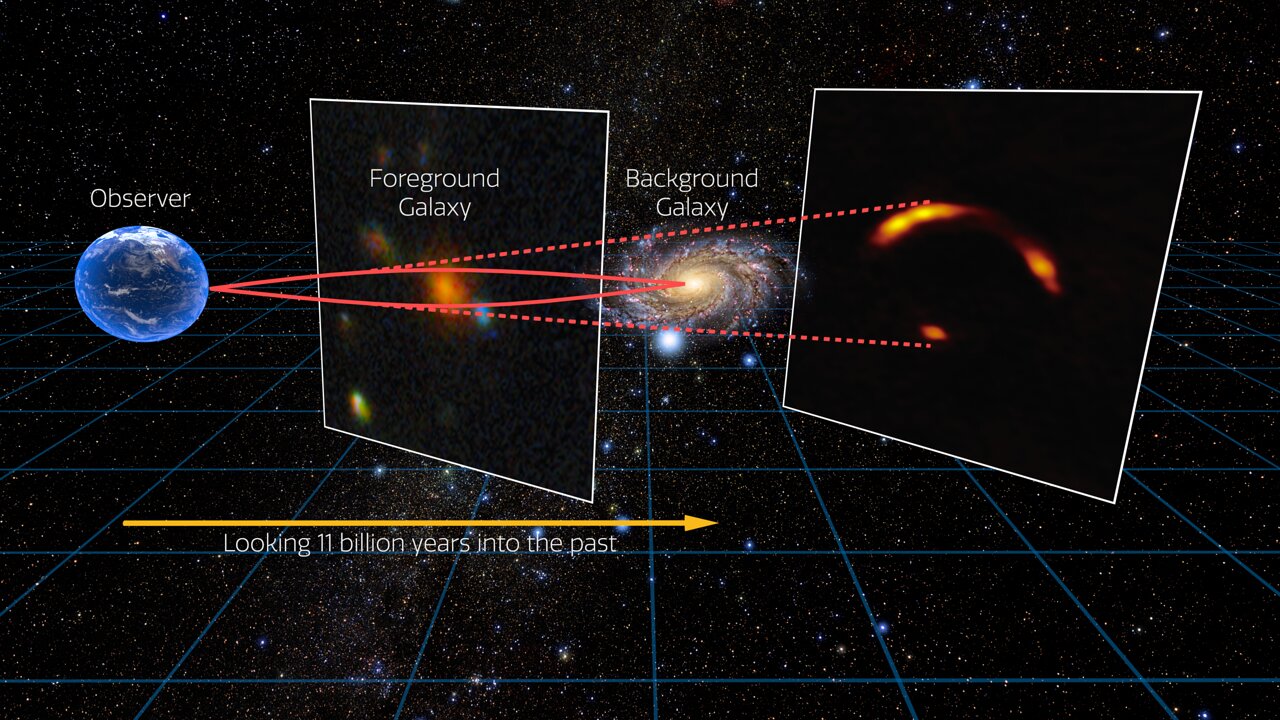
This artist’s impression compares the semi-heavy water content of the interstellar comet 3I/ATLAS (left) and Earth (right). Insets illustrate the relative abundance of deuterated water (HDO) molecules, showing that 3I/ATLAS contains over 30 times more HDO than is found in Earth’s oceans. This elevated ratio suggests the comet formed in an extremely cold environment, very different from the conditions that shaped our Solar System.
Credit: NSF/AUI/NSF NRAO/M.Weiss

New observations of the interstellar comet 3I/ATLAS include the first measurement of the abundance of deuterated water relative to ordinary water in an interstellar object...

Read More

Scientists discover skincare compound that kills drug-resistant bacteria

A popular Korean skincare ingredient may be far more powerful than anyone realized. Scientists have discovered that madecassic acid—derived from the herb Centella asiatica—can stop antibiotic-resistant bacteria in their tracks, including dangerous strains of Ecoli. By targeting a bacterial protein that humans don’t have, the compound disrupts the microbes’ ability to survive, making it a promising new type of antibiotic.

Madecassic acid is widely known in Korean skincare as a calming “hero ingredient,” but new research suggests it may have a much bigger role to play. Scientists at the University of Kent have found that this plant-derived compound could help fight antibiotic-resistant bacteria, one of the most pressing global health threats.

Working with colleagues at Uni...

Read More

A bizarre new state of matter may be hiding inside Uranus and Neptune

Deep inside planets like Uranus and Neptune, scientists may have uncovered a bizarre new state of matter where atoms behave in unexpected ways. Advanced simulations suggest that carbon and hydrogen, under crushing pressures and scorching temperatures, can form a strange hybrid phase—part solid, part fluid—where hydrogen atoms spiral through a rigid carbon framework. This unusual “superionic” structure could reshape how heat and electricity flow inside these distant worlds, potentially helping explain their mysterious magnetic fields.

The deep interiors of ice giant planets such as Uranus and Neptune may contain a previously unknown form of matter. This possibility comes from new computer simulations conducted by Carnegie scientists Cong Liu and Ronald Cohen.

Their study,...

Read More

Novel diabetic wound treatment turns cells into manufacturers

A microscopic view of how the diabetic wound treatment works.
A microscope view of injured diabetic skin 14 days after applying a bandage that uses the researchers’ interwoven extracellular matrix material. Immune cells are shifting their behavior from inflammation (green) to healing (red). tCredit: Texas A&M Engineering

Diabetes affects more than 40 million people in the United States, according to the American Diabetes Association. For many, the chronic condition means a lifetime of pain as worsening circulation leads to nonhealing ulcers in the extremities, especially the legs and feet.

Chronic inflammation, difficulty in forming nutrient-carrying capillaries, and overzealous immune cells that attack healing tissue all combine to make diabetic foot ulcers one of the most difficult wounds to treat...

Read More