Researchers Engineer Novel Material capable of ‘Thinking’

man holds rubber block in one hand and squeezed rubber block in other hand
Penn State researchers create mechanical integrated circuit materials from conductive and non-conductive rubber materials that sense and react to tactile input, such as force. Credit: Kelby Hochriether/Penn State. All Rights Reserved.

Collaboration builds on decades-old research to engineer advanced material. Someone taps your shoulder. The organized touch receptors in your skin send a message to your brain, which processes the information and directs you to look left, in the direction of the tap. Now, Penn State and U.S. Air Force researchers have harnessed this processing of mechanical information and integrated it into engineered materials that “think.”

The work, published today (Aug. 24) in Nature, hinges on a novel, reconfigurable alternative to integrated circuits...

Read More

An Extrasolar World Covered in Water?

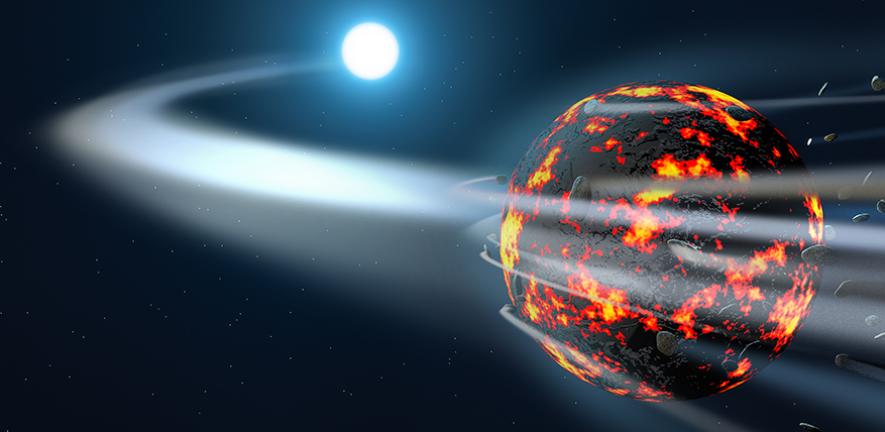
Artistic rendition of the exoplanet TOI-1452 b, a small planet that may be entirely covered in a deep ocean.

An international team of researchers led by Charles Cadieux, a Ph.D. student at the Université de Montréal and member of the Institute for Research on Exoplanets (iREx), has announced the discovery of TOI-1452 b, an exoplanet orbiting one of two small stars in a binary system located in the Draco constellation about 100 light-years from Earth.

The exoplanet is slightly greater in size and mass than Earth and is located at a distance from its star where its temperature would be neither too hot nor too cold for liquid water to exist on its surface. The astronomers believe it could be an “ocean planet,” a planet completely covered by a thick layer of water, similar to some of Jupiter’s and Saturn’s moons.

In an article published today in The Astronomical Journal, Cadieux and his ...

Read More

Comet Impacts Formed Continents when Solar System Entered Arms of Milky Way

New Curtin research has found evidence that Earth’s early continents resulted from being hit by comets as our Solar System passed into and out of the spiral arms of the Milky Way Galaxy, turning traditional thinking about our planet’s formation on its head.

The new research, published in Geology, challenges the existing theory that Earth’s crust was solely formed by processes inside our planet, casting a new light on the formative history of Earth and our place in the cosmos.

Lead researcher Professor Chris Kirkland, from the Timescales of Mineral Systems Group within Curtin’s School of Earth and Planetary Sciences, said studying minerals in the Earth’s crust revealed a rhythm of crust production every 200 million years or so that matched our Solar System’s transit through areas...

Read More

Surprising Culprit Worsens Stroke, TBI damage

In the aftermath of a stroke or traumatic brain injury (TBI), a group of amino acids that typically support brain function contribute significantly to the brain destruction that can follow both these injuries, scientists report.

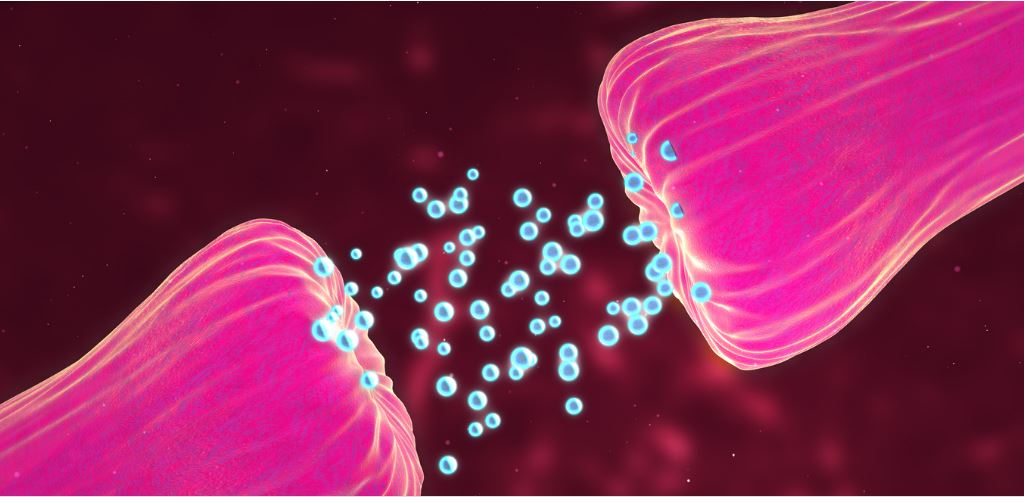
The new study provides for the first time the surprising evidence that four common nonexcitatory amino acids that usually make proteins which are essential to brain function, instead cause irreversible, destructive swelling of both the astrocytes that support neurons and the neurons themselves, says Dr. Sergei Kirov, neuroscientist in the Department of Neuroscience and Regenerative Medicine at the Medical College of Georgia.

“There are many ways to kill neurons...

Read More