









- Scientists may have found a “unifying theory” of chronic fatigue
- Atom-thin material could overcome key transistor bottleneck for next-generation computer chips
- Quantum interactions may have locked early universe’s fields into existing energy states
- High blood pressure can accelerate osteoarthritis joint damage via a newly identified hormone pathway
The Gut Microbiome’s Supersized Role in Shaping Molecules in our Blood
November 11, 2022,
 Biology/Biotechnology, Health/Medical
Death of a Star reveals Midsize Black Hole lurking in a Dwarf Galaxy
November 11, 2022,
Astronomy/Space
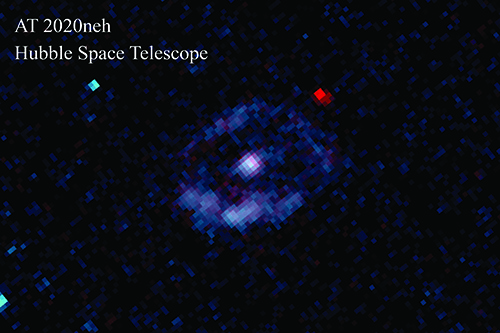
An intermediate-mass black hole lurking undetected in a dwarf galaxy revealed itself to astronomers when it gobbled up an unlucky star that strayed too close...
Read MoreNew AI Model can help Prevent Damaging and Costly Data Breaches
November 11, 2022,
Physics
Imperial privacy experts have created an AI algorithm that automatically tests privacy-preserving systems for potential data leaks.
This is the first time AI has been used to automatically discover vulnerabilities in this type of system, examples of which are used by Google Maps and Facebook.
The experts, from Imperial’s Computational Privacy Group, looked at attacks on query-based systems (QBS)—controlled interfaces through which analysts can query data to extract useful aggregate information about the world. They then developed a new AI-enabled method called QuerySnout to detect attacks on QBS.
QBS give analysts access to collections of statistics gathered from individual-level data like location and demographics...
Read MoreOHSU Scientists Identify Molecule that could help Treat Parkinson’s
November 11, 2022,
Health/Medical, Biology/Biotechnology
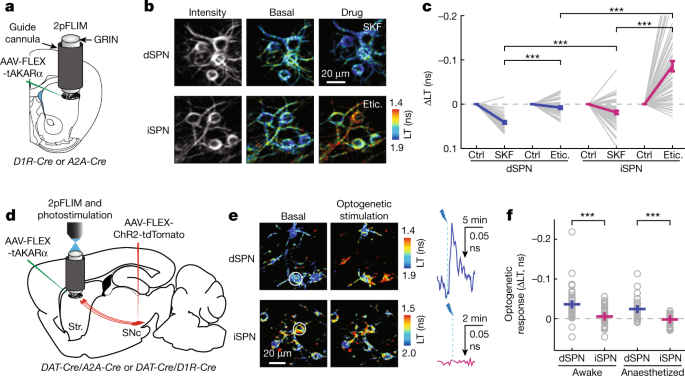
Discovery could immediately suggest new avenues for drug development. Researchers at Oregon Health & Science University have discovered that the neurotransmitter adenosine effectively acts as a brake to dopamine, another well-known neurotransmitter involved in motor control.
Scientists found that adenosine operates in a kind of push-pull dynamic with dopamine in the brain; the discovery published today in the journal Nature.
“There are two neuronal circuits: one that helps promote action and the other that inhibits action,” said senior author Haining Zhong, Ph.D., scientist with the OHSU Vollum Institute...
Read More
Recent Comments