First-ever detection of ‘heavy water’ in a planet-forming disk

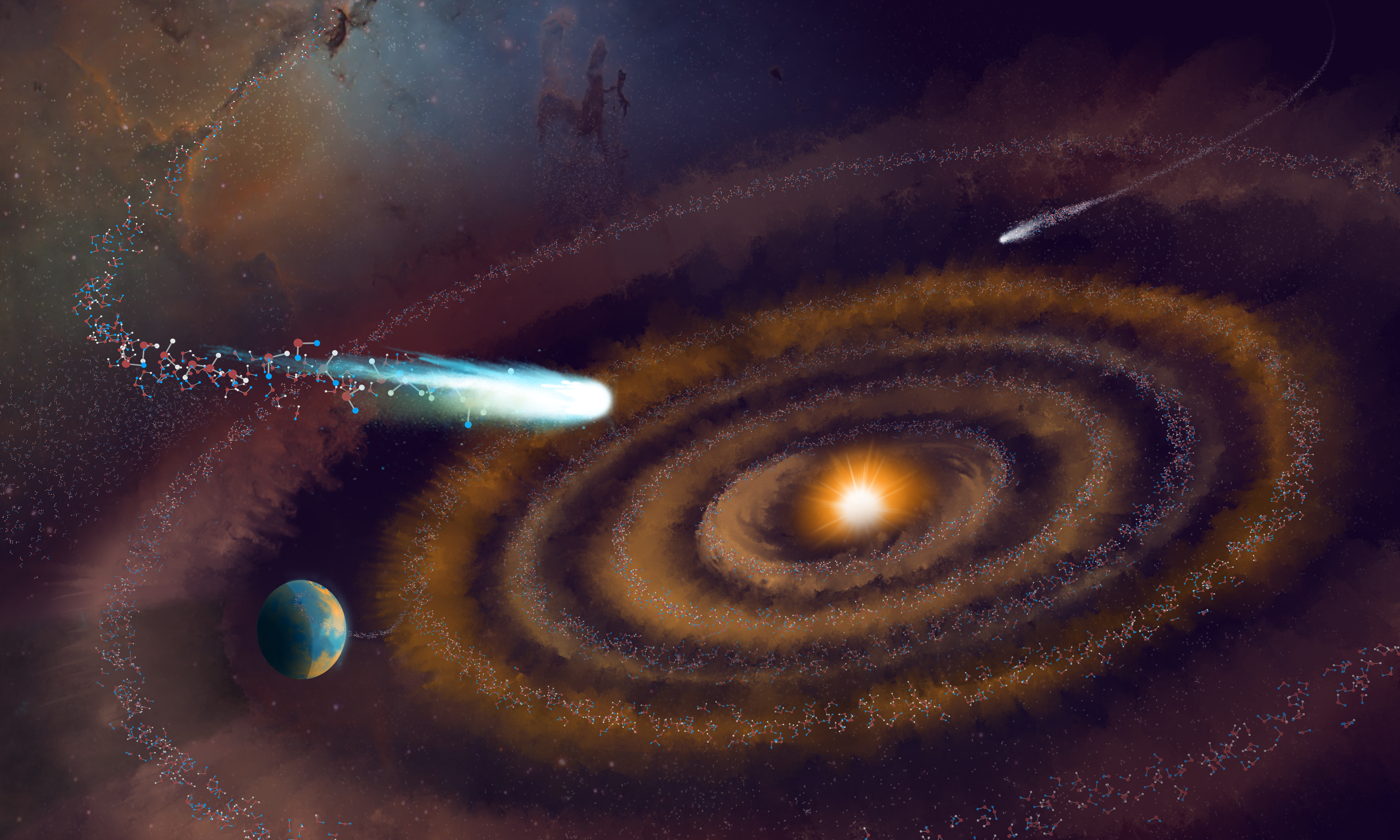
This artist’s impression shows the evolution of heavy water molecules (H2O, HDO, and D2O) as they have been observed in giant molecular clouds, a planet forming-disk, and comets—before they eventually may have made their way to Earth.
Credit: NSF/AUI/NSF NRAO/P. Vosteen, B. Saxton

The discovery of ancient water in a planet-forming disk reveals that some of the water found in comets—and maybe even Earth—is older than the disk’s star itself, offering breakthrough insights into the history of water in our solar system.

Astronomers using the Atacama Large Millimeter/submillimeter Array (ALMA) have made a first-ever detection of doubly deuterated water (D₂O, or “heavy water”) in a planet-forming disk around V883 Ori, a young star...

Read More
MIT’s “stealth” immune cells could change cancer treatment forever

MIT’s Stealth Immune Cells Destroy Cancer
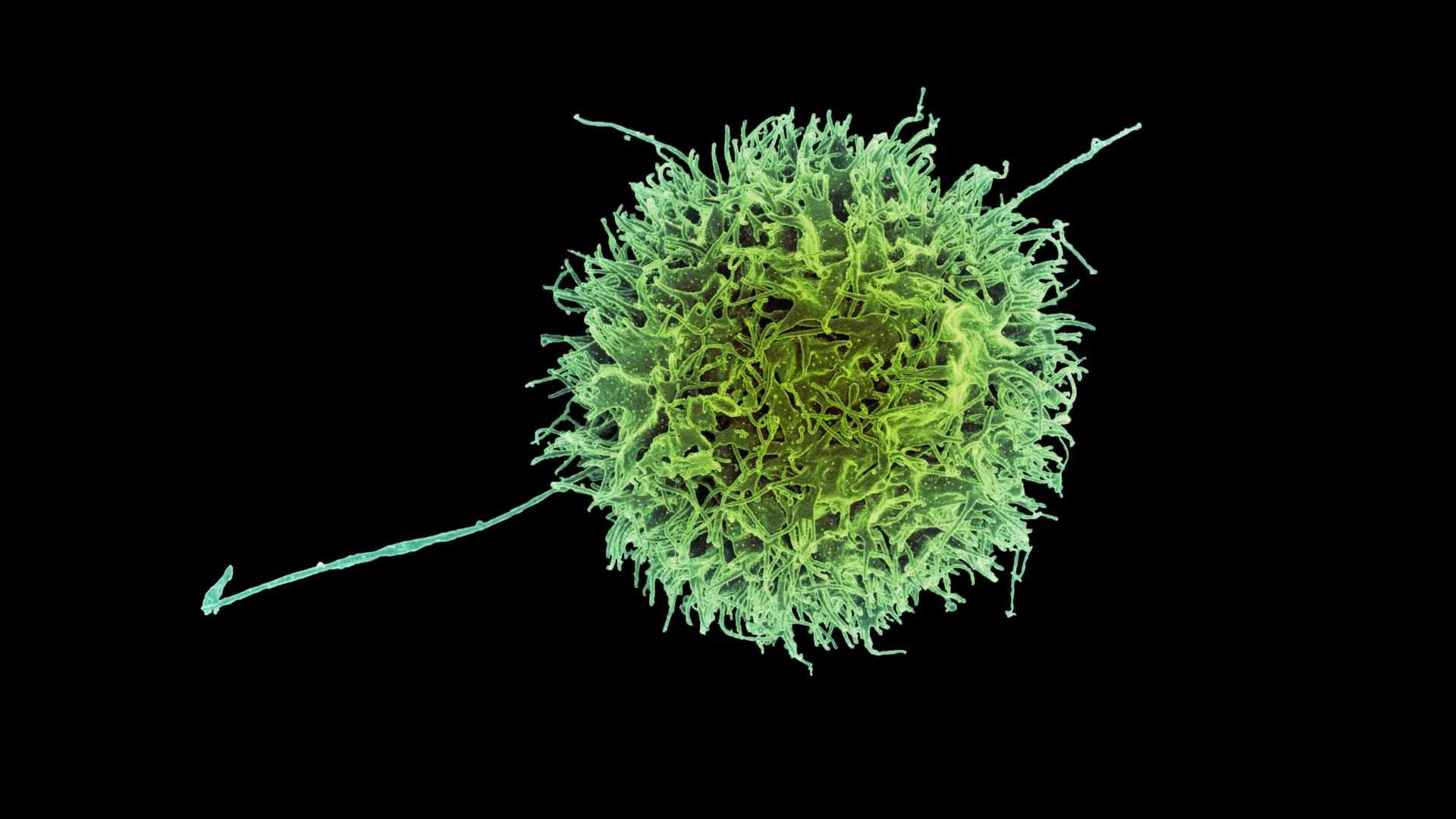
A new study identifies genetic modifications that make “natural killer” more effective at destroying cancer cells. Credit: NIAID

Engineered “stealth” immune cells from MIT and Harvard show promise for fast, safe, and powerful cancer treatment. Scientists have created a new and more advanced form of immune-based cancer therapy using engineered cells known as CAR-NK (natural killer) cells. Like CAR-T cells, these modified immune cells can be programmed to recognize and attack cancer, but they rely on a different type of immune cell that naturally targets abnormal or infected cells.

A team from MIT and Harvard Medical School has now developed a more effective way to engineer CAR-NK cells that dramatically reduces the chance of the body’s immune system rejecting them...

Read More

Quantum simulations that once needed supercomputers now run on laptops

Conceptual illustration of quantum entanglement.
A new method developed by University at Buffalo physicists will allow qunatum dnyamics, like the interaction between two atoms, to be simulated more easily on consumer laptops. 

UB physicists have upgraded an old quantum shortcut, allowing ordinary laptops to solve problems that once needed supercomputers. A team at the University at Buffalo has made it possible to simulate complex quantum systems without needing a supercomputer. By expanding the truncated Wigner approximation, they’ve created an accessible, efficient way to model real-world quantum behavior. Their method translates dense equations into a ready-to-use format that runs on ordinary computers. It could transform how physicists explore quantum phenomena.

Picture diving deep into the quantum realm, where unimaginably ...

Read More

JWST may have found the Universe’s first stars powered by dark matter

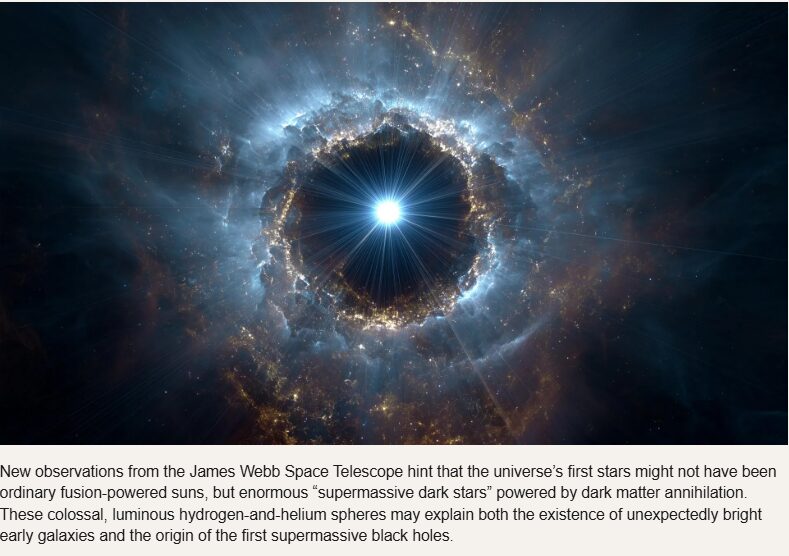
New observations from the James Webb Space Telescope hint that the universe’s first stars might not have been ordinary fusion-powered suns, but enormous “supermassive dark stars” powered by dark matter annihilation. These colossal, luminous hydrogen-and-helium spheres may explain both the existence of unexpectedly bright early galaxies and the origin of the first supermassive black holes.

In the early universe, a few hundred million years after the Big Bang, the first stars emerged from vast, untouched clouds of hydrogen and helium. Recent observations from the James Webb Space Telescope (JWST) suggest that some of these early stars may have been unlike the familiar (nuclear fusion-powered) stars that astronomers have studied for centuries...

Read More