COVID-19 on the brain: Neurological Symptoms Persist in Majority of Long-Haulers

Study: Evolution of neurologic symptoms in non-hospitalized COVID-19 “long haulers.” Image Credit: fizkes / Shutterstock.com

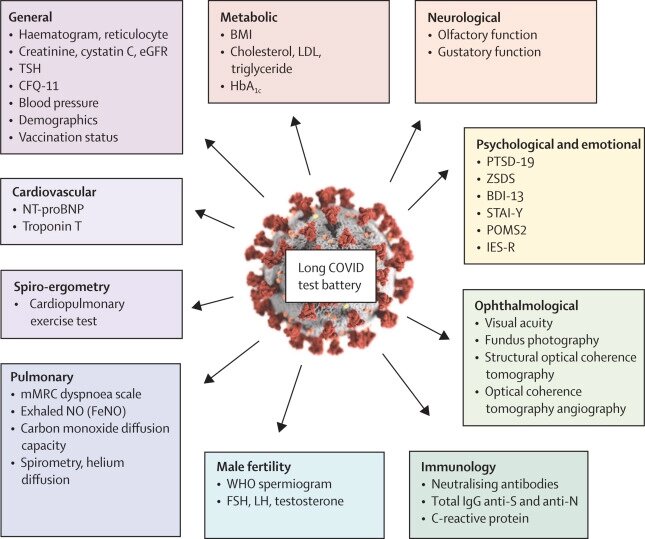
Longitudinal study describes short- and long-term neurological symptoms of SARS-CoV-2 infection; identifies new subgroup with advanced symptoms. Researchers at University of California San Diego School of Medicine are conducting a longitudinal study to track neurological symptoms in COVID-19 “long-haulers.”

The first round of results, published June 15, 2022 in Annals of Clinical and Translational Neurology, revealed the prevalence of various short- and long-term symptoms and found that, while many patients showed improvement, the majority still had some neurological symptoms after six months...

Read More

Introducing a Transceiver that can tap into the Higher Frequency Bands of 5G Networks

New 5G Transceiver Smooths Out Challenges in Beamforming

5G networks are becoming more prevalent worldwide. Many consumer devices that support 5G are already benefiting from increased speeds and lower latency. However, some frequency bands allocated for 5G are not effectively utilized owing to technological limitations. These frequency bands include the New Radio (NR) 39 GHz band, but actually span from 37 GHz to 43.5 GHz, depending on the country. The NR band offers notable advantages in performance over other lower frequency bands 5G networks use today. For instance, it enables ultralow latency in communication along with data rates of over 10 Gb/s and a massive capacity to accommodate several users.

However, these feats come at a cost. High-frequency signals are attenuated quickly as they travel through space...

Read More

Dead Star’s Cannibalism of its Planetary System is most far-reaching ever witnessed

Artist’s illustration shows a white dwarf star siphoning off debris from shattered objects in a planetary system. NASA, ESA, Joseph Olmsted (STScI)

White dwarf sheds light on the systemic chaos that occurs when a star dies. The violent death throes of a nearby star so thoroughly disrupted its planetary system that the dead star left behind — known as a white dwarf — is sucking in debris from both the system’s inner and outer reaches, UCLA astronomers and colleagues report today.

This is the first case of cosmic cannibalism in which astronomers have observed a white dwarf consuming both rocky-metallic material, likely from a nearby asteroid, and icy material, presumed to be from a body similar to those found in the Kuiper belt at the fringe of our own solar system.

“We have neve...

Read More

Astronomers find Evidence for most Powerful Pulsar in Distant Galaxy

Version Without Labels — Top Left: A giant blue star, much more massive than our Sun, has consumed, through nuclear fusion at its center, all its hydrogen, helium, and heavier elements up to iron. It now has a small iron core (red dot) at its center. Unlike the earlier stages of fusion, the fusion of iron atoms absorbs, rather than releases, energy. The fusion-released energy that has held up the star against its own weight now is gone, and the star will quickly collapse, triggering a supernova explosion. Top Right: The collapse has begun, producing a superdense neutron star with a strong magnetic field at its center (inset). The neutron star, though containing about 1.5 times the mass of the Sun, is only about the size of Manhattan...
Read More