






Researchers find Spaceflight may be associated with DNA mutations and increased risk of developing Heart Disease and Cancer

Goukassian

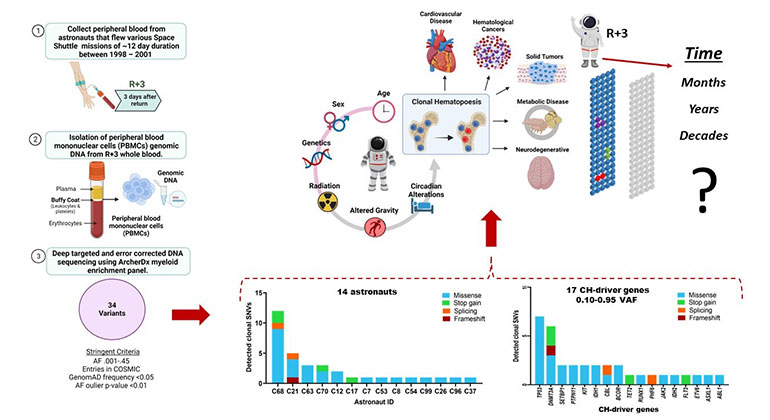
A new study could lead to ongoing health monitoring of astronauts to assess possible health risks and prevent disease progression. Astronauts are at higher risk for developing mutations – possibly linked to spaceflight – that can increase the risk of developing cancer and heart disease during their lifetimes, according to a first-of-its kind study from the Icahn School of Medicine at Mount Sinai.

A team of researchers collected blood samples from National Aeronautics and Space Administration (NASA) astronauts who flew space shuttle missions between 1998 and 2001. They discovered DNA mutations, known as somatic mutations, in the blood-forming system (hematopoietic stem cells) in all 14 astronauts studied...

Read More
New way found to turn Number Seven Plastic into Valuable Products

Closeup of two 3D-printed figurines.
The WSU research team, including postdoctoral researcher Yu-Chung Chang, used PLA plastic waste to create a high-quality resin for 3D printing.

A method to convert a commonly thrown-away plastic to a resin used in 3Dprinting could allow for making better use of plastic waste.

A team of Washington State University researchers developed a simple and efficient way to convert polylactic acid (PLA), a bio-based plastic used in products such as filament, plastic silverware and food packaging to a high-quality resin.

“We found a way to immediately turn this into something that’s stronger and better, and we hope that will provide people the incentive to upcycle this stuff instead of just toss it away,” said Yu-Chung Chang, a postdoctoral researcher in the WSU School of Mechanical and Mat...

Read More

ALMA discovers Birth Cry from a Baby Star in the Small Magellanic Cloud

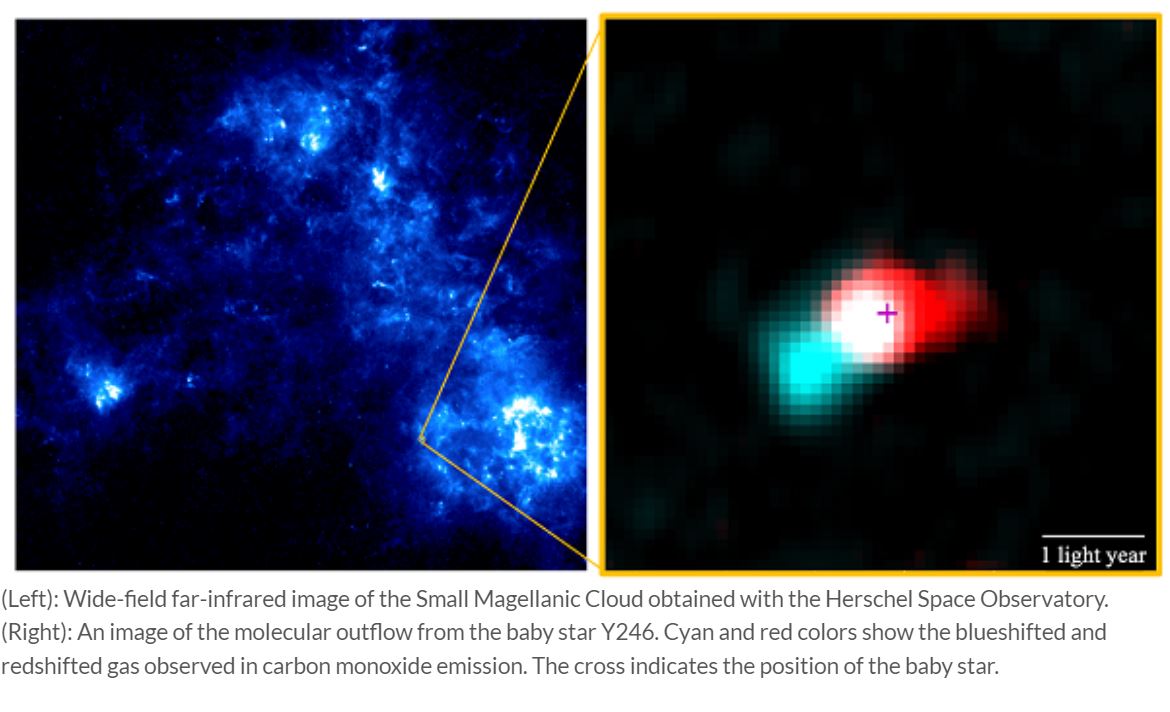
Researchers at Osaka Metropolitan University have observed “baby stars” in the Small Magellanic Cloud, having an environment similar to the early universe. Toward one of the baby stars, they found molecular outflow, which has similar properties to those seen in the Milky Way galaxy, giving a new perspective on the birth of stars.

The heavy elements in interstellar matter significantly impact the mechanism of star formation. In the early universe, the abundance of heavy elements was lower than in the present universe because there was not enough time for nucleosynthesis to produce heavy elements in stars. It has not been well understood how star formation in such an environment differs from present-day star formation.

An international team led by Professor Toshikazu Onishi, Osaka...

Read More

Researchers uncover Where and Why Proteins Malfunction in Parkinson’s disease

Super resolution image of α-synuclein in mitochondria of neuron (left) and single molecule TIRF image of individual α-synuclein aggregates (right)
Super resolution image of α-synuclein in mitochondria of neuron (left) and single molecule TIRF image of individual α-synuclein aggregates (right).
– Mathew Horrocks

Scientists at the Francis Crick Institute, UCL and the University of Edinburgh have uncovered how a build-up of harmful protein starts to happen within neurons in Parkinson’s disease, ultimately causing nerve cell death. By looking at how, where and why this build-up happens, the work provides unique insight into a key biological process driving Parkinson’s.

Parkinson’s is a progressive neurodegenerative disease that causes tremors, slowing of movements, stiffness and can progress to cause severe cognitive problems...

Read More