To raise new questions, new possibilities, to regard old problems from a new angle, requires creative imagination and marks real advance in science.
~Albert Einstein
Read More
Old Newtonian physics claimed that things have an objective reality separate from our perception of them. Quantum physics, and particularly Heisenberg's Uncertainty Principle, reveal that, as our perception of an object changes, the object itself literally changes.
~Marianne Williamson
Read More
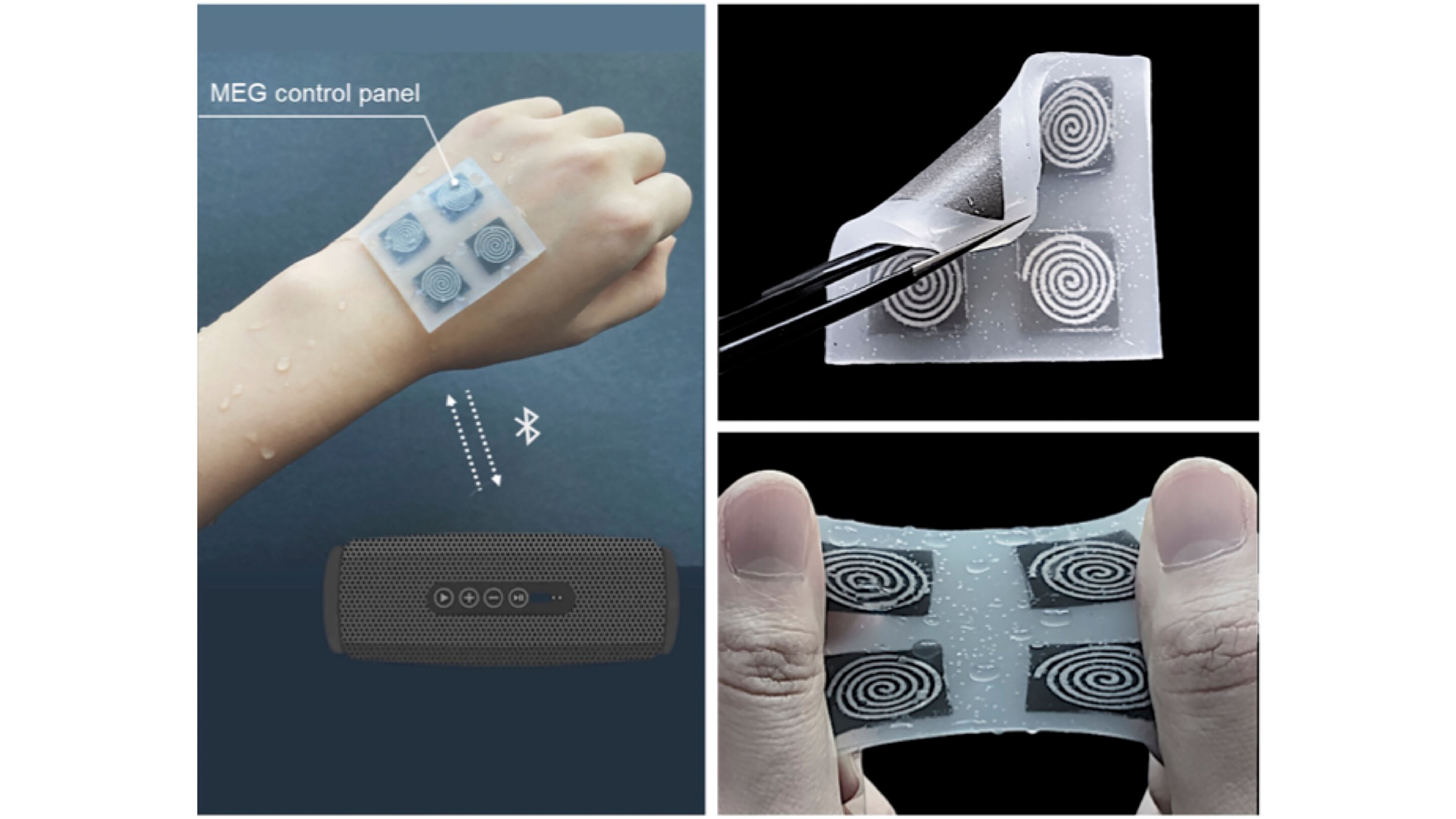
(Left) Photo of the magnetoelastic sensor array, which conforms to human skin and can function even when exposed to liquid. It can interact with a music speaker’s command components: play, pause, next, and previous. (Right two) The self-powered magnetoelastic sensor array is rollable and stretchable. Credit: The Jun Chen Research Group at UCLA: junchenlab.com
Wearable human-machine interface devices, HMIs, can be used to control machines, computers, music players, and other systems. A challenge for conventional HMIs is the presence of sweat on human skin.
In Applied Physics Reviews, scientists at UCLA describe their development of a type of HMI that is stretchable, inexpensive, and waterproof...
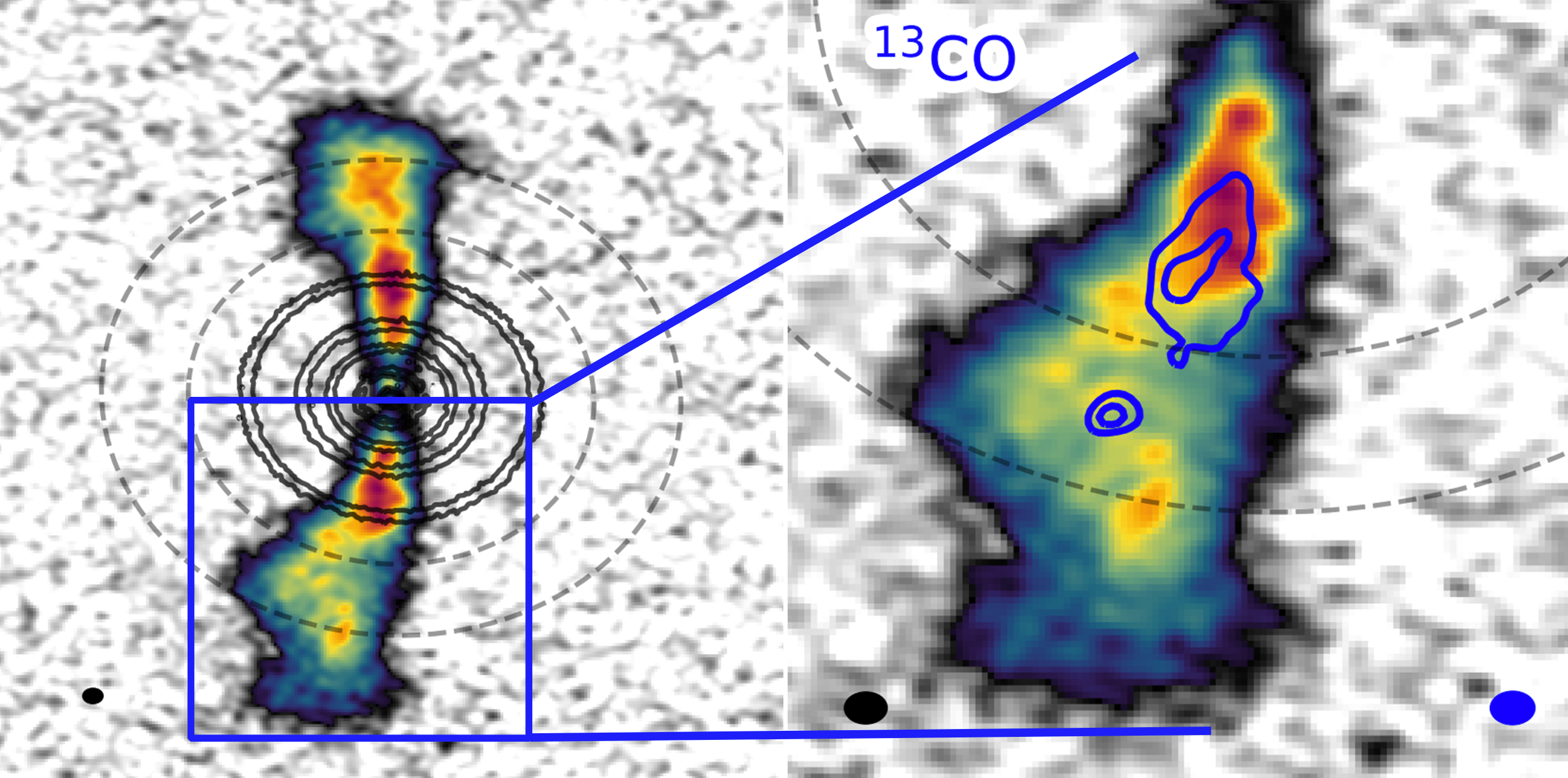
Scientists studying the young star AS 209 have detected gas in a circumplanetary disk for the first time, which suggests the star system may be harboring a very young Jupiter-mass planet. Science images from the research show (right) blob-like emissions of light coming from otherwise empty gaps in the highly-structured, seven-ring disk (left). Credit: ALMA (ESO/NAOJ/NRAO), J. Bae (U. Florida)
Scientists using the Atacama Large Millimeter/submillimeter Array (ALMA) and partners at the National Radio Astronomy Observatory (NRAO) have made the first-ever detection of gas in an circumplanetary disk. What’s more, the detection also suggests the presence of a very young exoplanet. The results of the research are published in The Astrophysical Journal Letters.
Disruption of the circadian clocks that keep the body and its cells entrained to the 24-hour day-night cycle plays a critical role in weight gain, according to a pair of studies by Weill Cornell Medicine investigators.
One study, published June 27, in Cell Reports revealed that stress caused by chronically administering glucocorticoid stress hormones and disturbing the normal daily cycle of release triggers a temporary protective mechanism in mice. This mechanism boosts fat cell growth and insulin production while reducing excess blood sugar and fat levels in the bloodstream and liver. The second study, published Aug...
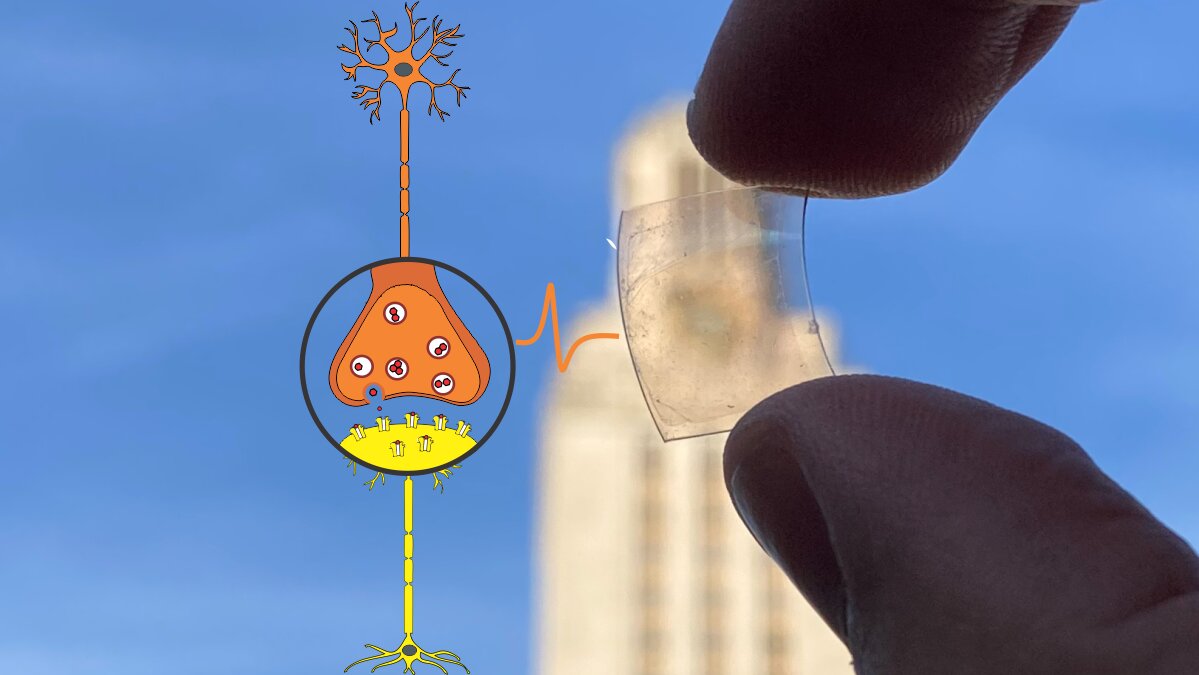
Computers that think more like human brains are inching closer to mainstream adoption. What types of materials can serve as the best building blocks to unlock the potential of this new style of computing? For most traditional computing devices, silicon remains the gold standard. However, there is a movement to use more flexible, efficient and environmentally friendly materials for these brain-like devices.
In a new paper, researchers from The University of Texas at Austin developed synaptic transistors for brain-like computers using the thin, flexible material graphene. These transistors are similar to synapses in the brain, that connect neurons to each other.
“Computers that think like brains can do so much more than today’s devices,” said J...












Recent Comments