Using Light to Restore Cell Function

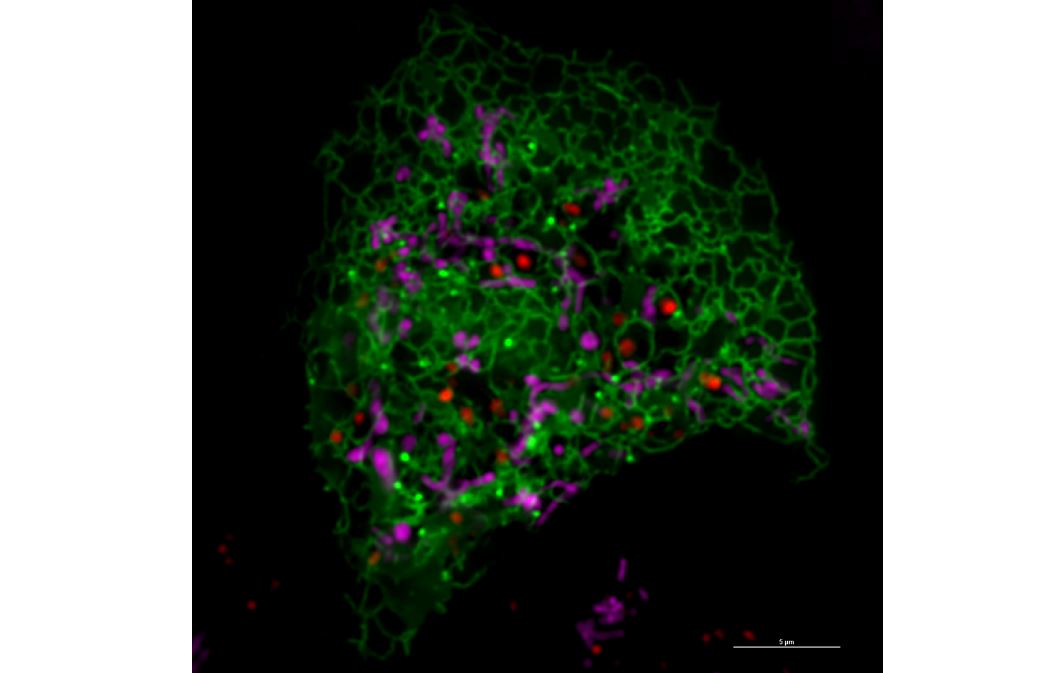
A super resolution image captured in Diao’s lab shows the endoplasmic reticulum in green, lysosomes in pink and mitochondria in red. Using the light-activated proteins, the mitochondria and lysosomes are brought together to conduct mitochondrial fission. Photo provided by Jiajie Diao.

New research from the University of Cincinnati shows early indications that light can be used as a treatment for certain diseases, including cancer.

Researchers from UC, the U222niversity of Illinois Urbana-Champaign and the University at Buffalo published the results of their study demonstrating light-activated proteins can help normalize dysfunction within cells in the journal Nature Communications July 25.

The research centers on the functions of mitochondria, organelles within a cell that act as...

Read More
Affordable and Sustainable Alternative to Lithium-ion Batteries proposed

Findings could pave the way for a cost-efficient, high-performing calcium-ion battery. Concerns regarding scarcity, high prices, and safety regarding the long-term use of lithium-ion batteries has prompted a team of researchers from Rensselaer Polytechnic Institute to propose a greener, more efficient, and less expensive energy storage alternative.

In research published recently in Proceedings of the National Academy of Sciences (PNAS), corresponding author Nikhil Koratkar, the John A. Clark and Edward T. Crossan Professor of Engineering at Rensselaer, and his team, assert that calcium ions could be used as an alternative to lithium-ions in batteries because of its abundance and low cost.

“The vast majority of rechargeable battery products are based on lithium-ion technology, wh...

Read More

Fast-acting Immune Cells provide Powerful Protection against Stroke

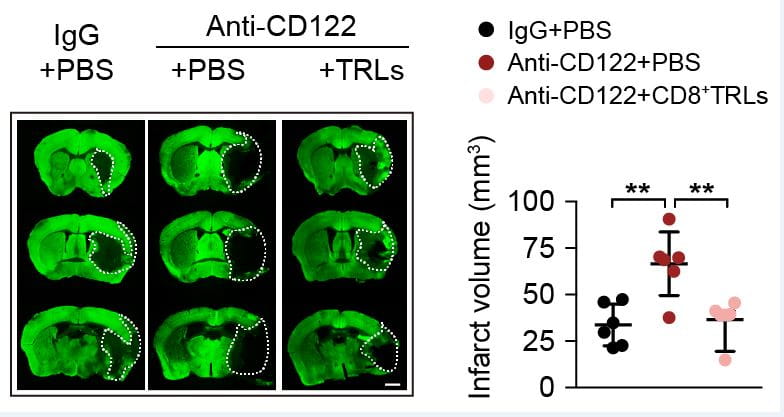
CREDIT: Adapted from Cai and Shi et al., 2022
CAPTION:  Within 24 hours after researchers depleted CD8+TRLs from the bloodstream of stroke mice, the size of the brain region affected by ischemia expanded by 50% (middle panel) compared to animals whose CD8+TRL levels remained intact (left and right panels).

CD8+ regulatory-like Tcells reach the brain within 24 hours after stroke onset, where they release molecules that provide direct neuroprotective effects, as well as limit inflammation and secondary brain damage.

“The beauty of CD8+TRLs is in their fast response. They confer very potent protection to the brain, which can last a long time,” said co-corresponding author Xiaoming Hu, M.D., Ph.D., associate professor of neurology at Pitt and a U.S...

Read More

Nickelate Superconductors are Intrinsically Magnetic

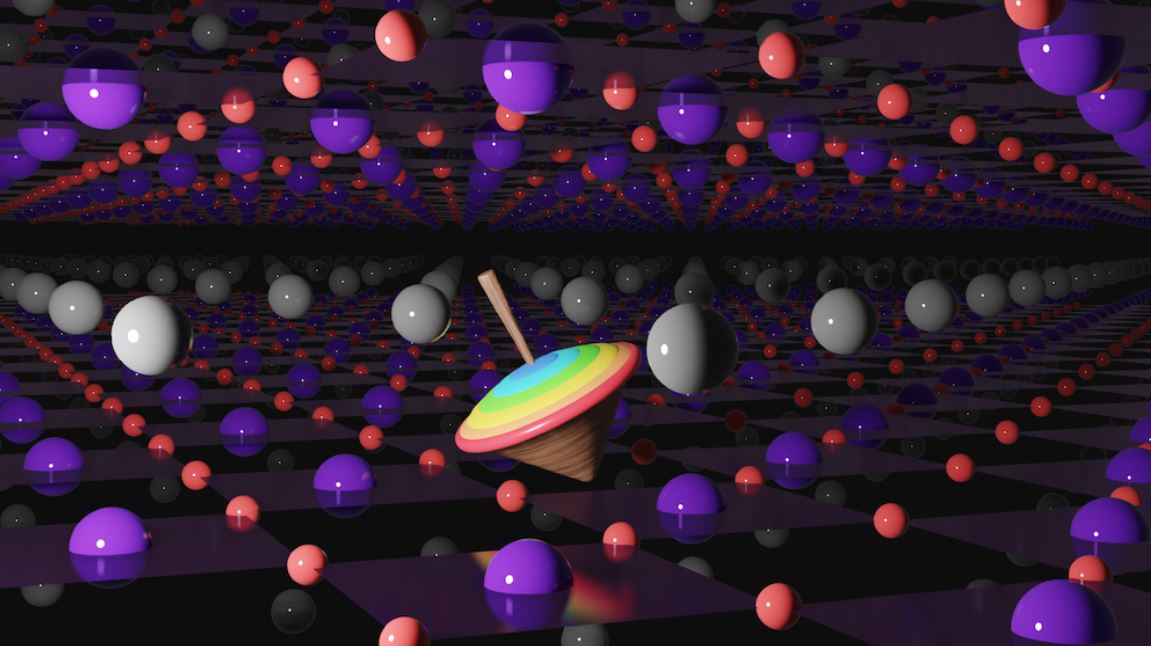
A muon, center, spins like a top within the atomic lattice of a thin film of superconducting nickelate. These elementary particles can sense the magnetic field created by the spins of electrons up to a billionth of a meter away. By embedding muons in four nickelate compounds at the Paul Scherrer Institute in Switzerland, researchers at SLAC and Stanford discovered that the nickelates they tested host magnetic excitations whether they’re in their superconducting states or not – another clue in the long quest to understand how unconventional superconductors can conduct electric current with no loss. (Jennifer Fowlie/SLAC National Accelerator Laboratory)

Waves of magnetic excitation sweep through this exciting new material whether it’s in superconducting mode or not — another possible...

Read More