Phase Transitions in the Early Universe and their Signals

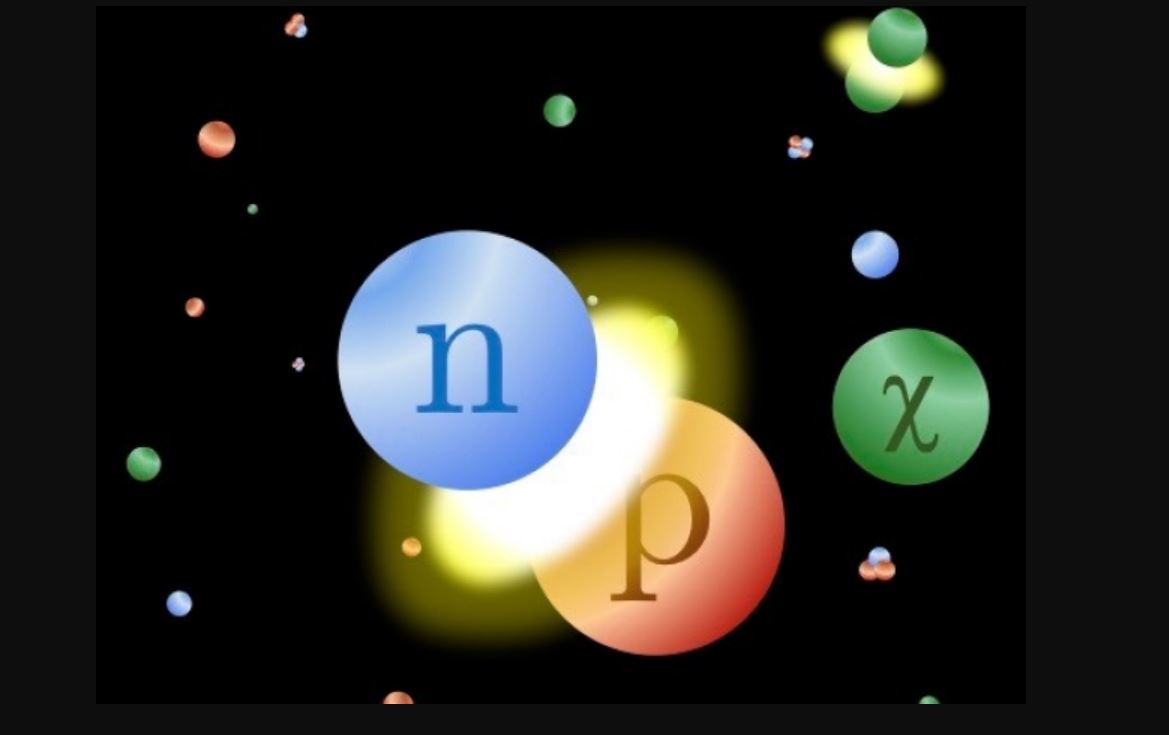
Colliding spherical pressure waves from a phase transition at around 10 picoseconds after the Big Bang would generate gravitational waves observable by LISA. (Image: David Weir)

The early universe may chirp about unknown physics. A University of Helsinki research team has demonstrated how an early universe phase transition will lead to gravitational wave signals potentially visible in the upcoming satellite missions. The research results were recently published in the journal Physical Review Letters.

Phase transitions, such as the boiling of water or the melting of a metal, are commonplace but fascinating phenomena that spur surprises decades after decades...

Read More

New knowledge on Lymphoid Cell Maturity could lead to more Effective IBD Therapies

Illustration: GettyImages.

A research group at Karolinska Institutet in Sweden has analysed how certain immune cells known as innate lymphoid cells (ILCs) develop into mature cells that play a part in inflammatory bowel disease (IBD). The findings could pave the way for more effective treatments against IBD, a disease that causes considerable suffering and that is linked to an increased risk of colorectal cancer. The results are published today in the journal Science Immunology.

Inflammatory bowel disease (IBD) is characterised by a chronic inflammation of the gut mucosa that is thought to increase the risk of colon cancer. The disease often debuts before middle age with symptoms such as abdominal pain and weight loss...

Read More

Extract from a Common Kitchen Spice could be key to Greener, More Efficient Fuel cells

In this illustration, the green fuel (alcohol) is represented by the green-colored droplets at the top of the image, which upon interacting with curcumin enveloped gold nanoparticles, efficiently yield energy (the sparks at the bottom of the image). Credit: Lakshman Ventrapragada and Sri Sai Prasad Nayak

Turmeric, a spice found in most kitchens, has an extract that could lead to safer, more efficient fuel cells.

Researchers at the Clemson Nanomaterials Institute (CNI) and their collaborators from the Sri Sathya Sai Institute of Higher Learning (SSSIHL) in India discovered a novel way to combine curcumin—the substance in turmeric—and gold nanoparticles to create an electrode that requires 100 times less energy to efficiently convert ethanol into electricity.

While the research...

Read More

Hubble Snaps yet another Spiral Galaxy

Credit: ESA/Hubble & NASA, J. Lee and the PHANGS-HST Team

The spiral galaxy M91 fills the frame of this Wide Field Camera 3 observation from the NASA/ESA Hubble Space Telescope. M91 lies approximately 55 million light-years from Earth in the constellation Coma Berenices and—as is evident in this image—is a barred spiral galaxy. While M91’s prominent bar makes for a spectacular galactic portrait, it also hides an astronomical monstrosity. Like our own galaxy, M91 contains a supermassive black hole at its center. A 2009 study using archival Hubble data found that this central black hole weighs somewhere between 9.6 and 38 million times as much as the Sun.

While archival Hubble data allowed astronomers to weigh M91’s central black hole, more recent observations have had other scien...

Read More