To raise new questions, new possibilities, to regard old problems from a new angle, requires creative imagination and marks real advance in science.
~Albert Einstein
Read More
Old Newtonian physics claimed that things have an objective reality separate from our perception of them. Quantum physics, and particularly Heisenberg's Uncertainty Principle, reveal that, as our perception of an object changes, the object itself literally changes.
~Marianne Williamson
Read More
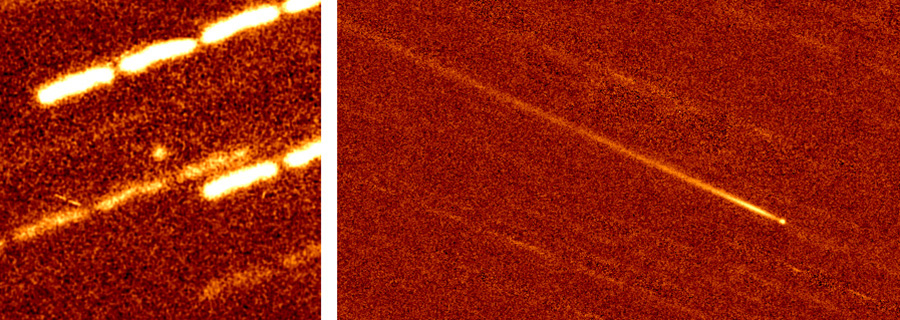
Near-Sun object 323P/SOHO observed by the Subaru Telescope on December 21, 2020 (left) and CFHT on February 11, 2021 (right). 323P/SOHO on its way to perihelion is seen as a point source in the center of the left image; after the perihelion, the comet has developed a long narrow tail as seen in the right image. (Credit: Subaru Telescope/CFHT/Man-To Hui/David Tholen)
Astronomers using a fleet of world leading telescopes on the ground and in space have captured images of a periodic rocky near-Sun comet breaking apart. This is the first time such a comet has been caught in the act of disintegrating and could help explain the scarcity of such periodic near-Sun comets.
Dementia is one of the major causes of disability and dependency among older people worldwide, affecting thinking and behaviors as you age. But what if you could stop this degenerative disease in its tracks?
A world-first study from the University of South Australia could make this a reality as new genetic research shows a direct link between dementia and a lack of vitamin D.
Investigating the association between vitamin D, neuroimaging features, and the risk of dementia and stroke, the study found:
low levels of vitamin D were associated with lower brain volumes and an increased risk of dementia and stroke
genetic analyses supported a causal effect of vitamin D deficiency and dementia.
in some populations as much as 17% of dementia cases might be prevented by increasing everyo...
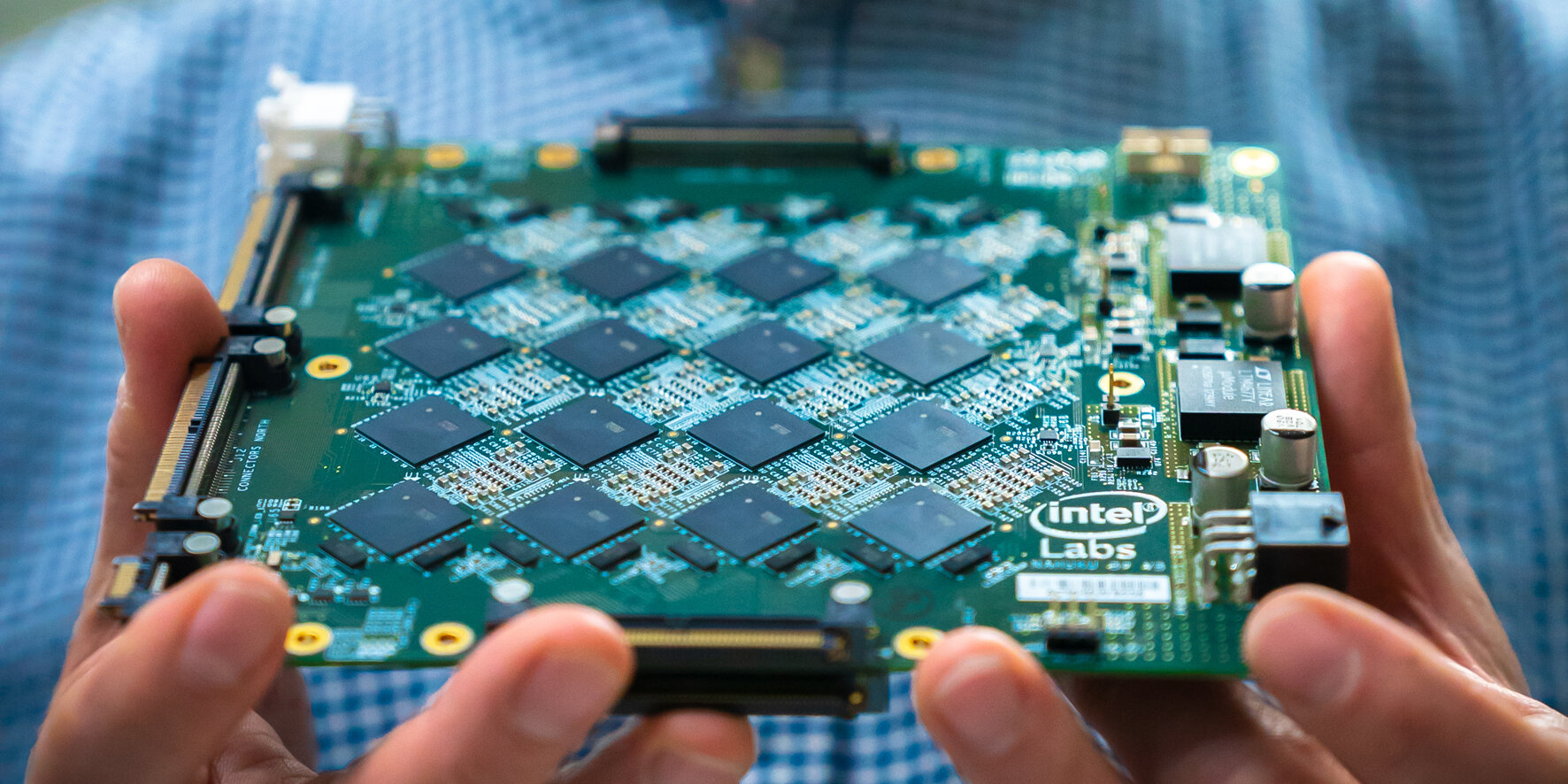
One of Intel’s Nahuku boards, each of which contains eight to 32 Intel Loihi neuromorphic chips. Credit: Tim Herman/Intel Corporation
As artificial intelligence and deep learning techniques become increasingly advanced, engineers will need to create hardware that can run their computations both reliably and efficiently. Neuromorphic computing hardware, which is inspired by the structure and biology of the human brain, could be particularly promising for supporting the operation of sophisticated deep neural networks (DNNs).
Researchers at Graz University of Technology and Intel have recently demonstrated the huge potential of neuromorphic computing hardware for running DNNs in an experimental setting...
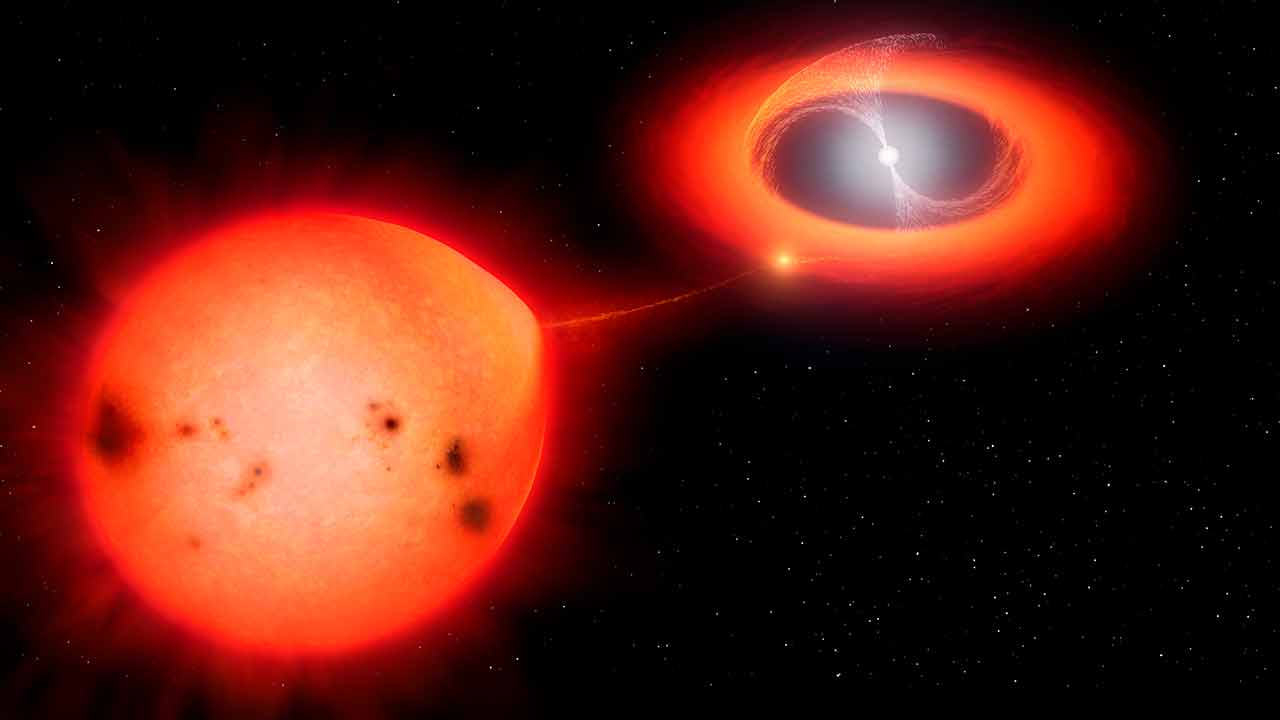
Illustration of an intermediate polar system, a type of two-star system that the research team thinks V1674 Hercules belongs to. A flow of gas from the large companion star impacts an accretion disk before flowing along magnetic field lines onto the white dwarf. Illustration by Mark Garlick
Astronomers are buzzing after observing the fastest nova ever recorded. The unusual event drew scientists’ attention to an even more unusual star. As they study it, they may find answers to not only the nova’s many baffling traits, but to larger questions about the chemistry of our solar system, the death of stars and the evolution of the universe.
The research team, led by Arizona State University Regents Professor Sumner Starrfield, Professor Charles Woodward from University of Minnesota and Re...












Recent Comments