
A team o...
Read More


Until we recognize the essential role of biology, our attempts to truly unify the universe will remain a train to nowhere. ~Robert Lanza Read More

Good health is not something we can buy. However, it can be an extremely valuable savings account. ~Anne Wilson Schaef Read More

The only way forward, if we are going to improve the quality of the environment, is to get everybody involved. ~Richard Rogers Read More

To raise new questions, new possibilities, to regard old problems from a new angle, requires creative imagination and marks real advance in science. ~Albert Einstein Read More

Old Newtonian physics claimed that things have an objective reality separate from our perception of them. Quantum physics, and particularly Heisenberg's Uncertainty Principle, reveal that, as our perception of an object changes, the object itself literally changes. ~Marianne Williamson Read More

Astronomy compels the soul to look upwards and leads us from this world to another. ~ Read More
May 31, 2022,
 Astronomy/Space
A team o...
Read More
May 26, 2022,
Health/Medical, Biology/Biotechnology

A team of researchers affiliated with multiple institutions in the U.S. and one in Japan has developed a new type of vaccine that helps the immune system destroy cancerous tumors by overcoming their defense system. In their paper published in the journal Nature, the group describes the new vaccine and its effects in mouse and rhesus macaque models.
Until recently, the only tools available to doctors treating cancer patients have been chemotherapy, radiation treatment and surgery. More recently, medical researchers have been exploring vaccines in the fight against cancer—the development of a vaccine against HPV-related diseases, for example, has reduced the risks of cervical and other types of cancers...
Read More
May 26, 2022,
Physics
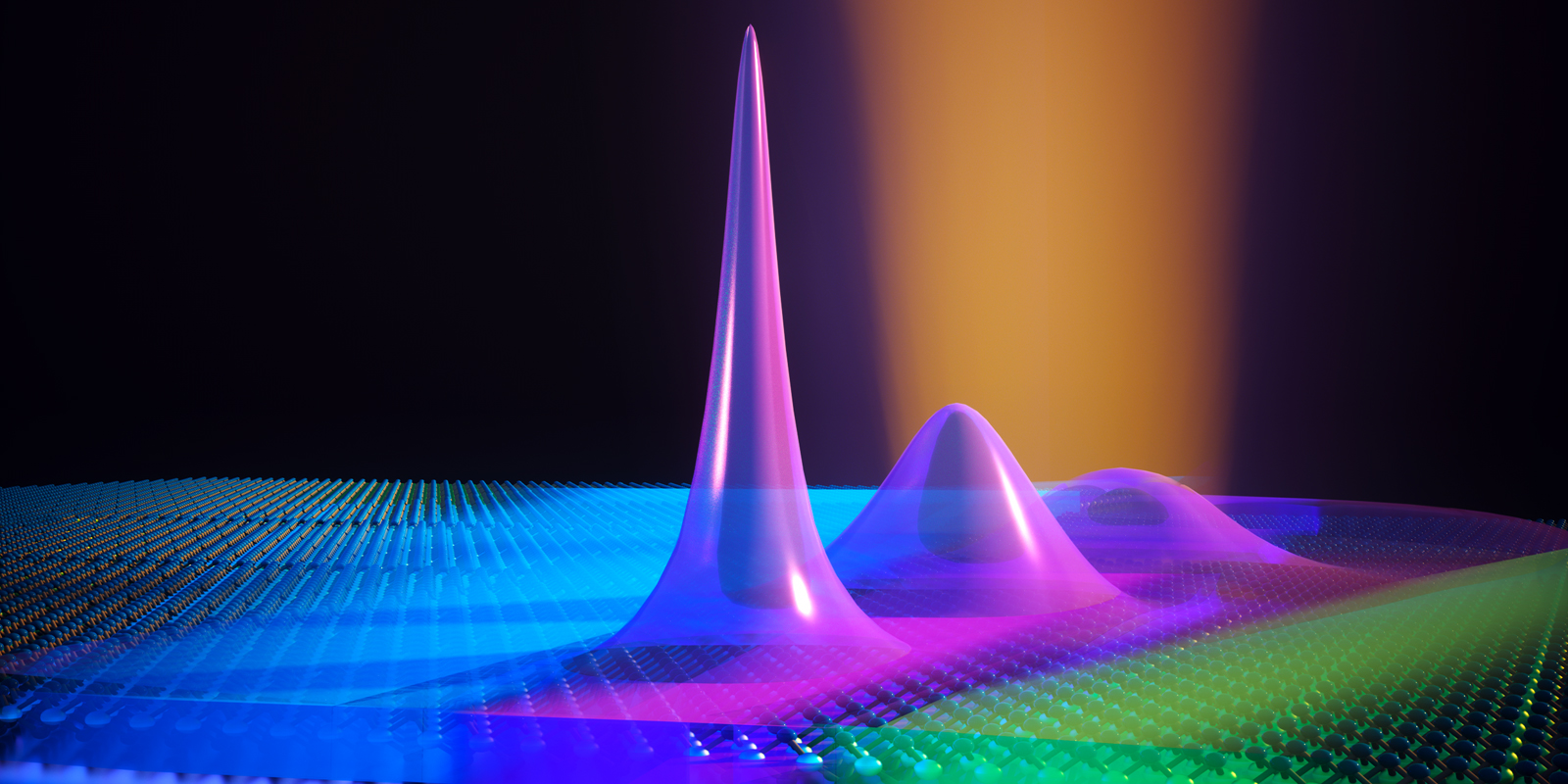
Researchers at ETH Zurich have succeeded for the first time in trapping excitons—quasiparticles consisting of negatively charged electrons and positively charged holes—in a semiconductor material using controllable electric fields. The new technique is important for creating single photon sources as well as for basic research.
In semiconductor materials, electric current can be conducted both by electrons and by positively charged holes, or missing electrons. Light hitting the material can also excite electrons to a higher energy band, leaving behind a hole in the original band...
Read More
May 26, 2022,
Physics, Astronomy/Space
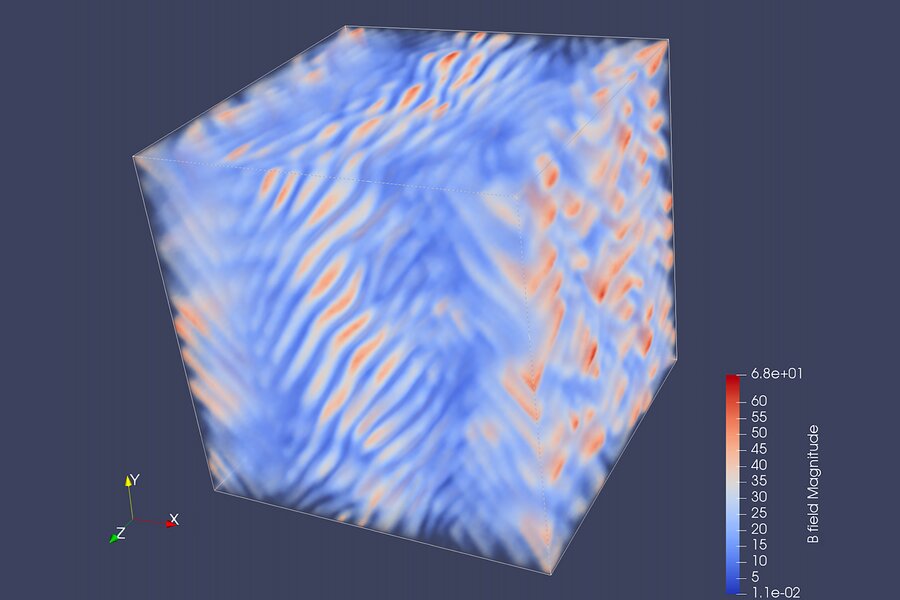
When we look out into space, all of the astrophysical objects that we see are embedded in magnetic fields. This is true not only in the neighborhood of stars and planets, but also in the deep space between galaxies and galactic clusters. These fields are weak—typically much weaker than those of a refrigerator magnet—but they are dynamically significant in the sense that they have profound effects on the dynamics of the universe. Despite decades of intense interest and research, the origin of these cosmic magnetic fields remains one of the most profound mysteries in cosmology.
In previous research, scientist...
Read More
Recent Comments