Using the Eye as a Window into Heart Disease

Scientists have developed an artificial intelligence (AI) system that can analyse eye scans taken during a routine visit to an optician or eye clinic and identify patients at a high risk of a heartattack.

Doctors have recognised that changes to the tiny blood vessels in the retina are indicators of broader vascular disease, including problems with the heart.

In the research, led by the University of Leeds, deep learning techniques were used to train the AI system to automatically read retinal scans and identify those people who, over the following year, were likely to have a heart attack.

Deep learning is a complex series of algorithms that enable computers to identify patterns in data and to make predictions.

Writing in the journal Nature Machine Intelligence, the researc...

Read More

Harnessing Noise in Optical Computing for AI

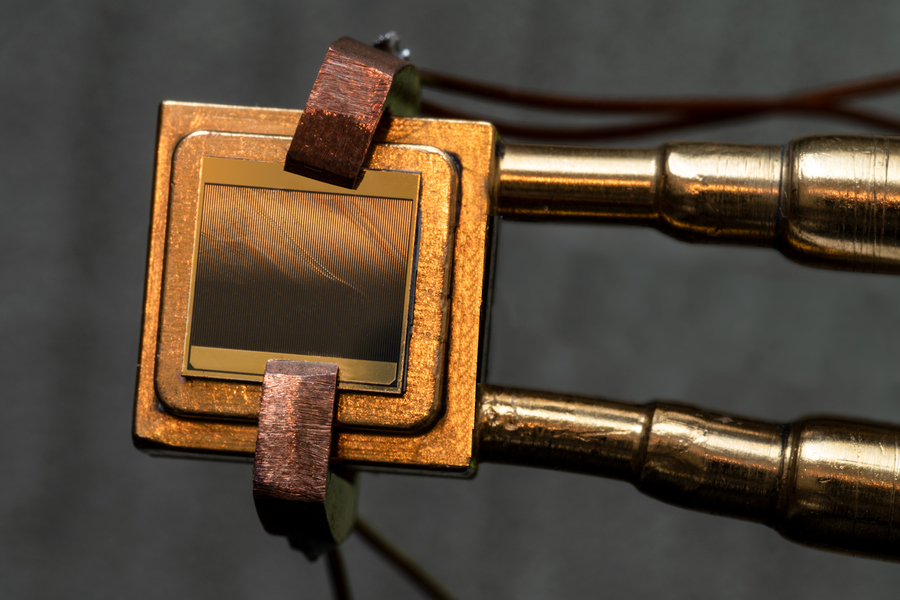
An illustration of the UW ECE-led research team’s integrated optical computing chip and “handwritten” numbers it generated. The chip contains an artificial neural network that can learn how to write like a human in its own, distinct style. This optical computing system uses “noise” (stray photons from lasers and thermal background radiation) to augment its creative capabilities. The system is also approximately 10 times faster than comparable conventional digital computers and more energy efficient, helping to put AI and machine learning on a path toward environmental sustainability. Illustration by Changming Wu

A research team has developed an optical computing system for AI and machine learning that not only mitigates the noise inherent to optical computing but actually use...

Read More

Consistent Asteroid Showers rock previous Thinking on Mars Craters

New Curtin University research has confirmed the frequency of asteroid collisions that formed impact craters on Mars has been consistent over the past 600 million years.

The study, published in Earth and Planetary Science Letters, analysed the formation of more than 500 large Martian craters using a crater detection algorithm previously developed at Curtin, which automatically counts the visible impact craters from a high-resolution image.

Despite previous studies suggesting spikes in the frequency of asteroid collisions, lead researcher Dr Anthony Lagain, from Curtin’s School of Earth and Planetary Sciences, said his research had found they did not vary much at all for many millions of years.

Dr Lagain said counting impact craters on a planetary surface was the only way to a...

Read More

Late-Life Exercise shows Rejuvenating Effects on Cellular Level

A new study suggests that exercise, even if not adopted until later in life, can slow the effects of aging. When 2-year old mice were studied after two months of progressive weighted wheel running, despite having no prior training, it was determined that they were the epigenetic age of mice eight weeks younger than sedentary mice of the same age.

For people who hate exercising, here comes some more bad news: it may also keep you younger. Not just looking younger, but actually younger, on an epigenetic level. By now, the benefits of exercise have been well established, including increased strength of bones and muscles, improved mobility and endurance, and lower risk of heart disease, diabetes and high blood pressure.

But younger?

A study recently published in Aging Cell, “Late...

Read More