To raise new questions, new possibilities, to regard old problems from a new angle, requires creative imagination and marks real advance in science.
~Albert Einstein
Read More
Old Newtonian physics claimed that things have an objective reality separate from our perception of them. Quantum physics, and particularly Heisenberg's Uncertainty Principle, reveal that, as our perception of an object changes, the object itself literally changes.
~Marianne Williamson
Read More
This map shows the Dark Matter distribution in the COSMOS field observed by the Hubble Space Telescope (left) and by the James Webb Space Telescope (right). Dark Matter distribution in the COSMOS field. The overlaid contours mark regions of equal dark-matter density, highlighting where this invisible matter – shown here in a blue color – is most strongly concentrated. Credit: Dr. Gavin Leroy/Professor Richard Massey/COSMOS-Webb collaboration
Scientists have produced the most detailed map ever created of dark matter that runs throughout the Universe, revealing how it has influenced the formation of stars, galaxies, and planets.
The research, which includes astronomers from Durham University in the UK, provides new insight into how this unseen substance helped draw ordinary matt...
Macroscale structural superlubricity at graphite/graphite and graphite/MoS2Â interfaces. Credit: Minhao Han et al.
For the first time, physicists in China have virtually eliminated the friction felt between two surfaces at scales visible to the naked eye. In demonstrating “structural superlubricity,” the team, led by Quanshui Zheng at Tsinghua University, have resolved a long-standing debate surrounding the possibility of the effect. Published in Physical Review Letters, the result could potentially lead to promising new advances in engineering.
What structural superlubricity promises When two objects slide over each other, any roughness on their surfaces will almost inevitably resist the motion, creating the force of friction...
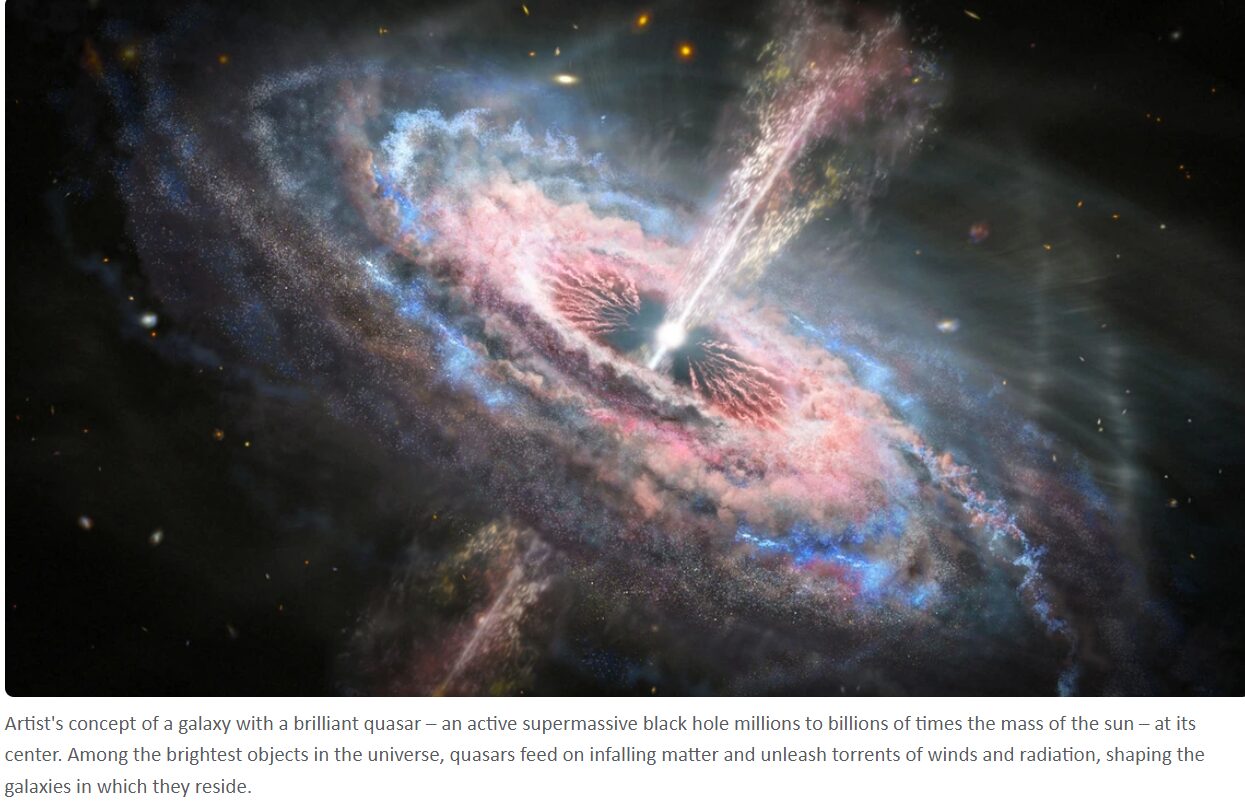
An artist’s rendition of the immediate vicinity around the supermassive black hole known as M87*. However, the roiling, superhot gases around these black holes extend much further than seen in this visualization. Two new studies give us new insight into the regions around these black holes and how they influence their surrounding galaxies.Illustration by S. Dagnello (NRAO/AUI/NSF)
Gigantic black holes lurk at the center of virtually every galaxy, including ours, but we’ve lacked a precise picture of what impact they have on their surroundings...
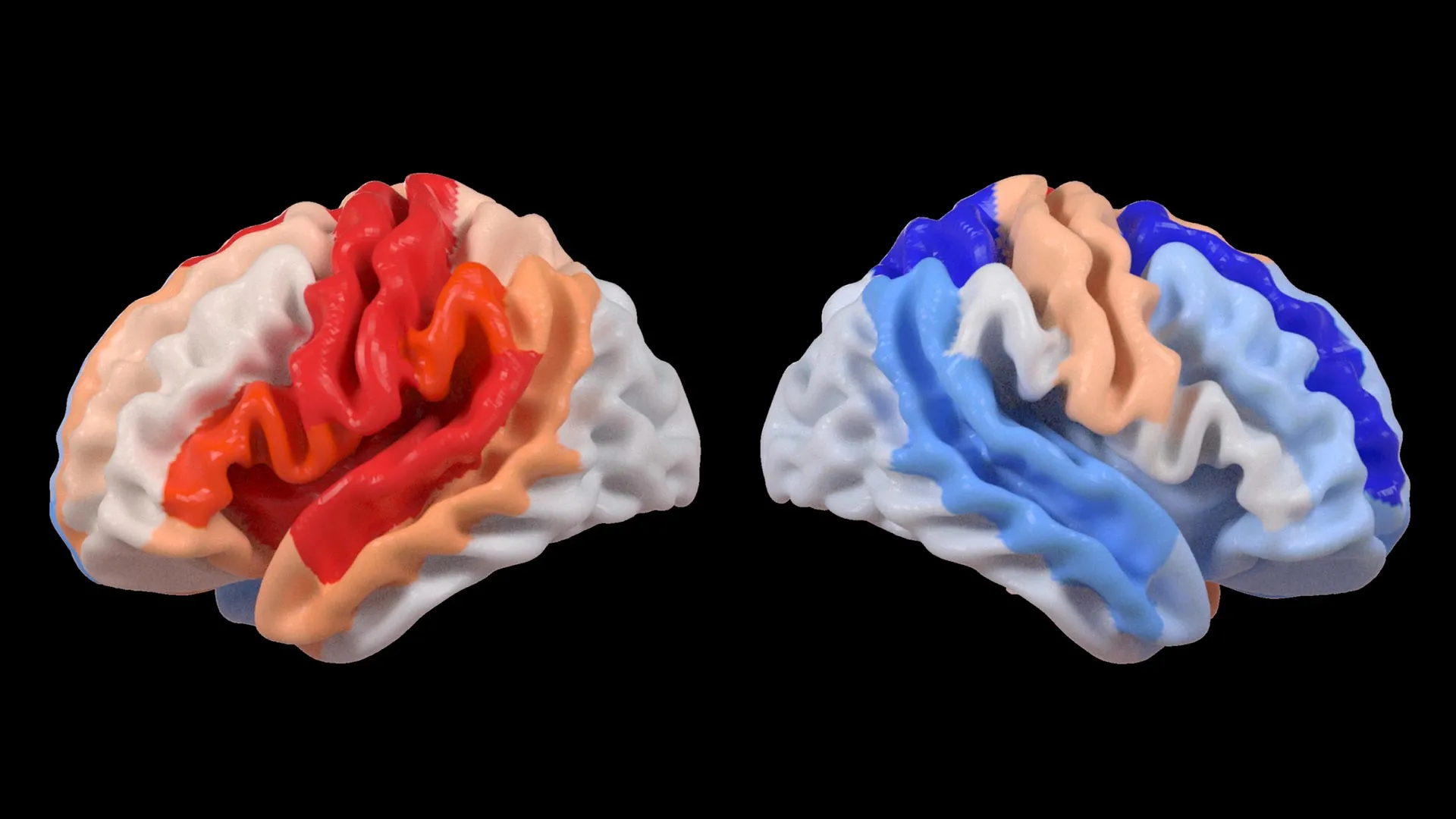
The familiar labels “night owl” and “early bird,” long used in sleep research, don’t fully capture the diversity of human internal clocks, a new study has found. The McGill University-led study published in Nature Communications found the two sleep-wake patterns, called chronotypes, contain a total of five distinct biological subtypes, each associated with different patterns of behavior and health.
A chronotype is based on the parts of a 24-hour period when a person naturally feels most alert or ready to sleep. Previous research has linked late chronotypes to worse health outcomes, but results have often been inconsistent. The new findings help explain why, the authors said.
“Rather than asking whether night owls are more at risk, the better question may be...
Recent Comments