Oxygen Ions in Jupiter’s Innermost Radiation Belts

From 1995 to 2003, NASA’s Galileo spacecraft explored the Jupiter system. Its final orbits took the probe deep into the giant planet’s innermost radiation belts, where it also performed a close flyby of Amalthea.
Michael Carroll

Researchers find high-energy oxygen and sulfur ions in Jupiter’s inner radiation belts — and a previously unknown ion source. Nearly 20 years after the end of NASA’s Galileo mission to Jupiter, scientists led by the Max Planck Institute for Solar System Research (MPS) in Germany have unlocked a new secret from the mission’s extensive data sets. For the first time, the research team was able to determine beyond doubt that the high-energy ions surrounding the gas giant as part of its inner radiation belt are primarily oxygen and sulfur ions...

Read More

Mouse Study Identifies Bacterial Protein associated with Colorectal Cancers

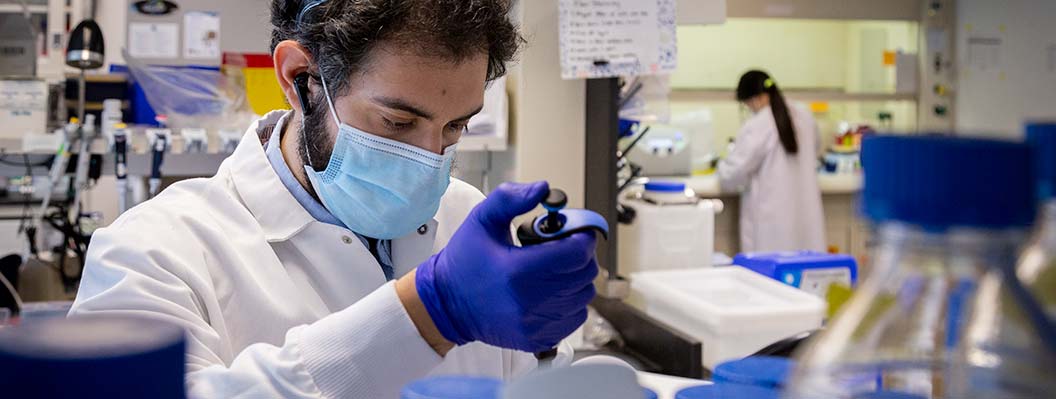
Newly identified toxin common in E. coli bacteria accelerated colon cancer in study mice; confirming link to human colorectal cancers could pave way for developing preventive drugs. The discovery raises the possibility that some of the roughly two million new cases of colorectal cancer every year around the world originate from brief and seemingly mild food-poisoning events. It also points to the possibility of future drugs that prevent colorectal cancers by neutralizing the newly identified toxin, UshA.

The findings were published January 12 in the January edition of Cancer Discovery.

Prior research has suggested that certain bacteria that reside in the gut can trigger colorectal cancer via persistent infections involving chronic gut inflammation...

Read More

1,000-light-year wide Bubble Surrounding Earth is Source of all Nearby, Young Stars

Leah Hustak (STScI)

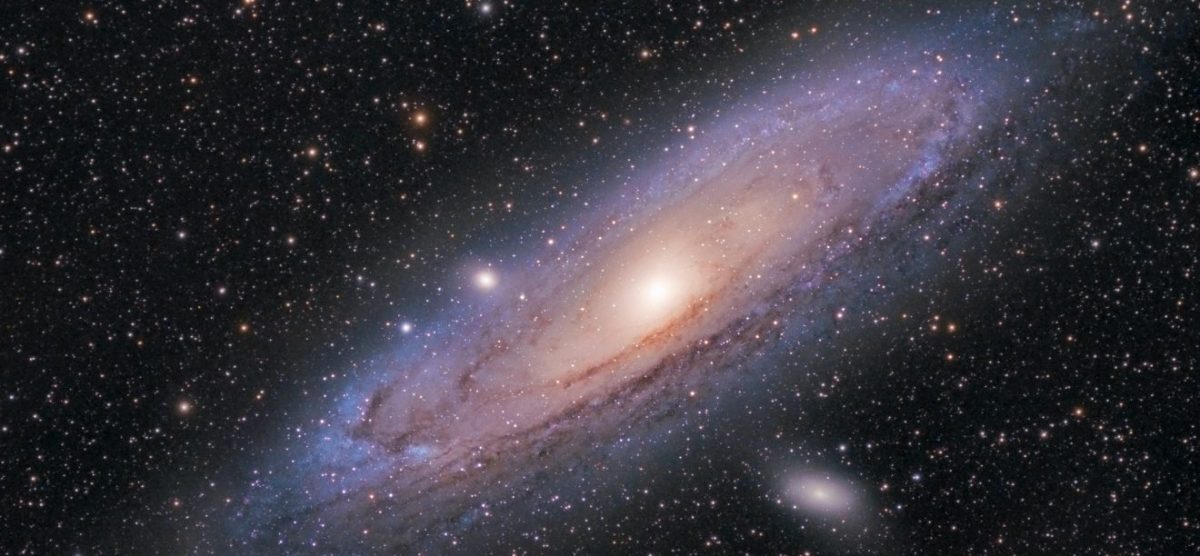
The Earth sits in a 1,000-light-year-wide void surrounded by thousands of young stars — but how did those stars form?

In a paper appearing Wednesday in Nature, astronomers at the Center for Astrophysics | Harvard & Smithsonian (CfA) and the Space Telescope Science Institute (STScI) reconstruct the evolutionary history of our galactic neighborhood, showing how a chain of events beginning 14 million years ago led to the creation of a vast bubble that’s responsible for the formation of all nearby, young stars.

“This is really an origin story; for the first time we can explain how all nearby star formation began,” says astronomer and data visualization expert Catherine Zucker who completed the work during a fellowship at the CfA.

The paper’s central figure, a 3...

Read More

Newly Discovered Type of ‘Strange Metal’ could lead to Deep Insights

A new discovery could help scientists to understand ‘strange metals,’ a class of materials that are related to high-temperature superconductors and share fundamental quantum attributes with black holes.

Scientists understand quite well how temperature affects electrical conductance in most everyday metals like copper or silver. But in recent years, researchers have turned their attention to a class of materials that do not seem to follow the traditional electrical rules. Understanding these so-called “strange metals” could provide fundamental insights into the quantum world, and potentially help scientists understand strange phenomena like high-temperature superconductivity.

Now, a research team co-led by a Brown University physicist has added a new discovery to the strange meta...

Read More