









Earth’s magnetic field creates a previously undetected pocket of protection from radiation on the moon
March 27, 2026,
 Astronomy/Space
From stillage to storage: Turning bourbon byproducts into supercapacitors
March 26, 2026,
Physics, Technology/Electronics

The state of Kentucky produces 95% of the world’s bourbon, and all that bourbon leaves behind an enormous amount of waste grain, called stillage. Now, researchers at the University of Kentucky have developed a process to transform that stillage into electrodes. With the bourbon byproduct electrodes, they created supercapacitors that could store more nergy than similarly sized commercial devices. The researchers will present their results at the spring meeting of the American Chemical Society (ACS Spring 2026), held in Atlanta from March 22 to 26.
Turning bourbon stillage into carbon
Jos...
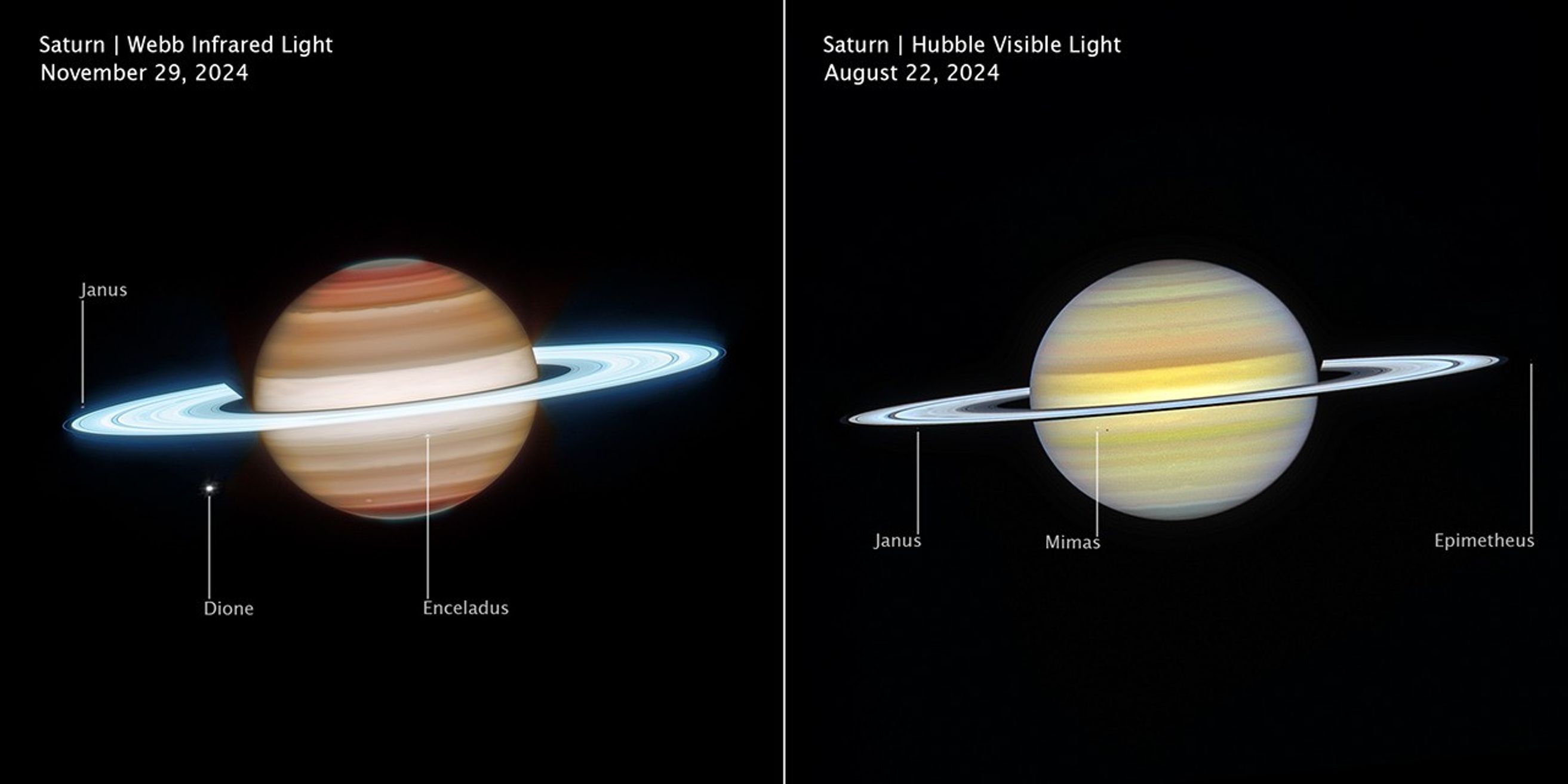
Image: NASA, ESA, CSA, STScI, Amy Simon (NASA-GSFC), Michael Wong (UC Berkeley); Image Processing: Joseph DePasquale (STScI)
NASA’s James Webb Space Telescope and Hubble Space Telescope have teamed up to capture new views of Saturn, revealing the planet in strikingly different ways. Observing in complementary wavelengths of light, the two space observatories provide scientists with a richer, more layered understanding of the gas giant’s atmosphere.
Both sense sunlight reflected from Saturn’s banded clouds and hazes, but where Hubble reveals subtle color variations across the planet, Webb’s infrared view se...
Read MoreBoron arsenide semiconductor sets record in quantum vibrations
March 25, 2026,
Physics, Technology/Electronics
You may not be able to hear it, but all solid materials make a sound. In fact, atoms—bound in lattices of chemical bonds—are never silent nor still: Under the placid surface of each and every object in our surroundings, a low hum hovers or a high-energy squeak titters.
As atoms vibrate in their lattices, they do so by either all moving in the same direction, in which case their collective vibration shows up as a low humming sound, or by moving in opposite directions from one another, giving rise to an energetic vibration that registers as a bright squeak or titter.
Why phonon vibrations matter
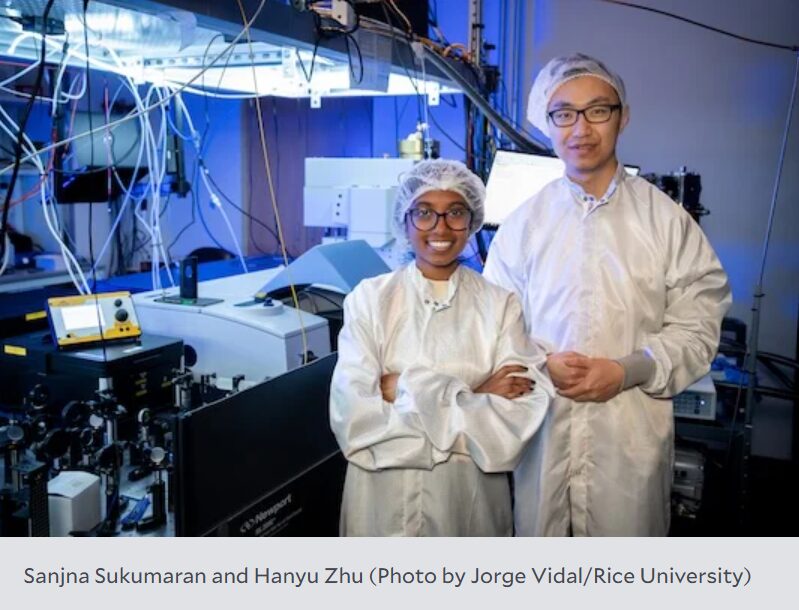
“These vibrations are crucial for both classical or quantum electronics,” said Hanyu Zhu, a corresponding author on a new study published in Physical Review Letters that reports an unus...

Recent Comments