Soft Semiconductors that Stretch Like Human Skin Can Detect UltraLow Light Levels

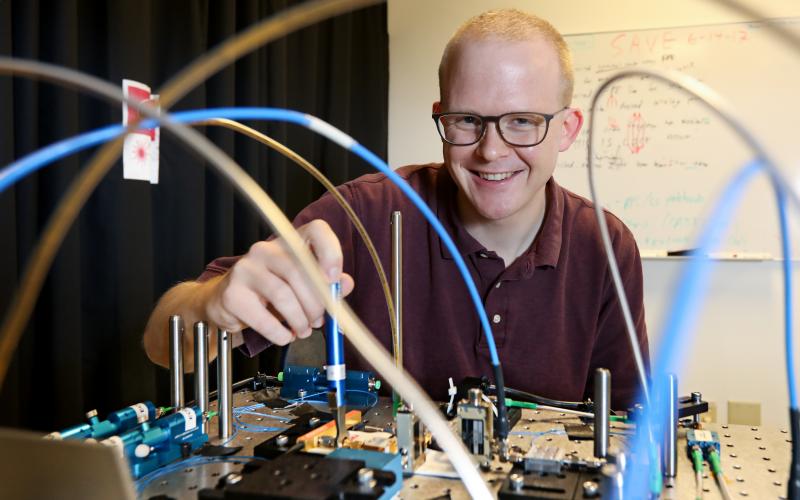
Three engineering labs at Georgia Tech collaborated to demonstrate a new level of stretchability of a photodetector. Pictured above is first author Youngrak Park (right) with the lab leads (L to R) Bernard Kippelen,  Samuel Graham, and Olivier Pierron. (Photo credit: Ben Wright, Georgia Tech)

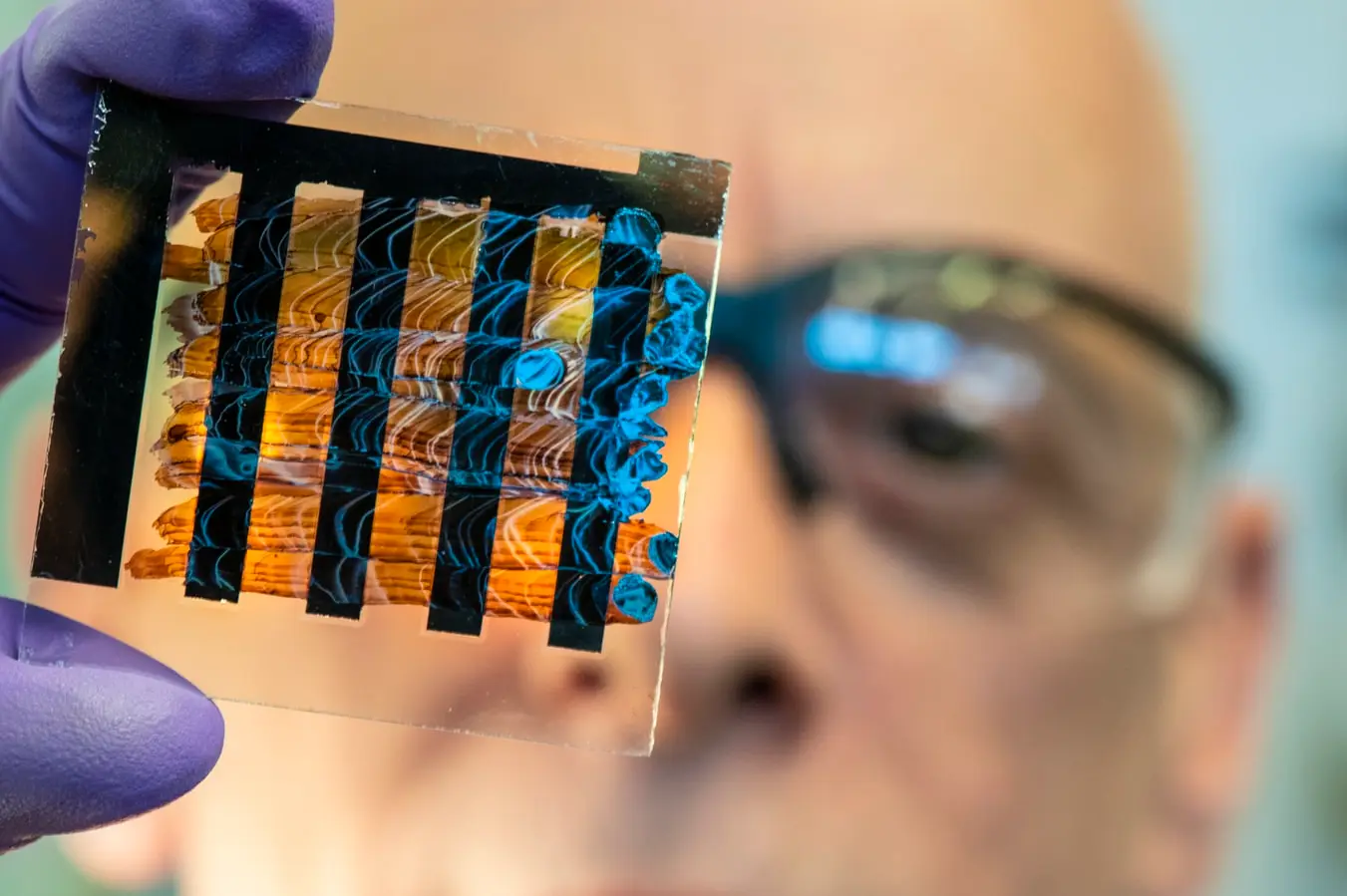
Flexible electronics breakthrough could enhance biosensor technology, from wearables to soft-robotic implantable systems. Semiconductors are moving away from rigid substrates, which are cut or formed into thin discs or wafers, to more flexible plastic material and even paper thanks to new material and fabrication discoveries. The trend toward more flexible substrates has led to fabrication of numerous devices, from light-emitting diodes to solar cells and transistors.

Georgia Tech researchers h...

Read More

Mystery behind Formation of Surface Ice-shapes on Pluto unraveled

A stellar embrace (artist’s impression). Sharing the same atmosphere (orange oval) a pair of stars start to interact with one another in dramatic fashion. ​​​​ â€‹Danielle Futselaar, artsource.nl

Scientists have unravelled a fascinating new insight into how the landscape of the dwarf-planet Pluto has formed. A team of international researchers, including Dr Adrien Morison from the University of Exeter, has shown how vast ice forms have been shaped in one of the planet’s largest craters, Sputnik Planita.

Perhaps the most striking feature on Pluto’s surface, Sputnik Planitia is an impact crater, consisting of a bright plain, slightly larger than France, and filled with nitrogen ice.

For the new study, researchers have used sophisticated modelling techniques to show that t...

Read More

Breakthrough Infections generate ‘Super Immunity’ to COVID-19, study suggests

Daniel Streblow, Ph.D., holds a plate of plasma samples that contain COVID-19 antibodies, to be evaluated in OHSUs in-house COVID-19 testing lab. Researchers have been studying antibody testing approaches. (OHSU/Kristyna Wentz-Graff)

Breakthrough infections greatly enhance immune response to variants of the virus that causes COVID-19, according to a newly published study from Oregon Health & Science University.

The laboratory results, published online ahead of print today in the Journal of the American Medical Association (JAMA), reveal that a breakthrough infection generates a robust immune response against the delta variant. Authors say the findings suggest the immune response is likely to be highly effective against other variants as the SARS-CoV-2 virus continues to mutate.

T...

Read More

New Smart-Roof Coating enables Year-Round Energy Savings

Samples of an all-season smart-roof coating designed to keep homes warm during the winter and cool during the summer – without consuming natural gas or electricity. The device looks like Scotch tape, and can be affixed to solid surfaces such as a rooftop. Research findings by scientists at the Department of Energy’s Lawrence Berkeley National Laboratory point to a groundbreaking technology that outperforms commercial cool-roof systems in energy savings. Credit: Junqiao Wu, Lawrence Berkeley National Laboratory

Scientists have developed an all-season smart-roof coating that keeps homes warm during the winter and cool during the summer—without consuming natural gas or electricity. Research findings reported in the Dec...

Read More