Analog Computers now just One Step from Digital

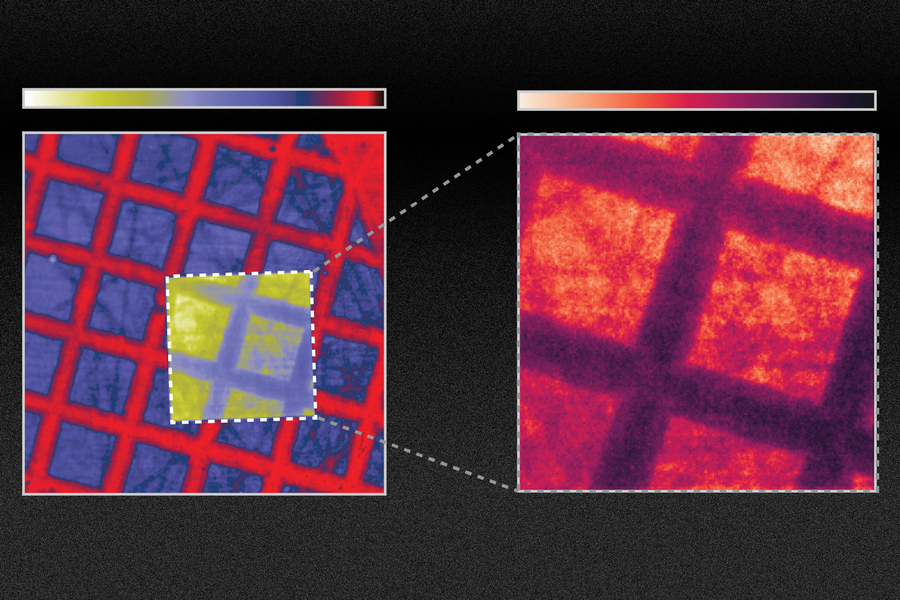
Researchers in the lab of Xuan “Silvia” Zhang at the McKelvey School of Engineering have designed a new kind of circuit, which brings the flexibility of neural networks to bear on an emerging technology: PIM computing. The circuit has the potential to increase PIM computing’s performance by orders of magnitude beyond its current theoretical capabilities. (Image: Shutterstock)

Engineers have reached a theoretical limit for efficiently converting analog data into digital bits in an emerging computer technology. The digital design of our everyday computers is good for reading email and gaming, but today’s problem-solving computers are working with vast amounts of data...

Read More

A Young, Sun-like Star may hold Warnings for Life on Earth

Artist’s depiction of the star EK Draconis ejecting a coronal mass ejection as two planets orbit. (Credit: National Astronomical Observatory of Japan)

Astronomers spying on a stellar system located dozens of lightyears from Earth have, for the first time, observed a troubling fireworks show: A star, named EK Draconis, ejected a massive burst of energy and charged particles much more powerful than anything scientists have seen in our own solar system.

The researchers, including astrophysicist Yuta Notsu of the University of Colorado Boulder, will publish their results Dec. 9 in the journal Nature Astronomy.

The study explores a stellar phenomenon called a “coronal mass ejection,” sometimes known as a solar storm...

Read More

New Findings about Cluster Headaches

An international survey found that 27.5% of participants experienced cluster headaches as children, but only 15.2% of participants with pediatric onset were diagnosed before the age of 18. (Photo by Getty Images)

Debilitating cluster headaches commonly begin in childhood, but patients are not typically diagnosed until they are adults, according to research from The University of Texas Health Science Center at Houston (UTHealth Houston).

A team of researchers led by Mark Burish, MD, PhD, assistant professor in the Vivian L. Smith Department of Neurosurgery with McGovern Medical School at UTHealth Houston, conducted the Cluster Headache Questionnaire, an international, internet-based survey of 1,604 participants with cluster headache...

Read More

These Tiny Liquid Robots Never Run Out of Juice as Long as they have Food

Artist’s rendering of autonomous, continuous “liquid robots” in an animated GIF. (Credit: Jenny Nuss/Berkeley Lab)

By removing electricity from equation, discovery overcomes yearslong hurdle in robotics. Scientists at Berkeley Lab and the University of Massachusetts Amherst have demonstrated the first self-powered, aqueous robot that runs continuously without electricity. The technology has potential as an automated chemical synthesis or drug delivery system for pharmaceuticals.

When you think of a robot, images of R2-D2 or C-3PO might come to mind. But robots can serve up more than just entertainment on the big screen. In a lab, for example, robotic systems can improve safety and efficiency by performing repetitive tasks and handling harsh chemicals.

But before a robot can...

Read More