Closest Pair of Supermassive Black Holes yet

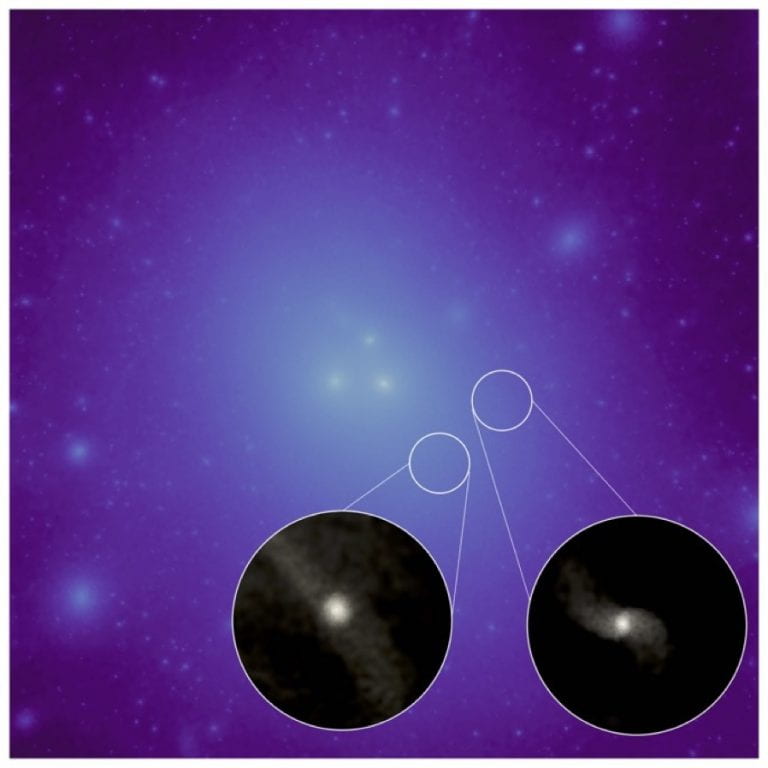
Using the European Southern Observatory’s Very Large Telescope (ESO’s VLT), astronomers have revealed the closest pair of supermassive black holes to Earth ever observed. The two objects also have a much smaller separation than any other previously spotted pair of supermassive black holes and will eventually merge into one giant black hole..

Using the European Southern Observatory’s Very Large Telescope (ESO’s VLT), astronomers have revealed the closest pair of supermassive black holes to Earth ever observed. The two objects also have a much smaller separation than any other previously spotted pair of supermassive black holes and will eventually merge into one giant black hole.

Voggel and her team were able to determine the masses of the two objects by looking at how the gravita...

Read More

Researchers propose a Simpler Design for Quantum Computers

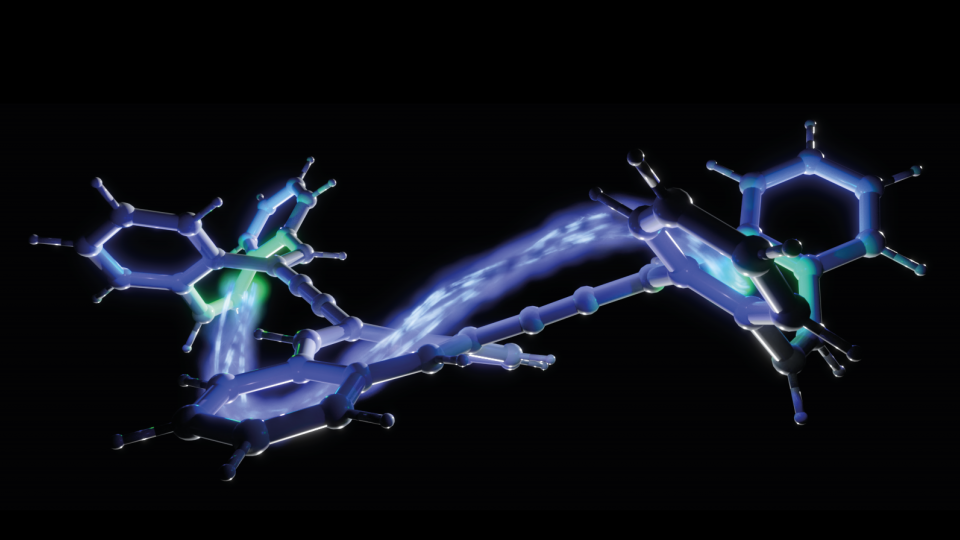
An animation of the photonic quantum computer proposed by the researchers. On the left is the storage ring, which holds several counter-propagating photons. On the right is the scattering unit, which is used to manipulate the photonic qubits. The spheres at the top, called “Bloch spheres,” depict the mathematical state of the atom and one of the photons. Because the atom and the photon are entangled, manipulating the atom also affects the state of the photon. (Image credit: Ben Bartlett)

Today’s quantum computers are complicated to build, difficult to scale up, and require temperatures colder than interstellar space to operate. These challenges have led researchers to explore the possibility of building quantum computers that work using photons—particles of light...

Read More

Team builds First Living Robots that can Reproduce

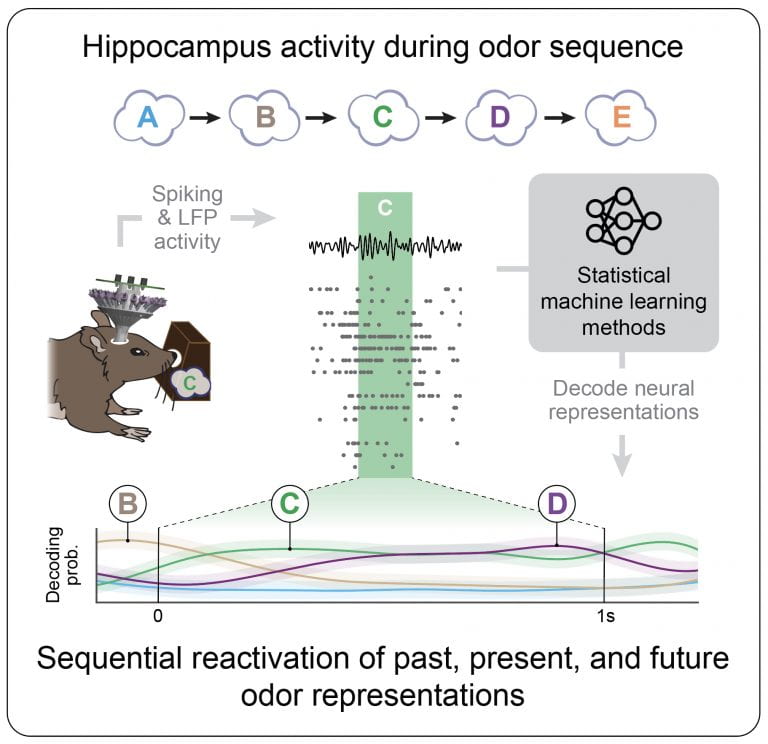
Spontaneous kinematic self-replication. (A) Stem cells are removed from early-stage frog blastula, dissociated, and placed in a saline solution, where they cohere into spheres containing ∼3,000 cells. The spheres develop cilia on their outer surfaces after 3 d. When the resulting mature swarm is placed amid ∼60,000 dissociated stem cells in a 60-mm-diameter circular dish (B), their collective motion pushes some cells together into piles (C and D), which, if sufficiently large (at least 50 cells), develop into ciliated offspring (E) themselves capable of swimming, and, if provided additional dissociated stem cells (F), build additional offspring. In short, progenitors (p) build offspring (o), which then become progenitors...
Read More

Study suggests Sun is likely an Unaccounted Source of the Earth’s Water

Graphic of the sun, solar winds and itokawa. Credit: Curtin University

Curtin University researchers have helped unravel the enduring mystery of the origins of the Earth’s water, finding the Sun to be a surprising likely source.

A University of Glasgow-led international team of researchers including those from Curtin’s Space Science and Technology Center (SSTC) found the solar wind, comprised of charged particles from the Sun largely made of hydrogen ions, created water on the surface of dust grains carried on asteroids that smashed into the Earth during the early days of the Solar System.

SSTC Director, John Curtin Distinguished Professor Phil Bland said the Earth was very water-rich compared to other rocky planets in the Solar System, with oceans covering more than 70 percent o...

Read More