New findings about Ions around Comets

Sofia Bergman’s thesis gives scientists unique possibilities to study low-energy ions in space. Credit: Institutet för rymdfysik

Sofia Bergman, Swedish Institute of Space Physics (IRF) and Umeå University, will defend her doctoral thesis on low-energy ions around comet 67P/Churyumov-Gerasimenko on 26 November. Observing low energy ions is notoriously difficult because their properties are affected greatly by the spacecraft which observes them. Sofia has developed new methods to do this. Using her work, scientists can study low-energy ions around comets and in a variety of other places in the solar system.

Comets have an environment of plasma which contains a large number of ions with low energies...

Read More

Morning Exposure to Deep Red Light Improves Declining Eyesight

Just three minutes of exposure to deep red light once a week, when delivered in the morning, can significantly improve declining eyesight, finds a pioneering new study by UCL researchers.

Published in Scientific Reports, the study builds on the team’s previous work*, which showed daily three-minute exposure to longwave deep red light ‘switched on’ energy producing mitochondria cells in the human retina, helping boost naturally declining vision.

For this latest study, scientists wanted to establish what effect a single three-minute exposure would have, while also using much lower energy levels than their previous studies...

Read More

Prize-Winning Technology for Large-Scale Energy Storage

Printed battery with two cells before encapsulation, designed in collaboration with the Ligna Energy company. Thor Balkhed

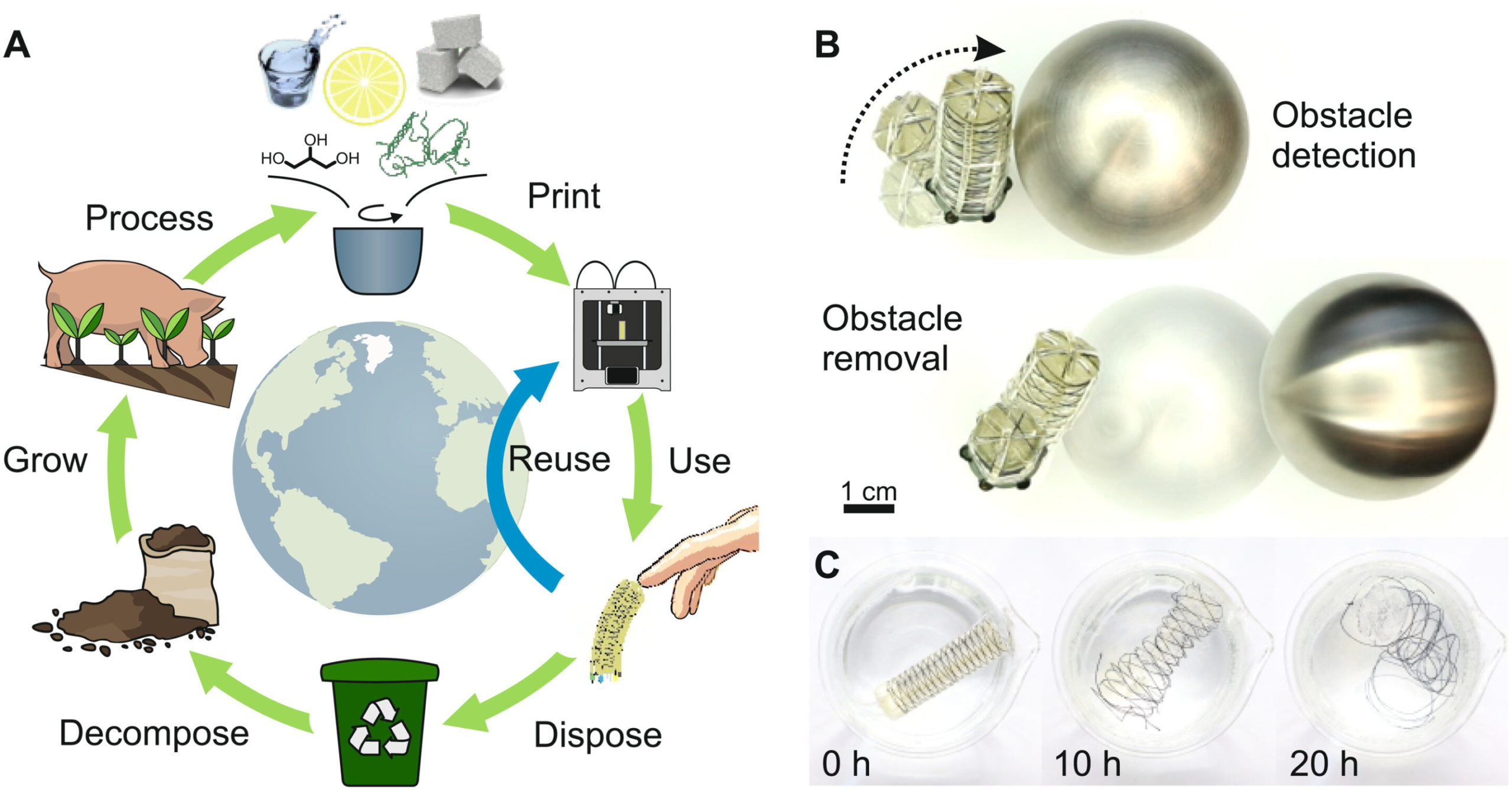
Water-In-Polymer Salt Electrolyte for Slow Self-discharge in Organic Batteries. Safe, cheap and sustainable technology for energy storage has been developed at the Laboratory of Organic Electronics, Linköping University. It is based on two major breakthroughs: the manufacture of wood-based electrodes in rolled form, and a new type of water-based electrolyte. The result has been published in the scientific journal Advanced Energy and Sustainability Research...

Read More

Hubble witnesses Shock Wave of Colliding Gases in Running Man Nebula

Hubble imaged a small section of the Running Man Nebula, which lies close to the famed Orion Nebula and is a favorite target for amateur astronomers to observe and photograph.
Credits: NASA, ESA, J. Bally (University of Colorado at Boulder), and DSS; Processing: Gladys Kober (NASA/Catholic University of America)

Mounded, luminous clouds of gas and dust glow in this Hubble image of a Herbig-Haro object known as HH45. Herbig-Haro objects are a rarely seen type of nebula that occurs when hot gas ejected by a newborn star collides with the gas and dust around it at hundreds of miles per second, creating bright shock waves. In this image, blue indicates ionized oxygen (O II) and purple shows ionized magnesium (Mg II)...

Read More