Where does Gold come from? New insights into Element Synthesis in the Universe

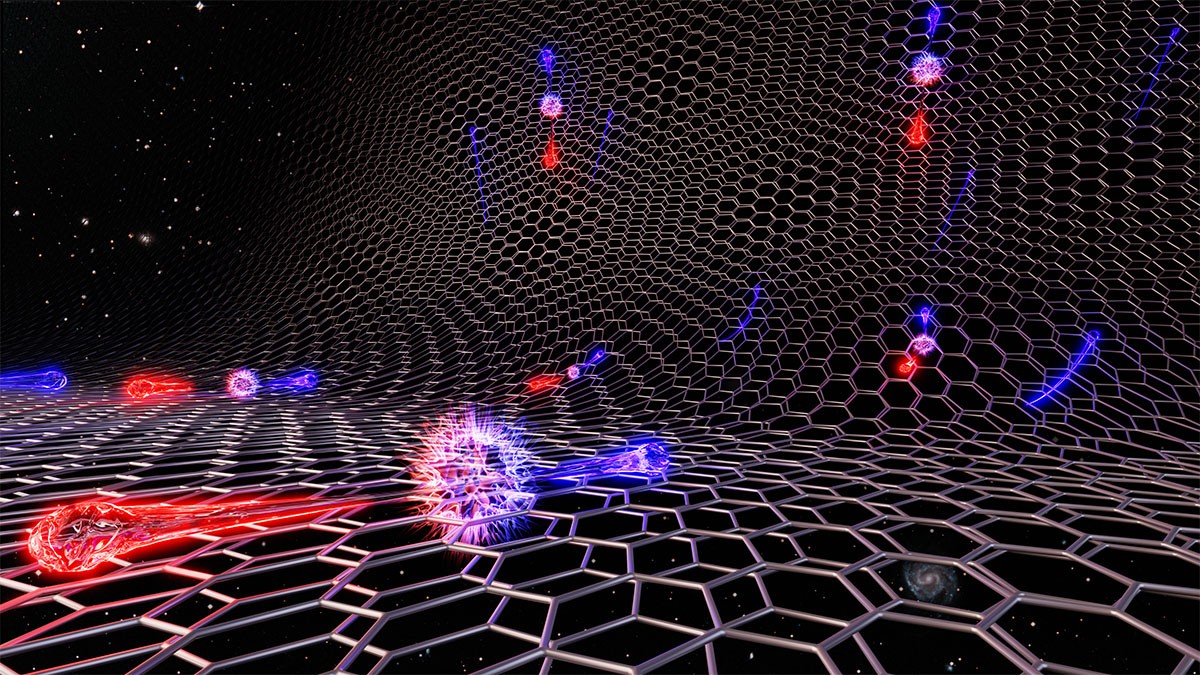
How are chemical elements produced in our Universe? Where do heavy elements like gold and uranium come from? Using computer simulations, a research team from the GSI Helmholtzzentrum für Schwerionenforschung in Darmstadt, together with colleagues from Belgium and Japan, shows that the synthesis of heavy elements is typical for certain black holes with orbiting matter accumulations, so-called accretion disks. The predicted abundance of the formed elements provides insight into which heavy elements need to be studied in future laboratories — such as the Facility for Antiproton and Ion Research (FAIR), which is currently under construction — to unravel the origin of heavy elements. The results are published in the journal Monthly Notices of the Royal Astronomical Society.

All heavy e...

Read More

Using T cells to Target Malignant Brain Tumors

© Adobe Stock

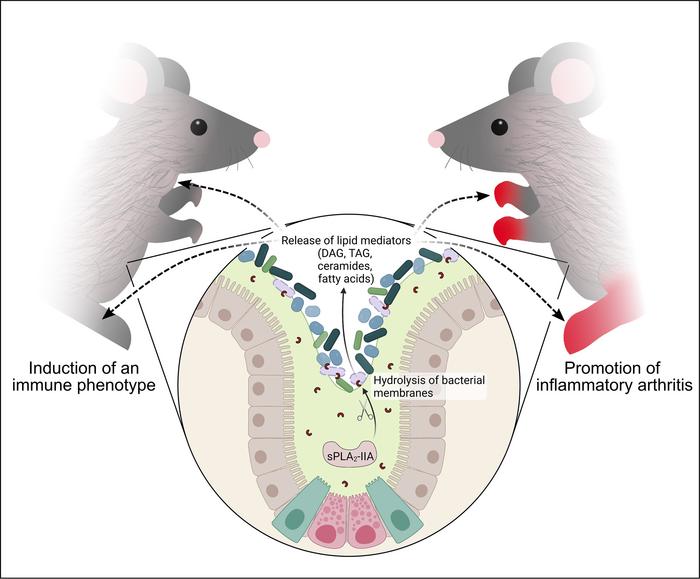
Doctors and scientists from the German Cancer Research Center (DKFZ) and from Heidelberg University’s Medical Faculty Mannheim have successfully tested a neoantigen-specific transgenic immune cell therapy for malignant brain tumors for the first time using an experimental model in mice.

Cellular immunotherapies that specifically target malignant tumors are thought to be a promising approach in cancer medicine. However, a basic requirement for this kind of targeted immunotherapy is to identify target molecules that are found exclusively on the tumor cells and are recognized by the immune system.

Malignant gliomas are incurable brain tumors that spread in the brain and cannot be completely removed by surgery...

Read More

This Light-Powered Catalyst Mimics Photosynthesis

catalysis graphic
By mimicking photosynthesis, MIT researchers have designed a new type of photocatalyst that can absorb light and use it to help catalyze a variety of chemical reactions that would otherwise be difficult to perform.
Credits:Image: Courtesy of the researchers

The new molecule can improve the yield of reactions for generating pharmaceuticals and other useful compounds. By mimicking photosynthesis, the light-driven process that plants use to produce sugars, MIT researchers have designed a new type of photocatalyst that can absorb light and use it to drive a variety of chemical reactions.

The new type of catalyst, known as a biohybrid photocatalyst, contains a light-harvesting protein that absorbs light and transfers the energy to a metal-containing catalyst...

Read More

Hubble Tension: Showing the Cracks in Gaussian Processes

Correlations between H(z=0) and H(zi) across a host of Matérn class kernels. The increase in the strength of correlations is directly reflected in the decreasing errors in Table 2 as Î½
ν is increased

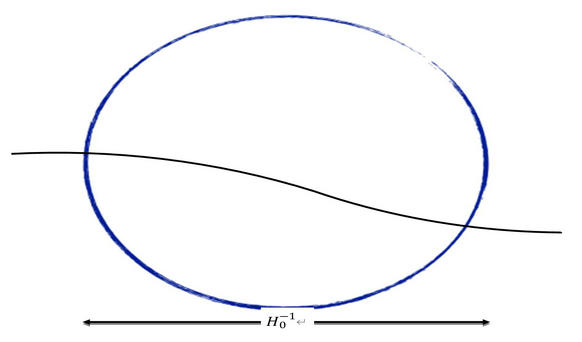
A new analysis of the Hubble constant to show that the Gaussian Processes data reconstruction technique may not actually be independent of all cosmological models — and that it may be time to question the validity of model independence itself.

The technique of Gaussian Processes (GP) is widely used to reconstruct cosmological parameters, most notably the expansion rate of the universe, using observational data. For many cosmologists, the crowning achievement of this approach is its ‘model independence’ — meaning it can be applied universally across all models...

Read More