AI behind Deepfakes may Power Materials Design Innovations

This image depicts a generative adversarial network creating new alloy compositions
The Generator network (G) uses statistical distributions learned from prior observations to imagine new materials with specific properties. Credit: Wesley Reinhart. All Rights Reserved.

The person staring back from the computer screen may not actually exist, thanks to artificial intelligence (AI) capable of generating convincing but ultimately fake images of human faces. Now this same technology may power the next wave of innovations in materials design, according to Penn State scientists.

“We hear a lot about deepfakes in the news today – AI that can generate realistic images of human faces that don’t correspond to real people,” said Wesley Reinhart, assistant professor of materials science and engineering and Institute for Computational and Data Sciences faculty co-hire, at Penn S...

Read More

Hubble Captures the Shredded Remains of a Cosmic Explosion

Image Credit: NASA, ESA, and Y. Chou (Academia Sinica, Institute of Astronomy and Astrophysics); Processing: Gladys Kober (NASA/Catholic University of America)

These cosmic ribbons of gas have been left behind by a titanic stellar explosion called a supernova. DEM L249 is thought to be the remnant of a Type 1a supernova, the death of a white dwarf star. White dwarf stars are usually stable, but in a binary system—two stars orbiting each other—a white dwarf can gravitationally pull so much matter from its companion that it reaches critical mass and explodes.

DEM L249, located in the Large Magellanic Cloud, is an unusual supernova remnant...

Read More

Blood Plasma Protein Fibrinogen Interacts Directly with Nerve Cells to Cause Brain Inflammation

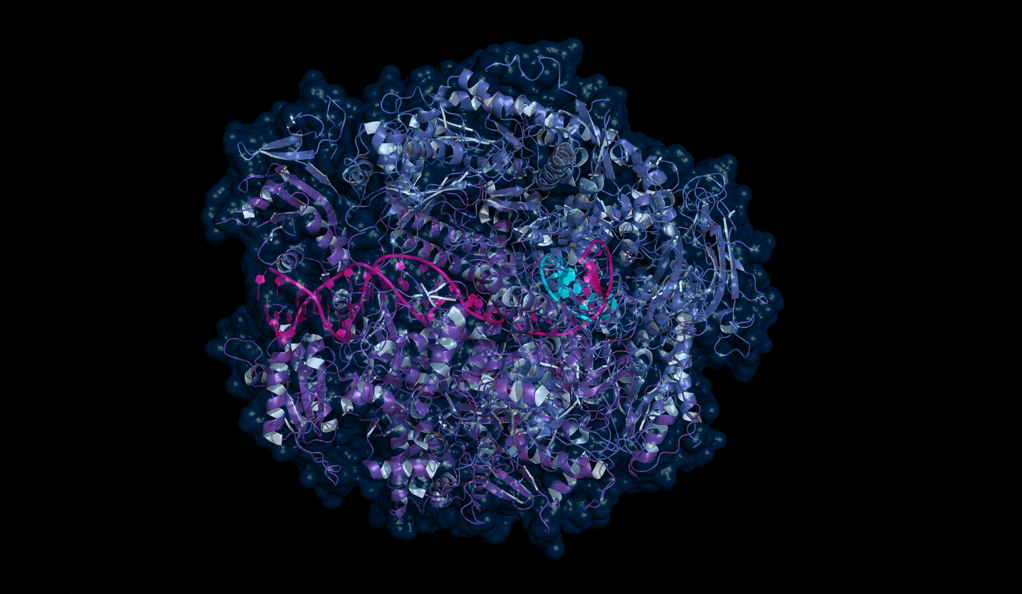
Interactions of blood plasma protein fibrinogen with its receptors, cellular prion protein (above) and intercellular adhesion molecule (below), on the surface of neurons are shown with red dots using a method called proximity ligation assay.  The presence of red dots indicates interaction of the target protein with its receptor. Neuronal nuclei are shown in blue.  — Microscopic images courtesy of Lominadze Laboratory, USF Health

Neuroinflammatory diseases, including Alzheimer’s disease and traumatic brain injury, have been linked to deposits of a tough protein known as fibrin, derived from the blood clotting factor fibrinogen. These mesh-like fibrin deposits occur outside blood vessels in the brain, contributing to the death of neurons that eventually leads to impaired memory.

Now...

Read More

Thinnest X-ray Detector ever created

Highly sensitive and with a rapid response time, the new X-ray detector is less than 10 nanometres thick and could one day lead to real-time imaging of cellular biology.

Scientists in Australia have used tin mono-sulfide (SnS) nanosheets to create the thinnest X-ray detector ever made, potentially enabling real-time imaging of cellular biology.

X-ray detectors are tools that allow energy transported by radiation to be recognised visually or electronically, like medical imaging or Geiger counters.

SnS has already shown great promise as a material for use in photovoltaics, field effect transistors and catalysis.

Now, members of the ARC Centre of Excellence in Exciton Science, based at Monash Universityand RMIT University, have shown that SnS nanosheets are also excellent can...

Read More