Gravitational ‘Kick’ may explain the Strange Shape at the Center of Andromeda

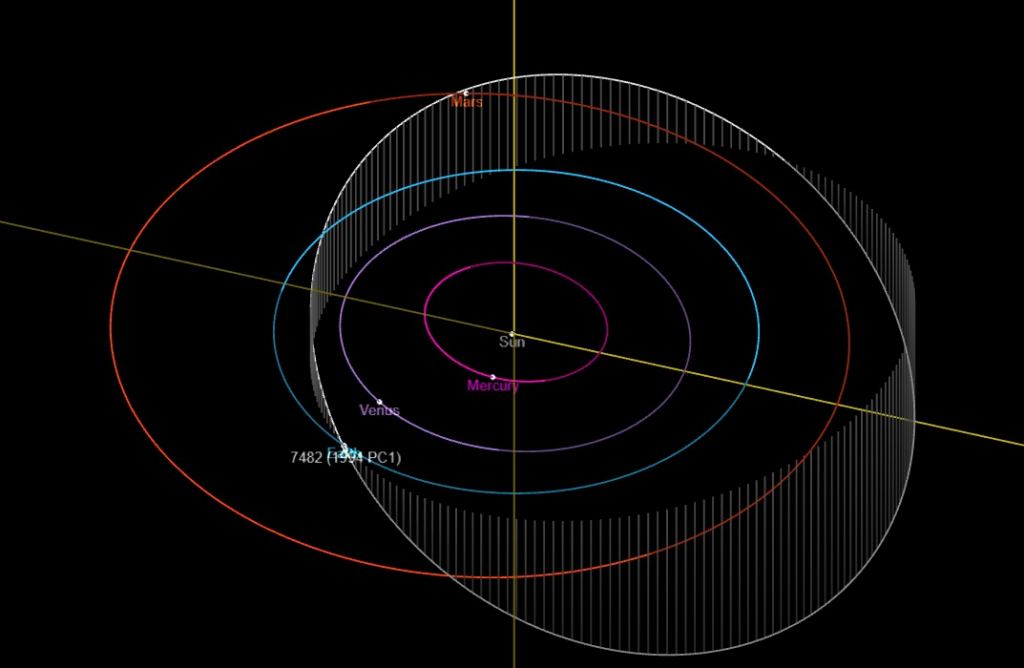
Click to enlarge: Graphic showing the orbit of stars around a supermassive black hole before, left, and after, right, a gravitational “kick.” (Credit: Steven Burrows/JILA)

When two galaxies collide, the supermassive black holes at their cores release a devastating gravitational “kick,” similar to the recoil from a shotgun. New research led by CU Boulder suggests that this kick may be so powerful it can knock millions of stars into wonky orbits.

The research, published Oct. 29 in The Astrophysical Journal Letters, helps solve a decades-old mystery surrounding a strangely-shaped cluster of stars at the heart of the Andromeda Galaxy. It might also help researchers better understand the process of how galaxies grow by feeding on each other.

“When scientists first looked at Andromeda,...

Read More

Combining two ‘Old Therapies’ packs a Powerful Punch against Pediatric Brain Tumors

On the left is a magnetic resonance image of a child’s medulloblastoma brain tumor, and on the right, a photomicrograph of medulloblastoma cells. The circle shows a Homer Wright rosette, a circular cluster of tumor cells characteristic of the disease. Johns Hopkins Medicine researchers have combined two old therapies — copper and disulfiram — to destroy this pediatric cancer. Credit: Graphic created by M.E. Newman, Johns Hopkins Medicine, using public domain images. MRI scan courtesy of the National Cancer Institute and photomicrograph courtesy of Jensflorian via Wikimedia Commons.

Copper has been clinically improving the lives of people since about 1500 BCE, when an Egyptian physician first recorded its use as a treatment for inflammation...

Read More

Thin-Film, High-Frequency Antenna Array offers new Flexibility for Wireless Communications

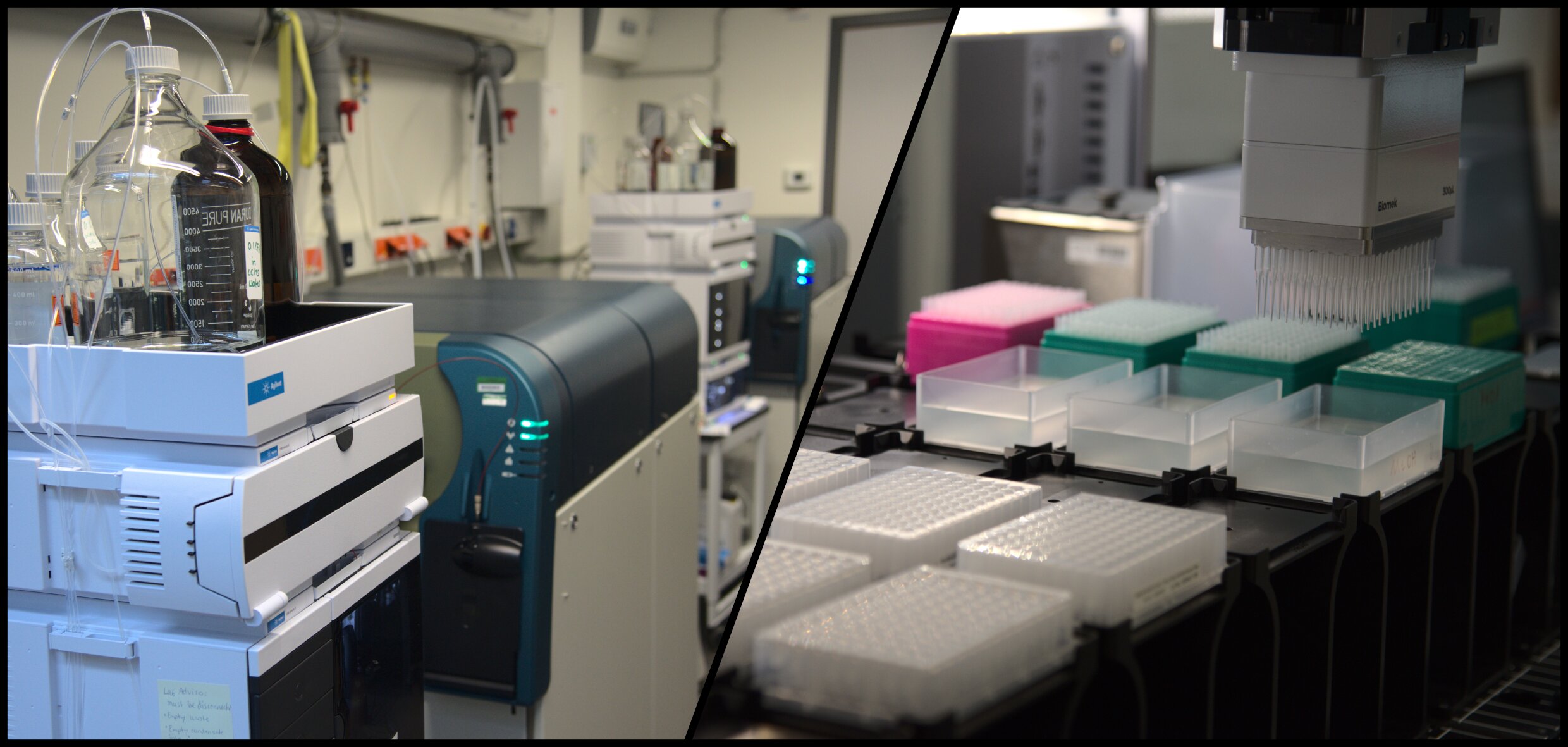
Princeton researchers have developed a new type of phased array antenna based on large-area electronics technology, which could enable many uses of emerging 5G and 6G wireless networks. The researchers tested the system on the roof of Princeton’s Andlinger Center for Energy and the Environment.
Can Wu

Princeton researchers have taken a step toward developing a type of antenna array that could coat an airplane’s wings, function as a skin patch transmitting signals to medical implants, or cover a room as wallpaper that communicates with internet of things (IoT) devices.

The technology, which could enable many uses of emerging 5G and 6G wireless networks, is based on large-area electronics, a way of fabricating electronic circuits on thin, flexible materials...

Read More

ALMA scientists detect signs of Water in a Galaxy far, far away

Credit: ALMA (ESO/NAOJ/NRAO)/S. Dagnello (NRAO)

New study marks most distant detection of required element for life as we know it in a regular star-forming galaxy. Water has been detected in the most massive galaxy in the early Universe, according to new observations from the Atacama Large Millimeter/submillimeter Array (ALMA). Scientists studying SPT0311-58 found H20, along with carbon monoxide in the galaxy, which is located nearly 12.88 billion light years from Earth. Detection of these two molecules in abundance suggests that the molecular Universe was going strong shortly after the elements were forged in early stars...

Read More