

How fast can a galaxy build ordered magnetic fields spanning thousands of light-years? Existing theories say several billion years, but observations of galaxies in our universe imply shorter timescales...
Read More


Until we recognize the essential role of biology, our attempts to truly unify the universe will remain a train to nowhere. ~Robert Lanza Read More

Good health is not something we can buy. However, it can be an extremely valuable savings account. ~Anne Wilson Schaef Read More

The only way forward, if we are going to improve the quality of the environment, is to get everybody involved. ~Richard Rogers Read More

To raise new questions, new possibilities, to regard old problems from a new angle, requires creative imagination and marks real advance in science. ~Albert Einstein Read More

Old Newtonian physics claimed that things have an objective reality separate from our perception of them. Quantum physics, and particularly Heisenberg's Uncertainty Principle, reveal that, as our perception of an object changes, the object itself literally changes. ~Marianne Williamson Read More

Astronomy compels the soul to look upwards and leads us from this world to another. ~ Read More
How fast can a galaxy build ordered magnetic fields spanning thousands of light-years? Existing theories say several billion years, but observations of galaxies in our universe imply shorter timescales...
Read More
March 19, 2026,
 Physics, Technology/Electronics

Edge computing is an emerging IT architecture that enables the processing of data locally by smartphones, autonomous vehicles, local servers, and other IoT devices instead of sending it to be processed at a centralized large data center. This approach could allow artificial intelligence (AI) models and other computational systems to perform tasks rapidly, while consuming less power.
Despite the potential of this approach, typically local devices have a limited battery capacity and restricted computing capabilities. This means they often need to send data to remote cloud servers via the internet to complete complex calculations...
Read More
March 19, 2026,
Physics, Astronomy/Space
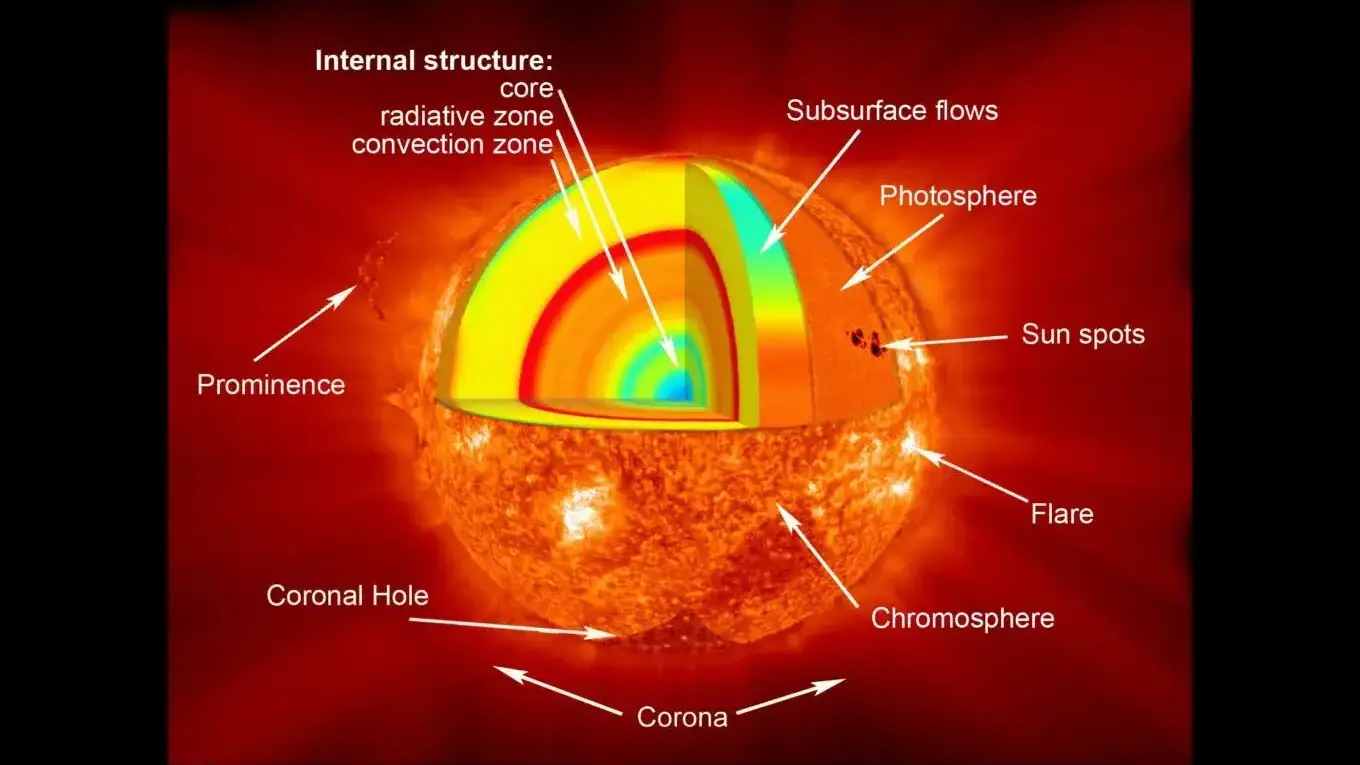
Every eleven years, the sun’s magnetic field flips. Sunspots—dark, cooler regions on the sun’s surface that mark intense magnetic activity and often trigger solar eruptions—appear at mid-latitudes and migrate toward the star’s equator in a butterfly-shape pattern before fading as the cycle resets. While this spectacle on the star’s surface has long been visible to astronomers, where this powerful cycle begins inside the star has remained hidden until now.
Researchers at the New Jersey Institute of Technology (NJIT) have analyzed nearly three dec...
Read More
March 19, 2026,
Astronomy/Space

All the essential ingredients to make the DNA and RNA underpinning life on Earth have been discovered in samples collected from the asteroid Ryugu, scientists said Monday.
The discovery comes after these building blocks of life were detected on another asteroid called Bennu, suggesting they are abundant throughout the solar system.
One longstanding theory is that life first began on Earth when asteroids carrying fundamental elements crashed into our planet long ago.
The asteroids that hurtle through our solar system give scientists a rare chance to study this possibility.
In 2014, the Japanese spacecraft Hayabusa-2 blasted off on a 300-million-kilometer (185-million-mile) mission to land on Ryugu, a 900-meter-wide (2,950-feet-wide) asteroid.
It successfully managed to c...
Read More
Recent Comments