






This new blood test could detect cancer before it shows up on scans

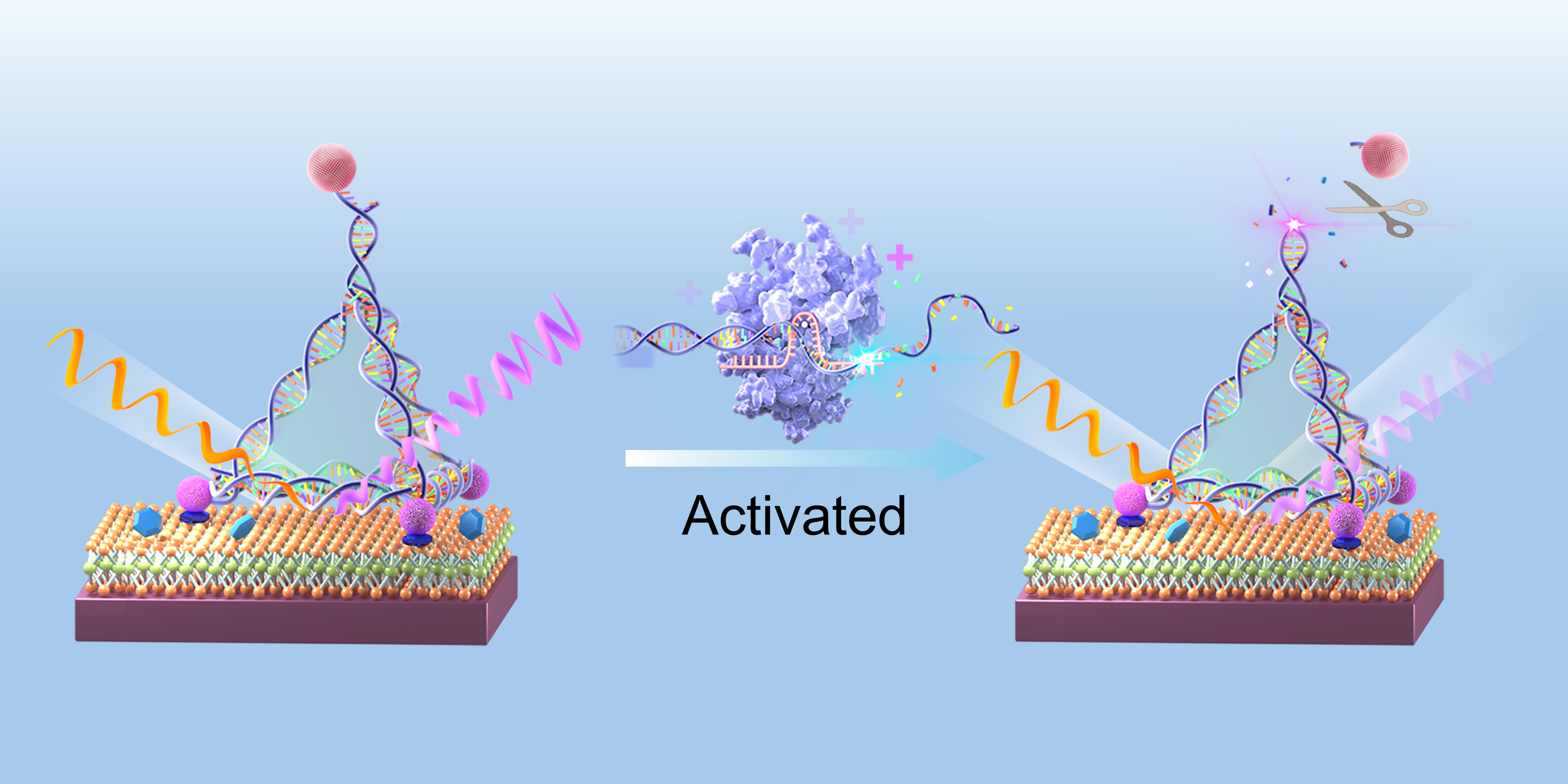
Caption: When the biomarker is detected, the Cas12a protein used for CRISPR cuts the DNA holding the quantum dots, which causes a measurable drop in SHG signal.
Credit: Han Zhang, Shenzhen University

A new CRISPR-powered light sensor can detect the faintest molecular signs of cancer in a drop of blood. A new light-based sensor can spot incredibly tiny amounts of cancer biomarkers in blood, raising the possibility of earlier and simpler cancer detection. The technology merges DNAnanotechnology, CRISPR, and quantumdots to generate a clear signal from just a few molecules. In lung cancer tests, it worked even in real patient serum samples. Researchers hope it could eventually power portable blood tests for cancer and other diseases.

Scientists have designed a powerful light based sensor...

Read More

Astronomers may have just found one of the missing links in galaxy evolution

An international team of astronomers led by UMass Amherst may have just found one of the missing links in galaxy evolution
Eighteen of the recently discovered dusty, star-forming galaxies (in red) formed almost 13 billion years ago. Credit: UMass Amherst

A team of 48 astronomers from 14 countries, led by the University of Massachusetts Amherst, has discovered a population of dusty, star-forming galaxies at the far edges of the universe that formed only a billion years after the Big Bang, believed to have occurred 13.7 billion years ago. The galaxies may represent a snapshot in the galactic life cycle, linking recently discovered ultradistant bright galaxies formed 13.3 billion years ago with early “quiescent” (dead) galaxies that stopped forming stars about two billion years after the Big Bang.

Challenging what we know about cosmos
The new discovery challenges current models of the universe, making the f...

Read More

How bacteria may promote breast cancer

How bacteria may promote breast cancer
SMOX is a key node for breast oncogenesis mediated by multiple pathogenic microbes and pharmacological inhibition of SMOX can serve as an intervention strategy for breast cancer patients harboring microbial dysbiosis. Credits: Drs. Deeptashree Nandi and Dipali Sharma

Researchers at the Johns Hopkins Kimmel Cancer Center have discovered how certain pathogenic bacteria in gut and breast tissue can promote breast cancer development and progression by hijacking a key metabolic enzyme known as spermine oxidase (SMOX). In a study led by Dipali Sharma, Ph.D...

Read More

Silicon quantum processor detects single-qubit errors while preserving entanglement

Demonstration of quantum error detection in a silicon quantum processor
The device used by the researchers. Credit: Zhang et al.

Quantum computers are alternative computing devices that process information, leveraging quantum mechanical effects, such as entanglement between different particles. Entanglement establishes a link between particles that allows them to share states in such a way that measuring one particle instantly affects the others, irrespective of the distance between them.

Quantum computers could, in principle, outperform classical computers in some optimization and computational tasks. However, they are also known to be highly sensitive to environmental disturbances (i.e., noise), which can cause quantum errors and adversely affect computations.

Researchers at the International Quantum Academy, Southern University of Science and Tech...

Read More
