

Drunken Solution to the Chaotic Three-Body problem

Credit: CC0 Public Domain

The three-body problem is one of the oldest problems in physics: It concerns the motions of systems of three bodies—like the sun, Earth, and the moon—and how their orbits change and evolve due to their mutual gravity. The three-body problem has been a focus of scientific inquiry ever since Newton.

When one massive object comes close to another, their relative motion follows a trajectory dictated by their mutual gravitational attraction, but as they move along and change their positions along their trajectories, the forces between them, which depend on their mutual positions, also change, which, in turn, affects their trajectory. For two bodies (e.g...

Read More

Disarming a Blood-Clotting Protein Prevents Gum Disease in mice

Compared to healthy volunteers (left), gum tissue from people with severe periodontal disease (right) shows high levels of fibrin (magenta). Lakmali Silva, NIDCR

Human and animal study offers insight into treating periodontal disease and other inflammatory disorders. Blocking function of a blood-clotting protein prevented bone loss from periodontal (gum) disease in mice, according to research led by scientists at the National Institute of Dental and Craniofacial Research (NIDCR), part of the National Institutes of Health. Drawing on animal and human data, the researchers found that buildup of the protein, called fibrin, triggers an overactive immune response that damages the gums and underlying bone...

Read More

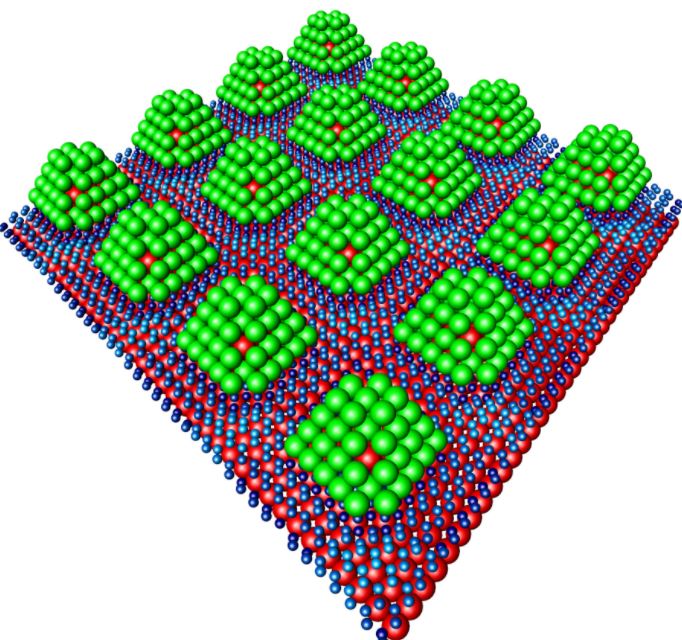
‘Nano-Chocolates’ that Store Hydrogen

The palladium nanoparticles (green) are stabilised by a core of iridium (red). Hydrogen can accumulate on their surface like a kind of chocolate glaze – and can be released again by heating. Credit: DESY, Andreas Stierle

Innovative ideas for the energy carrier of the future. An innovative approach could turn nanoparticles into simple reservoirs for storing hydrogen. The highly volatile gas is considered a promising energy carrier for the future, which could provide climate-friendly fuels for airplanes, ships and lorries, for example, as well as allowing climate-friendly steel and cement production — depending on how the hydrogen gas is generated...

Read More

Researchers Capture High-frequency Oscillations in the Gigantic Eruption of a Neutron Star

Credit: Pixabay/CC0 Public Domain

An international scientific group with outstanding Valencian participation has managed to measure for the first time oscillations in the brightness of a magnetar during its most violent moments. In just a 10th of a second, the magnetar released energy equivalent to that produced by the sun in 100,000 years. The observation was carried out without human intervention, thanks to an artificial intelligence system developed at the Image Processing Laboratory (IPL) of the University of Valencia.

Among neutron stars, objects that can contain a half-million times the mass of the Earth in a diameter of about 20 kilometers, are magnetars, a small group with the most intense magnetic fields known...

Read More