Largest Virtual Universe Free for Anyone to Explore

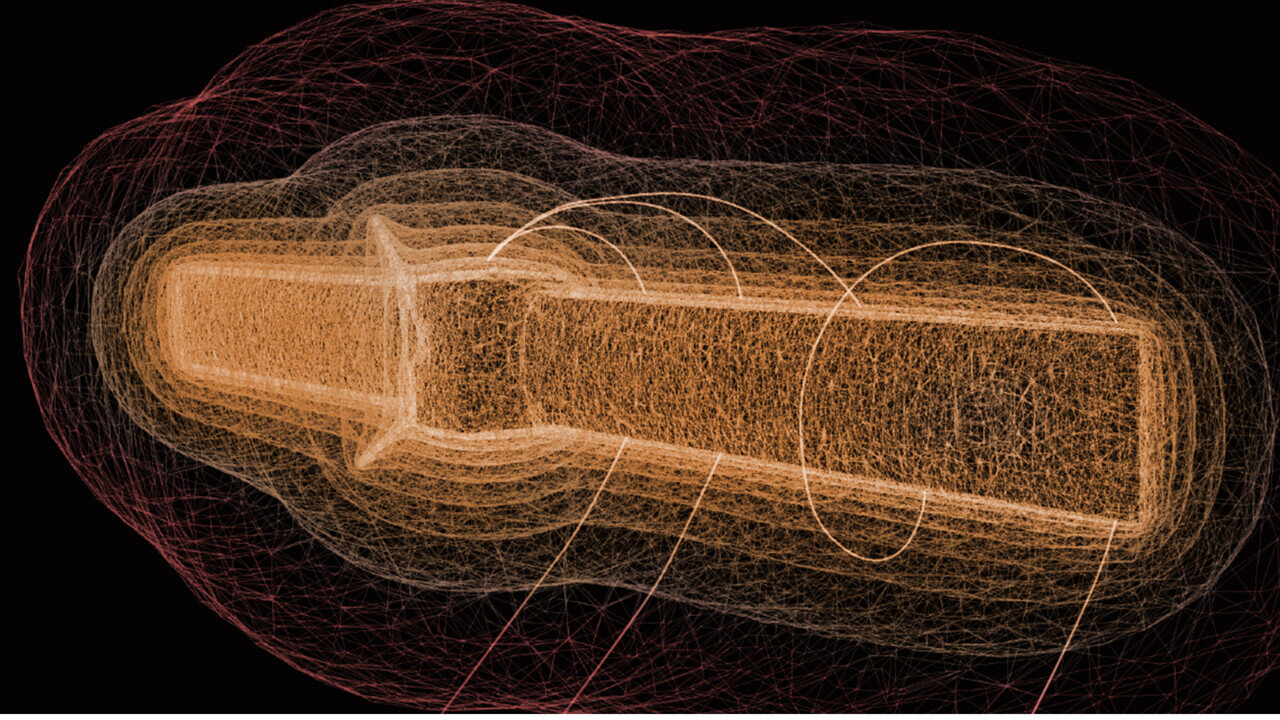
The distribution of dark matter in a snapshot from Uchuu. The images show the dark matter halo of the largest galaxy cluster formed in the simulation at different magnifications. (Credit: Tomoaki Ishiyama) 

An international team of researchers has generated an entire virtual UNIVERSE, and made it freely available on the cloud to everyone.

Uchuu (meaning “Outer Space” in Japanese) is the largest and most realistic simulation of the Universe to date. The Uchuu simulation consists of 2.1 trillion particles in a computational cube an unprecedented 9.63 billion light-years to a side. For comparison, that’s about three-quarters the distance between Earth and the most distant observed galaxies...

Read More

Researchers developing Smart Dental Implants that Resist Bacterial Growth, Generate their own Electricity

Researchers developing smart dental implants that resist bacterial growth, generate their own electricity
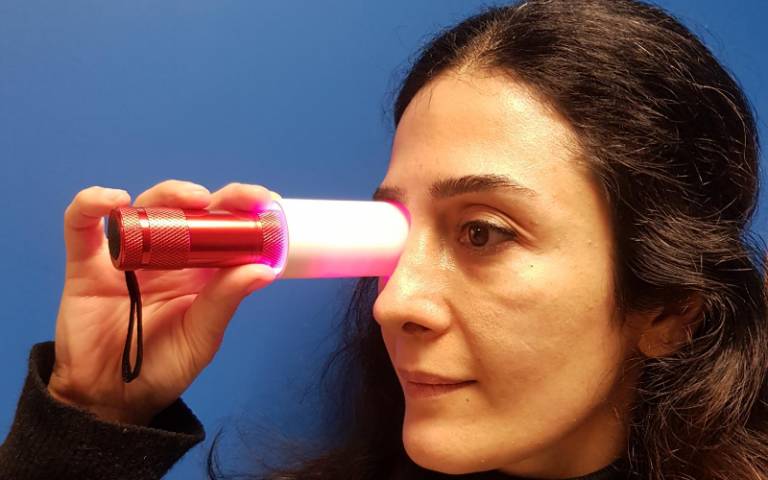
A “smart” dental implant could improve upon current devices by employing biofilm-resisting nanoparticles and a battery-powered light to promote health of the surrounding gum tissue. Credit: Geelsu Hwang

More than 3 million people in America have dental implants, used to replace a tooth lost to decay, gum disease, or injury. Implants represent a leap of progress over dentures or bridges, fitting much more securely and designed to last 20 years or more.

But often implants fall short of that expectation, instead needing replacement in five to 10 years due to local inflammation or gum disease, necessitating a repeat of a costly and invasive procedure for patients.

“We wanted to address this issue, and so we came up with an innovative new implant,” says Geelsu Hwang, an assistant ...

Read More

Stretching the Capacity of Flexible Energy Storage

Abstract Image

Some electronics can bend, twist and stretch in wearable displays, biomedical applications and soft robots. While these devices’ circuits have become increasingly pliable, the batteries and supercapacitors that power them are still rigid. Now, researchers in ACS’ Nano Letters report a flexible supercapacitor with electrodes made of wrinkled titanium carbide — a type of MXene nanomaterial — that maintained its ability to store and release electronic charges after repetitive stretching.

One major challenge stretchable electronics must overcome is the stiff and inflexible nature of their energy storage components, batteries and supercapacitors...

Read More

Groundbreaking Technique yields important new Details on Silicon, Subatomic Particles and possible ‘Fifth Force’

Groundbreaking technique yields important new details on silicon, subatomic particles and possible ‘fifth force’
As neutrons pass through a crystal, they create two different standing waves – one along atomic planes and one between them. The interaction of these waves affects the path of the neutron, revealing aspects of the crystal structure. Credit: NIST

Using a groundbreaking new technique at the National Institute of Standards and Technology (NIST), an international collaboration led by NIST researchers has revealed previously unrecognized properties of technologically crucial silicon crystals and uncovered new information about an important subatomic particle and a long-theorized fifth force of nature.

By aiming subatomic particles known as neutrons at silicon crystals and monitoring the outcome with exquisite sensitivity, the NIST scientists were able to obtain three extraordinary resu...

Read More