To raise new questions, new possibilities, to regard old problems from a new angle, requires creative imagination and marks real advance in science.
~Albert Einstein
Read More
Old Newtonian physics claimed that things have an objective reality separate from our perception of them. Quantum physics, and particularly Heisenberg's Uncertainty Principle, reveal that, as our perception of an object changes, the object itself literally changes.
~Marianne Williamson
Read More
Interactions of blood plasma protein fibrinogen with its receptors, cellular prion protein (above) and intercellular adhesion molecule (below), on the surface of neurons are shown with red dots using a method called proximity ligation assay. The presence of red dots indicates interaction of the target protein with its receptor. Neuronal nuclei are shown in blue. — Microscopic images courtesy of Lominadze Laboratory, USF Health
Neuroinflammatory diseases, including Alzheimer’s disease and traumatic brain injury, have been linked to deposits of a tough protein known as fibrin, derived from the blood clotting factor fibrinogen. These mesh-like fibrin deposits occur outside blood vessels in the brain, contributing to the death of neurons that eventually leads to impaired memory.
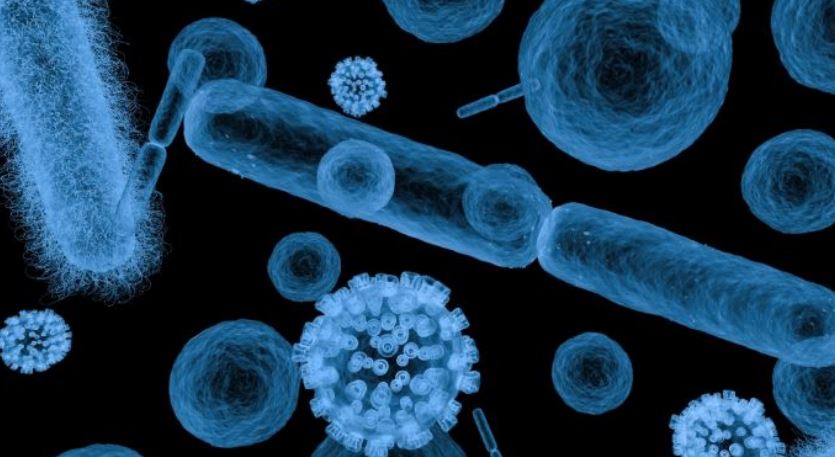
Highly sensitive and with a rapid response time, the new X-ray detector is less than 10 nanometres thick and could one day lead to real-time imaging of cellular biology.
Scientists in Australia have used tin mono-sulfide (SnS) nanosheets to create the thinnest X-ray detector ever made, potentially enabling real-time imaging of cellular biology.
X-ray detectors are tools that allow energy transported by radiation to be recognised visually or electronically, like medical imaging or Geiger counters.
SnS has already shown great promise as a material for use in photovoltaics, field effect transistors and catalysis.
Now, members of the ARC Centre of Excellence in Exciton Science, based at Monash Universityand RMIT University, have shown that SnS nanosheets are also excellent can...
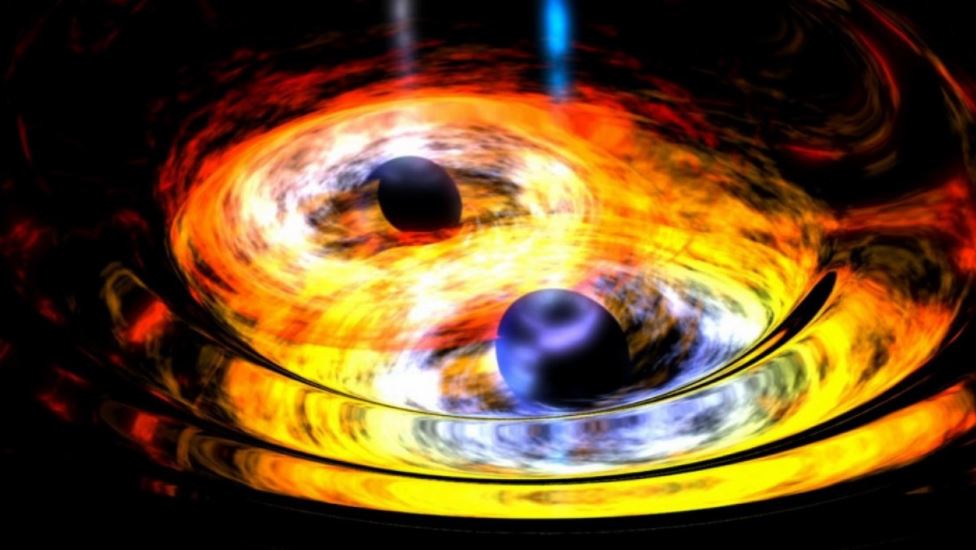
A team of international scientists, including researchers from The Australian National University (ANU), have unveiled the largest number of gravitational waves ever detected.
The discoveries will help solve some of the most complex mysteries of the Universe, including the building blocks of matter and the workings of space and time.
The global team’s study, published on ArXiv, made 35 new detections of gravitational waves caused by pairs of black holes merging or neutron stars and black holes smashing together, using the LIGO and Virgo observatories between November 2019 and March 2020.
This brings the total number of detections to 90 after three observing runs between 2015 and 2020.
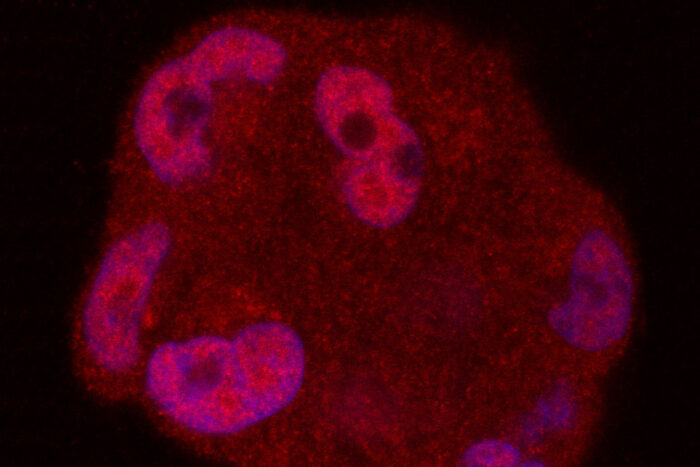
A study from Washington University School of Medicine in St. Louis has identified an RNA molecule that suppresses prostate tumors. According to the research — conducted in mice implanted with human prostate tumor samples — restoring this so-called long noncoding RNA could be a new strategy to treat prostate cancer that has developed resistance to hormonal therapies. Pictured are prostate cancer cells. The androgen receptor is shown in dark red. Cell nuclei are outlined in blue. MAHAJAN LAB
A new study has identified an RNA molecule that suppresses prostate tumors. The scientists found that prostate cancers develop ways to shut down this RNA molecule to allow themselves to grow...







Recent Comments