Lunar Samples Solve Mystery of the Moon’s Supposed Magnetic Shield

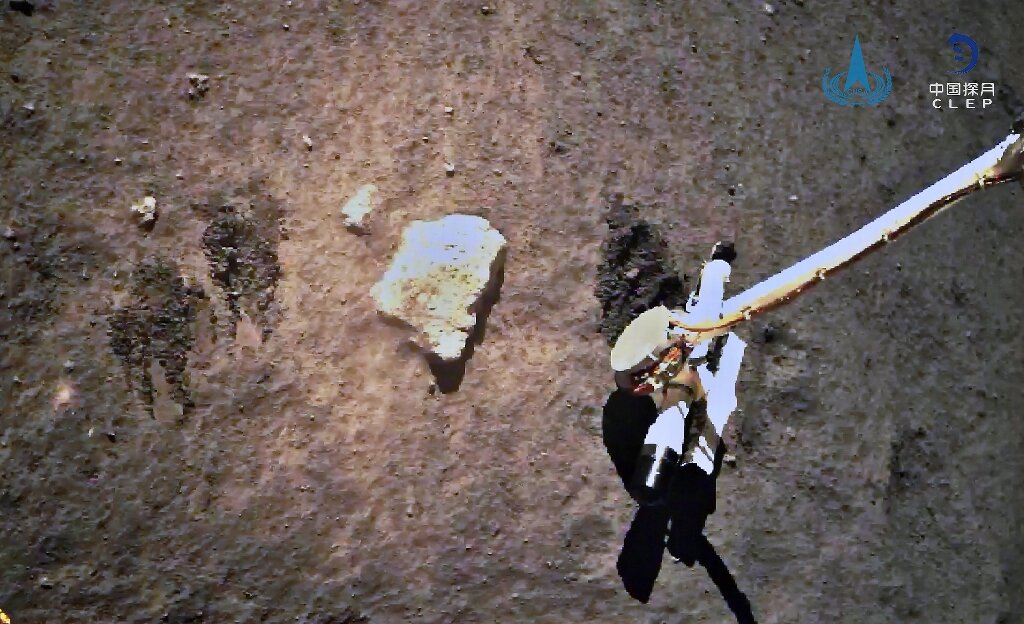
Three samples of lunar glass cast shadows on a white surface and dark background.
The lunar glass samples tested by Rochester scientists were gathered during NASA’s 1972 Apollo 16 mission. (University of Rochester photo / J. Adam Fenster)

Research may help inform a new wave of lunar experiments based on data that will be gathered by the Artemis mission. In 2024, a new age of space exploration will begin when NASA sends astronauts to the moon as part of their Artemis mission, a follow-up to the Apollo missions of the 1960s and 1970s.

Some of the biggest questions that scientists hope to explore include determining what resources are found in the moon’s soil and how those resources might be used to sustain life.

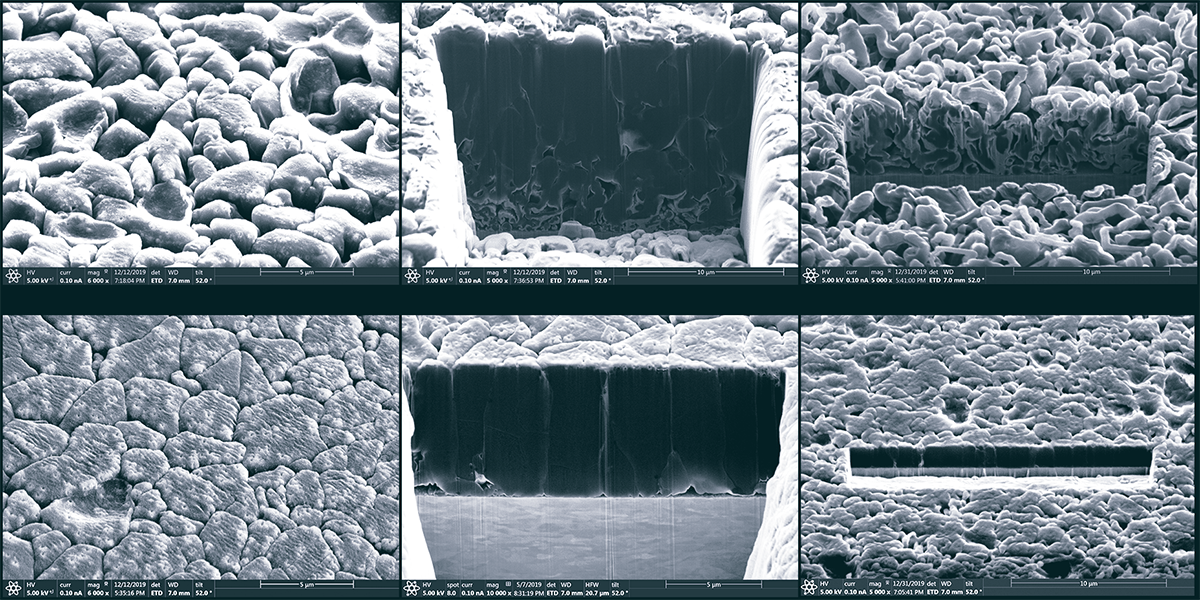
In a paper published in the journal Science Advances, researchers at the University of Rochester, leading a team of colleagues at seven other institut...

Read More

Brain-inspired highly scalable Neuromorphic Hardware

Single transistor neurons and synapses fabricated using a standard silicon CMOS process. They are co-integrated on the same 8-inch wafer

KAIST researchers fabricated a brain-inspired highly scalable neuromorphic hardware by co-integrating single transistor neurons and synapses. Using standard silicon complementary metal-oxide-semiconductor (CMOS) technology, the neuromorphic hardware is expected to reduce chip cost and simplify fabrication procedures.

The research team led by Yang-Kyu Choi and Sung-Yool Choi produced a neurons and synapses based on single transistor for highly scalable neuromorphic hardware and showed the ability to recognize text and face images. This research was featured in Science Advances on August 4.

Neuromorphic hardware has attracted a great deal of atten...

Read More

Frequent Consumption of Peanuts by Cancer Patients may increase risk of ancer Spread, study finds

A study by University of Liverpool researchers has identified new factors accompanying previous findings that frequent consumption of peanuts by cancer patients could increase risk of cancer spread.

The study, published in Carcinogenesis, shows that Peanut agglutinin (PNA) — a carbohydrate-binding protein that rapidly enters into the blood circulation after peanuts are eaten — interacts with blood vascular wall (endothelial) cells to produce cytokines.

The cytokines in question, IL-6 and MCP-1 are well-known promoters of cancer metastasis. The increased cytokine production causes other endothelial cells to express more cell surface adhesion molecules, making them more attractive to the circulating tumour cells and thus potentially promoting metastasis.

In an earlier study, Co...

Read More

Nearby Star resembles ours in its youth

An artist concept of a coronal mass ejection hitting young Earth’s weak magnetosphere.
Credits: NASA/GSFC/CIL

New research led by NASA provides a closer look at a nearby star thought to resemble our young Sun. The work allows scientists to better understand what our Sun may have been like when it was young, and how it may have shaped the atmosphere of our planet and the development of life on Earth.

Many people dream of meeting with a younger version of themselves to exchange advice, identify the origins of their defining traits, and share hopes for the future. At 4.65 billion years old, our Sun is a middle-aged star. Scientists are often curious to learn exactly what properties enabled our Sun, in its younger years, to support life on nearby Earth.

Without a time machine to trans...

Read More