Habitable planet potential increases in the outer galaxy

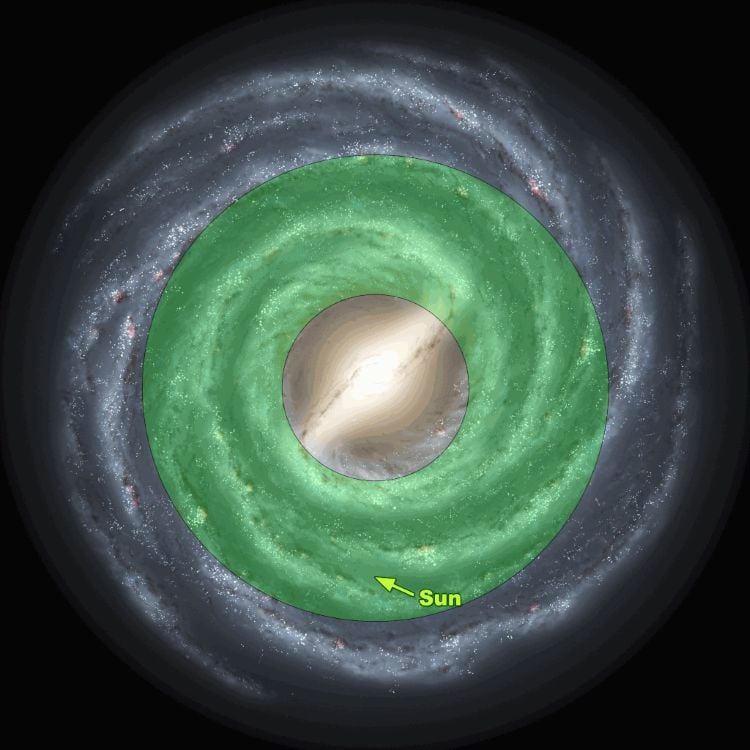
Longstanding model of the Galactic habitable Zone, which is estimated to exist between 7-9 kiloparsecs from the center of the galaxy. However, recent research calls this into question. (Credit: NASA/Caltech)

What can the galactic habitable zone (GHZ), galactic regions where complex life is hypothesized to be able to evolve, teach scientists about finding the correct stars that could have habitable planets?

This is what a recent study accepted for publication in Astronomy & Astrophysics hopes to address as an international team of researchers investigated a connection between the migration of stars, commonly called stellar migration, and what this could mean for finding habitable planets within our galaxy...

Read More
Researchers discover new microprotein that controls metabolic health in mouse fat cells

Mouse fat cells filled with lipid droplets (green).
Click here for a high-resolution image.
Credit: Salk Institute

Like bees breathing life into gardens, providing pollen and making flowers blossom, little cellular machines called mitochondria breathe life into our bodies, buzzing with energy as they produce the fuel that powers each of our cells. Maintaining mitochondrial metabolism requires input from many molecules and proteins—some of which have yet to be discovered.

Salk Institute researchers are taking a closer look at whether mitochondria rely on microproteins—small proteins that have been difficult to find and, consequently, underestimated for their role in health and disease...

Read More

Unusual COâ‚‚-rich disk detected around young star challenges planet formation models

Unusual carbon dioxide-rich disk detected around young star challenges planet formation models
An image of the star-forming region NGC 6357 with the young star XUE 10. Observations with JWST/MIRI reveal a planet-forming disk whose spectrum shows clear detections of four distinct forms of carbon dioxide (CO2), but only little water, providing new insights into the chemical environment where planets are taking shape. Credit: Stockholm University (SU) and María Claudia Ramírez-Tannus, Max Planck Institute for Astronomy (MPIA).

A study led by Jenny Frediani at Stockholm University has revealed a planet-forming disk with a strikingly unusual chemical composition: an unexpectedly high abundance of carbon dioxide (CO2) in regions where Earth-like planets may one day form.

The discovery, made using the James Webb Space Telescope (JWST), challenges long-standing assumptions about th...

Read More

Clinical trial shows constipation drug can treat patients with chronic kidney disease

World's first clinical trial showing lubiprostone aids kidney function
Administering lubiprostone alters gut microbiota, leading to improved mitochondrial function and suppression of inflammation. This improved renal function by increasing the levels of aguA and polyamines. Credit: Shun Watanabe

Chronic kidney disease (CKD) is a major health issue worldwide. Many patients end up requiring regular dialysis to avoid kidney failure and stay alive. Despite the severity of the condition, there are currently no drugs available that improve kidney function.

A research group led by Tohoku University Graduate School of Medicine’s Professor Takaaki Abe has found a remarkable solution to treat patients with CKD by co-opting a drug typically used for constipation...

Read More