To raise new questions, new possibilities, to regard old problems from a new angle, requires creative imagination and marks real advance in science.
~Albert Einstein
Read More
Old Newtonian physics claimed that things have an objective reality separate from our perception of them. Quantum physics, and particularly Heisenberg's Uncertainty Principle, reveal that, as our perception of an object changes, the object itself literally changes.
~Marianne Williamson
Read More
Above is a all sky view in galactic coordinates. The number of stars is higher in brighter regions. Most of the image, where the Milky Way plane is visible (b = 0 degrees), is produced using Gaia eDR3 data. The small patch in the top-centre shows a region where deeper DESI Legacy Imaging Survey (DECaLS) data is available, which allows for Palomar 5 and its tidal tails to be seen. Image: M. Gieles et al./Gaia eDR3/DESI DECaLS
Palomar 5 is a unique star cluster. This is firstly because it is one of the “fluffiest” clusters in the halo of our Galaxy, with the average distance between the stars being a few light-years, comparable to the distance from the Sun to the nearest star. Secondly, it has a specular stellar stream associated with it that spans more than 20 degrees across the sky...
The theory that modern society is too clean, leading to defective immune systems in children, should be swept under the rug, according to a new study by researchers at UCL and the London School of Hygiene & Tropical Medicine.
In medicine, the ‘hygiene hypothesis’ states that early childhood exposure to particular microorganisms protects against allergic diseases by contributing to the development of the immune system.
However, there is a pervading view (public narrative) that Western 21st century society is too hygienic, which means toddlers and children are likely to be less exposed to germs in early life and so become less resistant to allergies.
In this paper, published in the Journal of Allergy and Clinical Immunology, researchers point to four significant reasons which, ...
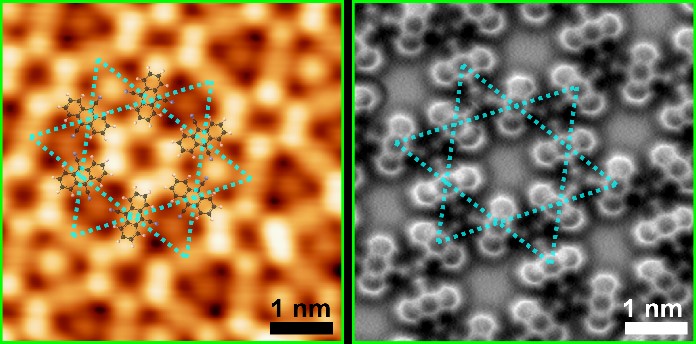
1D Coulomb drag in topological circuits. Credit: Du et al.
Two important factors limiting Moore’s Law are power consumption and Coulomb interactions. Coulomb interactions are interactions between electric charges that follow Coloumb’s law, an electrodynamics theory. These interactions can be a major challenge for the development of nanoelectronic circuits.
QSH insulators are particularly promising materials for the development of low-power electronics, yet so far the impact of Coulomb interactions on nanocircuits made by these materials have only been examined theoretically, rather than experimentally.
Researchers at Nanjing University and Peking University have recently observed one-dimensional (1D) Coulomb drag between adjacent QSH edges separated by an air gap...
A new study disputes the prevailing hypothesis on why Mercury has a big core relative to its mantle (the layer between a planet’s core and crust). For decades, scientists argued that hit-and-run collisions with other bodies during the formation of our solar system blew away much of Mercury’s rocky mantle and left the big, dense, metal core inside. But new research reveals that collisions are not to blame—the sun’s magnetism is.
William McDonough, a professor of geology at the University of Maryland, and Takashi Yoshizaki from Tohoku University developed a model showing that the density, mass and iron content of a rocky planet’s core are influenced by its distance from the sun’s magnetic field...
Recent Comments