High Caffeine Consumption may be associated with Increased Risk of Blinding Eye Disease

Consuming large amounts of daily caffeine may increase the risk of glaucoma more than 3X for those with a genetic predisposition to higher eye pressure according to an international, multi-center study. The research led by the Icahn School of Medicine at Mount Sinai is the first to demonstrate a dietary — genetic interaction in glaucoma. The study results published in the June print issue of Ophthalmology may suggest patients with a strong family history of glaucoma should cut down on caffeine intake.

The study is important because glaucoma is the leading cause of blindness in the United States. It looks at the impact of caffeine intake on glaucoma, and intraocular pressure (IOP) which is pressure inside the eye...

Read More

Novel Materials: Sound Waves Traveling Backwards

Designed elastic metamaterial structure made of a single linear elastic material. (Illustration: Dr. Yi Chen, KIT)

Acoustic waves in gases, liquids, and solids usually travel at an almost constant speed of sound. So-called rotons are an exception: their speed of sound changes significantly with the wavelength, and it is also possible that the waves travel backwards. Researchers at Karlsruhe Institute of Technology (KIT) are studying the possibilities of using rotons in artificial materials. These computer-designed metamaterials, produced by ultra-precise 3D laserprinting, might be used in the future to manipulate or direct sound in ways that have never been possible before. A report on the researchers’ work has been published in Nature Communications.

Rotons are quasiparticles, whic...

Read More

Citizen scientists discover 2 Gaseous Planets around a Bright, Sun-like Star

In this artist’s rendering, two gaseous planets orbit the bright star HD 152843. These planets were discovered through the citizen science project Planet Hunters TESS, in collaboration with professional scientists.
Credits: NASA/Scott Wiessinger

At night, seven-year-old Miguel likes talking to his father Cesar Rubio about planets and stars. “I try to nurture that,” says Rubio, a machinist in Pomona, California, who makes parts for mining and power generation equipment.

Now, the boy’s father can claim he helped discover planets, too. He is one of thousands of volunteers participating in Planet Hunters TESS, a NASA-funded citizen science project that looks for evidence of planets beyond our solar system, or exoplanets...

Read More

‘Bad Fat’ Suppresses Killer T cells from Attacking Cancer

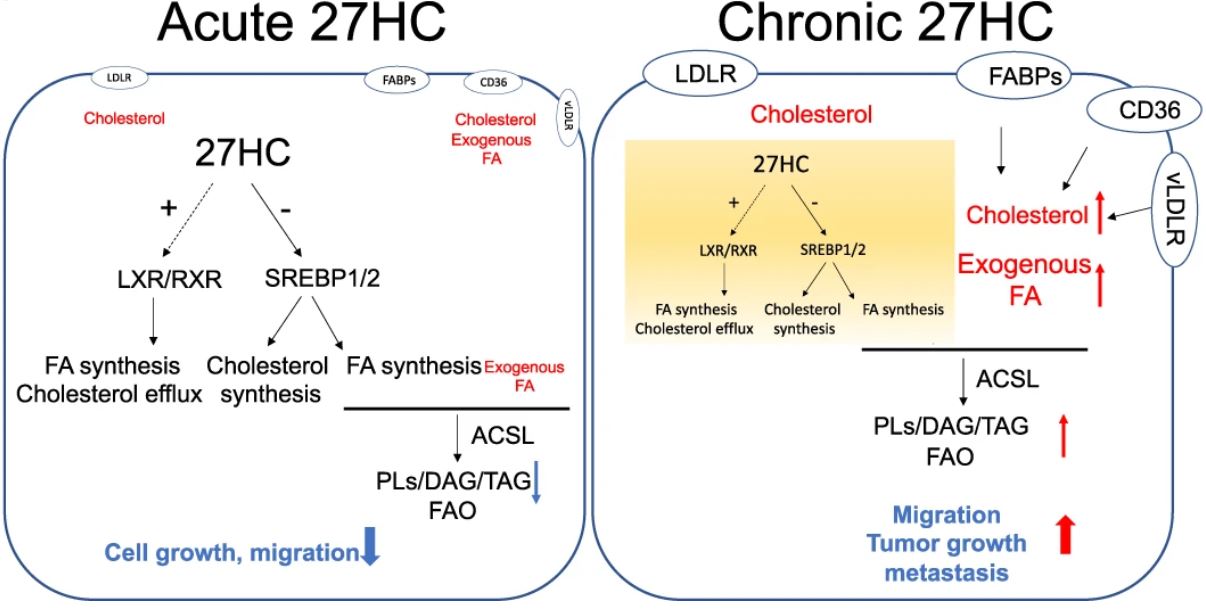
In order for cancer to grow and spread, it has to evade detection by our immune cells, particularly specialized “killer” T cells. Salk researchers led by Professor Susan Kaech have found that the environment inside tumors (the tumor microenvironment) contains an abundance of oxidized fat molecules, which, when ingested by the killer T cells, suppresses their ability to kill cancer cells. In a vicious cycle, those T cells, in need of energy, increase the level of a cellular fat transporter, CD36, that unfortunately saturates them with even more oxidized fat and further curtails their anti-tumor functions.

The discovery, published online in Immunity on June 7, 2021, suggests new pathways for safeguarding the immune system’s ability to fight cancer by reducing the oxidative lipid dama...

Read More