Rare 4,000-year Comets can cause Meteor Showers on Earth

The meteoroid stream of long-period comet Thatcher from CAMS data. Outer blue ellipse is the orbit of Neptune. Photo: P. Jenniskens / SETI Institute

Researchers report that they can detect showers from the debris in the path of comets that pass close to Earth orbit and return as infrequently as once every 4,000 years.

Comets that circle the Sun in very elongated orbits spread their debris so thin along their orbit or eject it out of the solar system altogether that their meteor showers are hard to detect. From a new meteor shower survey published in the journal Icarus, researchers now report that they can detect showers from the debris in the path of comets that pass close to Earth orbit and are known to return as infrequent as once every 4,000 years.

“This creates a situational ...

Read More

Novel Approach Identifies Genes linked to Autism and Predicts Patient IQ

gene
Credit: CC0 Public Domain

According to some estimates, hundreds of genes may be associated with autism spectrum disorders (ASD), but it has been difficult to determine which mutations are truly involved in the disease and which are incidental. New work published in the journal Science Translational Medicine led by researchers at Baylor College of Medicine shows that a novel computational approach can effectively identify genes most likely linked to the condition, as well as predict the severity of intellectual disability in patients with ASD using only rare mutations in genes beyond those already associated with the syndrome.

Knowing which genes contribute to ASD, researchers can then study them to better understand how the condition happens and use them to improve predicting the ri...

Read More

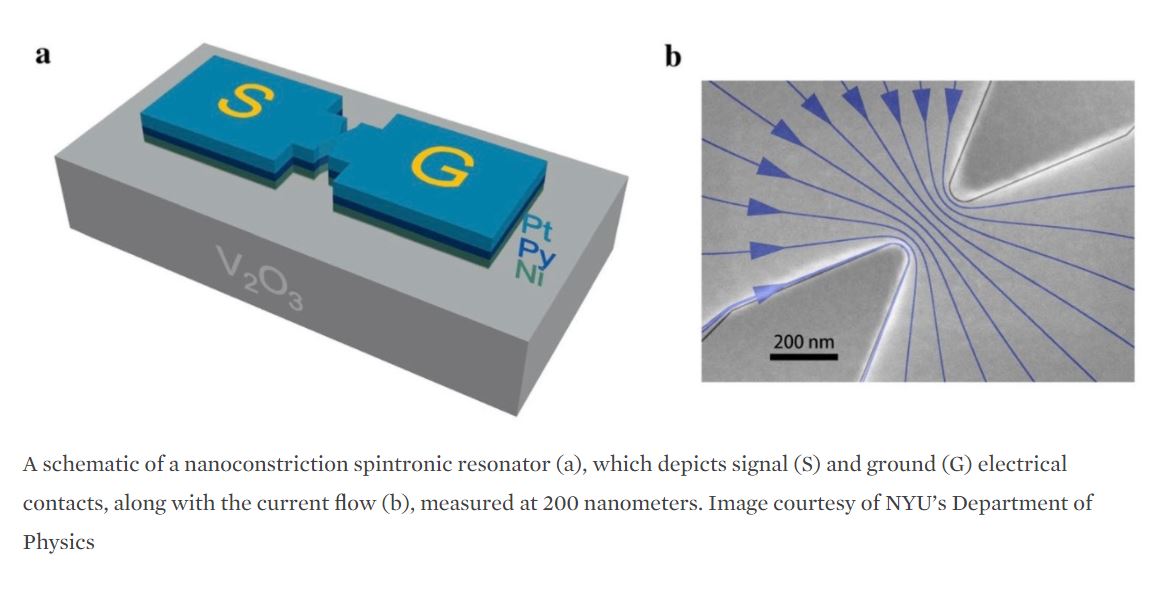
Engineers harvest WiFi Signals to power Small-Electronics

The research breakthrough was achieved by a team led by Professor Yang Hyunsoo (left). Dr Raghav Sharma (right), the first author of the paper, is holding a chip embedded with about 50 spin-torque oscillators.

A research team has developed new technology that uses tiny smart devices known as spin-torque oscillators to harvest and convert wireless radio frequencies into energy to power small electronics.

With the rise of the digital age, the amount of WiFi sources to transmit information wirelessly between devices has grown exponentially. This results in the widespread use of the 2.4GHz radio frequency that WiFi uses, with excess signals available to be tapped for alternative uses.

To harness this under-utilised source of energy, a research team from the National University of Sin...

Read More

Alien Radioactive Element Prompts Creation Rethink

This false-colour composite from NASA Spitzer Space Telescope and NASA Chandra X-ray Observatory shows the remnant of N132D. Credit: NASA/JPL-Caltech/Harvard-Smithsonian CfA. 

The first-ever discovery of an extraterrestrial radioactive isotope on Earth has scientists rethinking the origins of the elements on our planet.

The tiny traces of plutonium-244 were found in ocean crust alongside radioactive iron-60. The two isotopes are evidence of violent cosmic events in the vicinity of Earth millions of years ago.

Star explosions, or supernovae create many of the heavy elements in the periodic table, including those vital for human life, such as iron, potassium and iodine.

To form even heavier elements, such as gold, uranium and plutonium it was thought that a more violent event ma...

Read More