

People who carry the APOE2 version of the apolipoprotein E gene are more likely to live to advanced age and are partly protected against Alzheimer’s disease, but scientists have struggled to explain why...
Read More

May 19, 2026,
 Health/Medical, Biology/Biotechnology
People who carry the APOE2 version of the apolipoprotein E gene are more likely to live to advanced age and are partly protected against Alzheimer’s disease, but scientists have struggled to explain why...
Read More
October 1, 2025,
Physics, Technology/Electronics, Biology/Biotechnology

Could a simple blood test reveal how well someone is aging? A team of researchers led by Wolfram Weckwerth from the University of Vienna, Austria, and Nankai University, China, has combined advanced metabolomics with cutting-edge machine learning and a novel network modeling tool to uncover the key molecular processes underlying active aging.
Their study, published in npj Systems Biology and Applications, identifies aspartate as a dominant biomarker of physical fitness and maps the dynamic interactions that support healthier aging.
It has long been known that exercise protects mobility and lowers the risk of chronic disease...
Read More
November 24, 2024,
Technology/Electronics, Biology/Biotechnology

A new “toolkit” to repair damaged DNA that can lead to aging, cancer and motor neuron disease (MND) has been discovered by scientists at the Universities of Sheffield and Oxford.
Published in Nature Communications, the research shows that a protein called TEX264, together with other enzymes, is able to recognize and “eat” toxic proteins that can stick to DNA and cause it to become damaged. An accumulation of broken, damaged DNA can cause cellular aging, cancer and neurological diseases such as MND.
Until now, ways of repairing this sort of DNA damage have been poorly understood, but scientists hope to exploit this novel repair toolkit of proteins to protect us from aging, can...
Read More
February 15, 2024,
Uncategorized
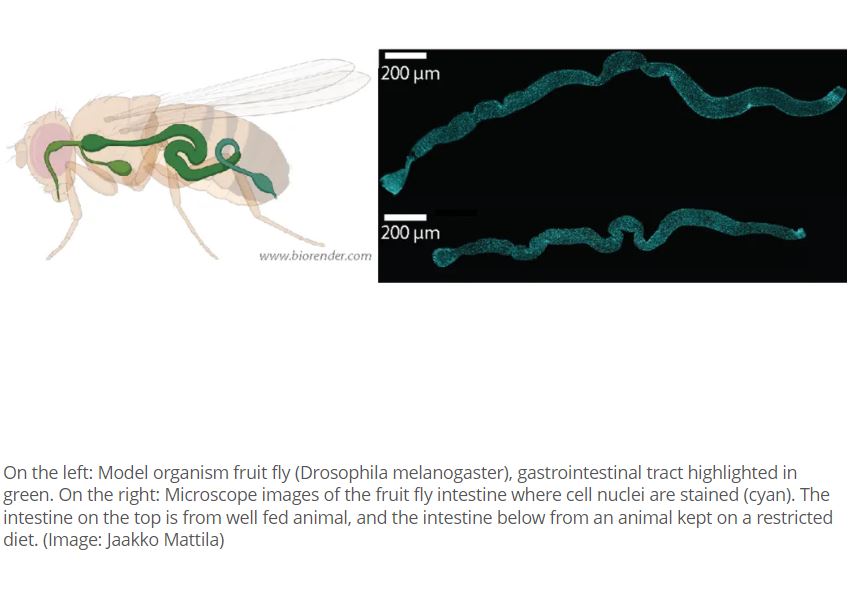
The capacity of intestinal stem cells to maintain cellular balance in the gut decreases upon ageing. Researchers at the University of Helsinki have discovered a new mechanism of action between the nutrient adaptation of intestinal stem cells and ageing. The finding may make a difference when seeking ways to maintain the functional capacity of the ageing gut.
The cellular balance of the intestine is carefully regulated, and it is influenced, among other things, by nutrition: ample nutrition increases the total number of cells in the gut, whereas fasting decreases their number.
The relative number of different types of cells also changes according to nutrient status.
The questions of how the nutrition status of the gut controls stem cell division and differentiation, and how th...
Read More
Recent Comments