aging tagged posts

Study finds Patterns of Biomarkers predict How Well people Age, Risks of Age-Related Disease

Paola Sebastiani, Bharat Thyagarajan, Fangui Sun, Nicole Schupf, Anne B. Newman, Monty Montano, Thomas T. Perls. Biomarker signatures of aging. Aging Cell, 2017; DOI: 10.1111/acel.12557

Paola Sebastiani, Bharat Thyagarajan, Fangui Sun, Nicole Schupf, Anne B. Newman, Monty Montano, Thomas T. Perls. Biomarker signatures of aging. Aging Cell, 2017; DOI: 10.1111/acel.12557

Levels of specific biomarkers can be combined to produce patterns that signify how well a person is aging and his or risk for future aging-related diseases, according to a new study by researchers at the Boston University Schools of Public Health and Medicine and Boston Medical Center. The study used biomarker data collected from the blood samples of almost 5,000 participants in the Long Life Family Study, funded by the National Institute on Aging (NIA) at the National Institutes of Health (NIH).

A large number – about half – had an average “signature,” or pattern, of 19 biomarkers...

Read More

Cellular Reprogramming Slows Aging in Mice

Highlights •Partial reprogramming erases cellular markers of aging in mouse and human cells •Induction of OSKM in progeria mice ameliorates signs of aging and extends lifespan •In vivo reprogramming improves regeneration in 12-month-old wild-type mice

Highlights •Partial reprogramming erases cellular markers of aging in mouse and human cells •Induction of OSKM in progeria mice ameliorates signs of aging and extends lifespan •In vivo reprogramming improves regeneration in 12-month-old wild-type mice

In mice carrying a mutation leading to premature aging, reprogramming of chemical marks in the genome, ie epigenetic marks, reduced many signs of aging in the mice and extended their lifespan on average from 18 weeks to 24. The study suggests epigenetic changes drive the aging process, and that those changes may be malleable. “We did not correct the mutation that causes premature aging in these mice,” says Juan Carlos Izpisua Belmonte, a professor in the Salk Institute of Biological Science’s Gene Expression Laboratory...

Read More

Beneficial Effects of Exercise Change with Age

Exercise-induced ROS activates Nrf2, which then translocates into the nucleus to increase the expression of antioxidant enzymes. Antioxidant response element (ARE), carbon monoxide (CO), Glutathione peroxidase (GPx), Glutathione S-transferase (GST), Heme oxygenase-1 (HO-1), Kelch-like ECH-associated protein 1 (Keap1), NAD(P)H quinone oxidoreductase-1 (NQO-1), and nuclear factor erythroid 2-related factor 2 (Nrf2).

Exercise-induced ROS activates Nrf2, which then translocates into the nucleus to increase the expression of antioxidant enzymes. Antioxidant response element (ARE), carbon monoxide (CO), Glutathione peroxidase (GPx), Glutathione S-transferase (GST), Heme oxygenase-1 (HO-1), Kelch-like ECH-associated protein 1 (Keap1), NAD(P)H quinone oxidoreductase-1 (NQO-1), and nuclear factor erythroid 2-related factor 2 (Nrf2).

If you’re an older adult, a 30 min workout may not be as effective, even at the cellular level, as it was when you were younger. According to a new study, age may play a significant role in a cell’s ability to respond to that activity. In the study, a group of men 18 to 30 yo were tested against a group of older men 55 years and older...

Read More

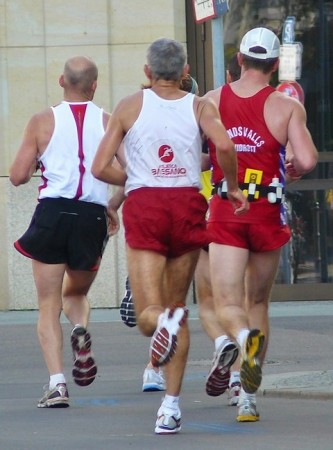
Exercise Keeps Muscles, and You, Young

“These are individuals in their 80s and 90s who actively compete in world masters track and field championships. We have seven world champions. These individuals are the crème de la crème of aging.”

“These are individuals in their 80s and 90s who actively compete in world masters track and field championships. We have seven world champions. These individuals are the crème de la crème of aging.”

A Uni of Guelph professor has uncovered the “secret” to staying strong as we age – superb fitness. Geoff Power found elderly people who were elite athletes in their youth or later in life – and who still compete as masters athletes – have much healthier muscles at the cellular level compared to those of non-athletes.

The study compared world-class track and field athletes in their 80s with people of the same age who are living independently. There have been few such studies of aging and muscle weakening in masters athletes in this age group...

Read More