AMPK tagged posts

Diabetes drug metformin could be repurposed to help slow aging mechanisms

Can a diabetes drug be repurposed to help slow aging mechanisms?

Metformin, a widely prescribed, safe and inexpensive drug for type 2 diabetes, is a first-line treatment that lowers blood sugar and improves the body’s response to insulin. The drug appears to trick cells into sensing an energy shortage, similar to what happens during fasting or dieting. This activates a key cellular energy sensor called AMPK, which helps trigger cellular waste cleanup and supports cellular repair. Now, a recent review suggests metformin might also help counter some effects of aging.

The researchers compiled decades of global research, from cellular and molecular studies to animal and human studies, to provide a comprehensive, unified picture of how metformin might affect aging and longevity...

Read More

Study shows how to Prevent a High-fat Diet from throwing Metabolism out of whack

Study shows how to prevent a high-fat diet from throwing metabolism out of whack
SAPS3 brings the PP6 catalytic subunit to dephosphorylate AMPK. Credit: Nature Communications (2023). DOI: 10.1038/s41467-023-36809-1

Eating lots of fats increases the risk of metabolic disorders, but the mechanisms behind the problem have not been well understood. Now, University of California, Irvine biologists have made a key finding about how to ward off harmful effects caused by a high-fat diet. Their study appears in Nature Communications.

The UC Irvine research centered on a protein complex called AMPK, which senses the body’s nutrition and takes action to keep it balanced. For example, if AMPK detects that glucose is low, it can boost lipid breakdown to produce energy in its place...

Read More

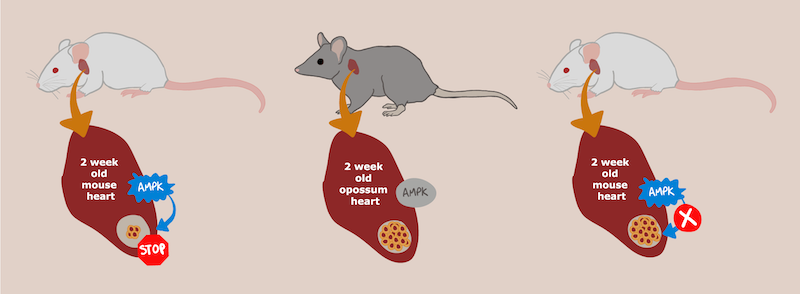
Harnessing the Heart Regeneration Ability of Marsupials

diagram of mouse and opposum heart regeneration

Wataru Kimura and colleagues at the RIKEN Center for Biosystems Dynamics Research (BDR) in Japan have discovered how the hearts of newborn marsupials retain the ability to regenerate for several weeks. Using this knowledge, the team was able to repair mouse hearts that were damaged a week after birth. The findings, published in the journal Circulation, are expected to contribute to the development of regenerative heart medicines.

Heart disease is a leading cause of human death and is associated with numerous other secondary illnesses. For humans and other mammals, damaged heart muscle—such as occurs after a heart attack—cannot be naturally repaired because matured heart-muscle cells do not regenerate...

Read More

Parkinson’s, Cancer, type 2 Diabetes Share a Key Element that Drives Disease

Enzyme with central role in cancer and type 2 diabetes also activates. Researchers have discovered a direct link between a master sensor of cell stress and a protein that protects the power stations of cells. The same pathway is also tied to type 2 diabetes and cancer, which could open a new avenue for treating all three diseases.

When cells are stressed, chemical alarms go off, setting in motion a flurry of activity that protects the cell’s most important players. During the rush, a protein called Parkin hurries to protect the mitochondria, the power stations that generate energy for the cell. Now Salk researchers have discovered a direct link between a master sensor of cell stress and Parkin itself...

Read More