artificial intelligence tagged posts

How to make AI Trustworthy

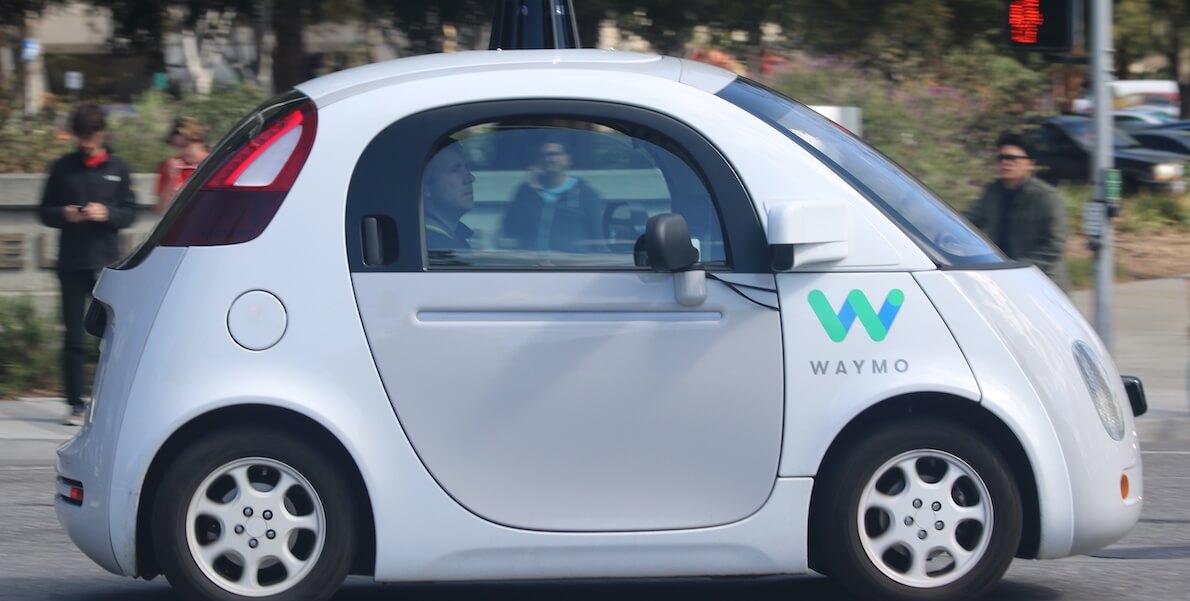
Self-driving car/Photo credit: Grendelkhan
SELF-DRIVING CAR/PHOTO CREDIT: GRENDELKHAN

New tool might aid the adoption of technologies such as autonomous vehicles. One of the biggest impediments to adoption of new technologies is trust in AI.

Now, a new tool developed by USC Viterbi Engineering researchers generates automatic indicators if data and predictions generated by AI algorithms are trustworthy. Their research paper, “There Is Hope After All: Quantifying Opinion and Trustworthiness in Neural Networks” by Mingxi Cheng, Shahin Nazarian and Paul Bogdan of the USC Cyber Physical Systems Group, was featured in Frontiers in Artificial Intelligence.

Neural networks are a type of artificial intelligence that are modeled after the brain and generate predictions...

Read More

Photon-based processing units enable more Complex Machine Learning

The photonic tensor core performs vector-matrix multiplications by utilizing the efficient interaction of light at different wavelengths with multistate photonic phase change memories. CREDIT: Mario Miscuglio

Using photons to create more powerful and power-efficient processing units for artificial intelligence. Machine learning performed by neural networks is a popular approach to developing artificial intelligence, as researchers aim to replicate brain functionalities for a variety of applications.

A paper in the journal Applied Physics Reviews, by AIP Publishing, proposes a new approach to perform computations required by a neural network, using light instead of electricity...

Read More

Artificial Intelligence yields new Antibiotic

MIT researchers used a machine-learning algorithm to identify a drug called halicin that kills many strains of bacteria. Halicin (top row) prevented the development of antibiotic resistance in E. coli, while ciprofloxacin (bottom row) did not.

Image: courtesy of the Collins Lab at MIT

A deep-learning model identifies a powerful new drug that can kill many species of antibiotic-resistant bacteria

Using a machine-learning algorithm, MIT researchers have identified a powerful new antibiotic compound. In laboratory tests, the drug killed many of the world’s most problematic disease-causing bacteria, including some strains that are resistant to all known antibiotics. It also cleared infections in two different mouse models.

The computer model, which can screen more than a hundr...

Read More

Artificial Intelligence identifies previously unknown features associated with Cancer Recurrence

Illustration showing structure of the disk
Outline of the method. First, unsupervised deep neural networks were applied to pathology images without being taught any medical knowledge. Next, the features (a series of numbers that humans cannot directly understand) acquired by AI were translated into high-resolution images that can be understood by humans and were automatically assigned optimum weights to make images interpretable.

Artificial intelligence (AI) technology developed by the RIKEN Center for Advanced Intelligence Project (AIP) in Japan has successfully found features in pathology images from human cancer patients, without annotation, that could be understood by human doctors...

Read More