artificial intelligence tagged posts

Light-based chip can boost power efficiency of AI tasks up to 100-fold

New light-based chip boosts power efficiency of AI tasks 100 fold
A newly developed silicon photonic chip turns light-encoded data into instant convolution results. Credit: H. Yang (University of Florida)

A team at the University of Florida has developed a new kind of computer chip that uses light with electricity to perform one of the most power-intensive parts of artificial intelligence—image recognition and similar pattern-finding tasks. Using light dramatically cuts the power needed to perform these tasks, with efficiency 10 or even 100 times that of current chips performing the same calculations. Using this approach could help rein in the enormous demand for electricity that is straining power grids while enabling higher performance AI models and systems.

Artificial intelligence (AI) systems are increasingly central to technology, powering ...

Read More

AI tool spots hidden heart disease using routine electrocardiogram data

With the help of artificial intelligence (AI), an inexpensive test found in many doctors’ offices may soon be used to screen for hidden heart disease.

Structural heart disease, including valve disease, congenital heart disease, and other issues that impair heart function, affects millions of people worldwide. Yet in the absence of a routine, affordable screening test, many structural heart problems go undetected until significant function has been lost.

“We have colonoscopies, we have mammograms, but we have no equivalents for most forms of heart disease,” says Pierre Elias, assistant professor of medicine and biomedical informatics at Columbia University Vagelos College of Physicians and Surgeons and medical director for artificial intelligence at NewYork-Presbyterian.

Elias...

Read More

Photonic chips boost computing speed and efficiency to address growing demand

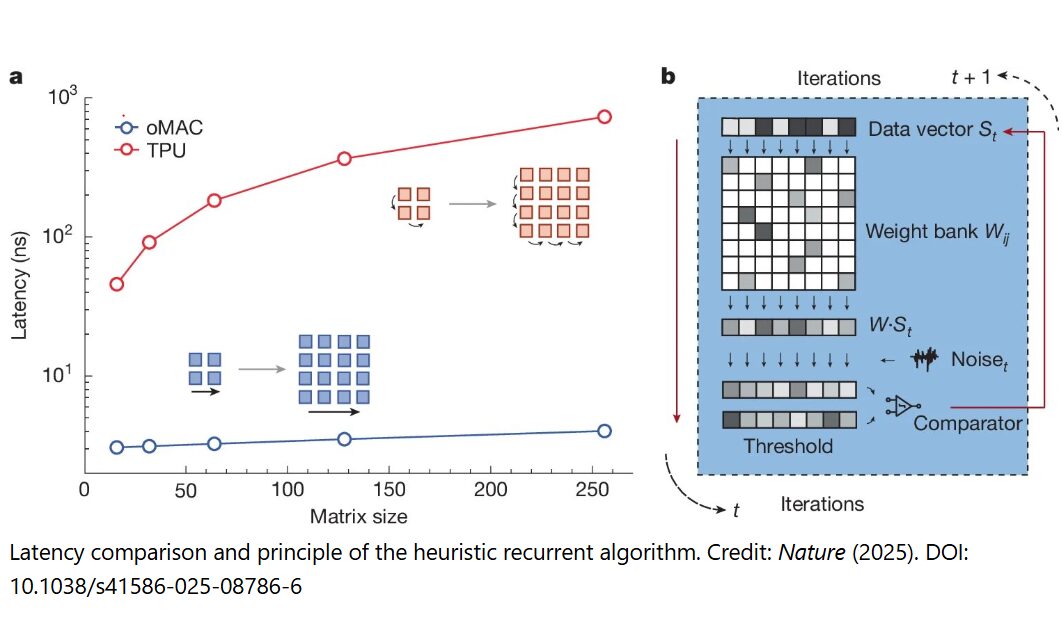
Computer chips that combine the use of light and electricity are shown to increase computational performance, while reducing energy consumption, compared with conventional electronic chips. The photonic computing chips, described in two papers in Nature this week, might address the growing computing demands driven by advancing artificial intelligence technology.

The growth in the complexity of artificial intelligence and deep learning models is pushing conventional electronic computing to its limits and has ever-increasing energy demands. Photonic computing, which uses photons rather than electrons, presents a potential solution to these challenges.

Multiplication and accumulation—central computational operations for artificial intelligence—can be performed faster and more effic...

Read More

Unfair Decisions by AI could make us Indifferent to Bad Behavior by Humans

Representation of AI
Anggalih Prasetya / Shutterstock

Artificial intelligence (AI) makes important decisions that affect our everyday lives. These decisions are implemented by firms and institutions in the name of efficiency. They can help determine who gets into college, who lands a job, who receives medical treatment and who qualifies for government assistance.

As AI takes on these roles, there is a growing risk of unfair decisions—or the perception of them by those people affected. For example, in college admissions or hiring, these automated decisions can unintentionally favor certain groups of people or those with certain backgrounds, while equally qualified but underrepresented applicants get overlooked.

Or, when used by governments in benefit systems, AI may allocate resources in ways that w...

Read More