artificial intelligence tagged posts

When it comes to AI, can we Ditch the Datasets?

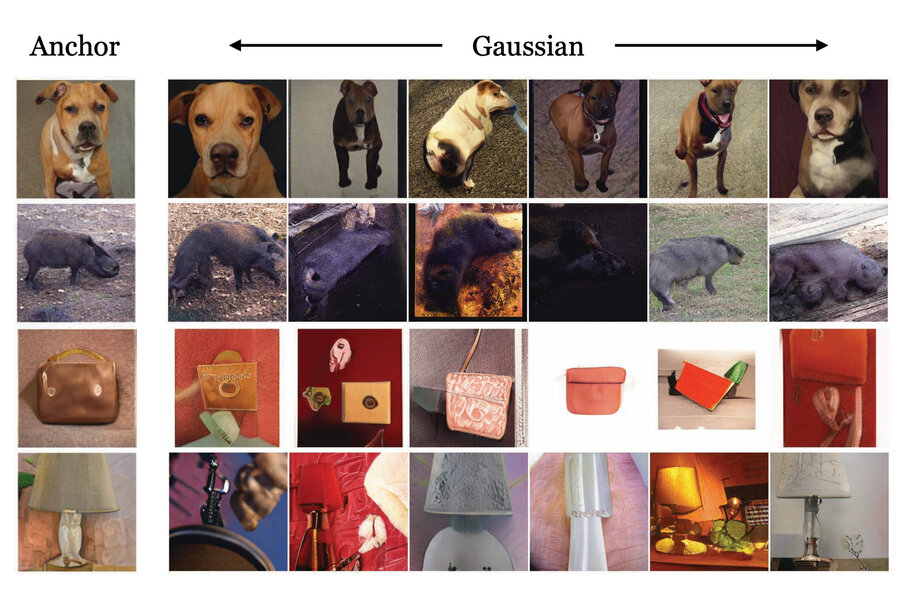
MIT researchers have demonstrated the use of a generative machine-learning model to create synthetic data, based on real data, that can be used to train another model for image classification. This image shows examples of the generative model’s transformation methods. Credit: Massachusetts Institute of Technology

Huge amounts of data are needed to train machine-learning models to perform image classification tasks, such as identifying damage in satellite photos following a natural disaster. However, these data are not always easy to come by. Datasets may cost millions of dollars to generate, if usable data exist in the first place, and even the best datasets often contain biases that negatively impact a model’s performance.

To circumvent some of the problems presented by datasets, M...

Read More

The Brain’s Secret to Life-Long Learning can now come as Hardware for Artificial Intelligence

An electronic chip that can be reprogrammed on demand may enable artificial intelligence to learn more continuously like the human brain does, researchers have discovered. (Purdue University photo/Rebecca McElhoe)

When the human brain learns something new, it adapts. But when artificial intelligence learns something new, it tends to forget information it already learned.

As companies use more and more data to improve how AI recognizes images, learns languages and carries out other complex tasks, a paper publishing in Science this week shows a way that computer chips could dynamically rewire themselves to take in new data like the brain does, helping AI to keep learning over time.

“The brains of living beings can continuously learn throughout their lifespan...

Read More

Key step toward Personalized Medicine: Modeling Biological Systems

Brian D. Wood

A new study by the Oregon State University College of Engineering shows that machine learning techniques can offer powerful new tools for advancing personalized medicine, care that optimizes outcomes for individual patients based on unique aspects of their biology and disease features.

The research with machine learning, a branch of artificial intelligence in which computer systems use algorithms and statistical models to look for trends in data, tackles long-unsolvable problems in biological systems at the cellular level, said Oregon State’s Brian D. Wood, who conducted the study with then OSU Ph.D. student Ehsan Taghizadeh and Helen M. Byrne of the University of Oxford.

“Those systems tend to have high complexity — first because of the vast number of individual ce...

Read More

AI Is Discovering Patterns in Pure Mathematics That Have Never Been Seen Before

We can add suggesting and proving mathematical theorems to the long list of what artificial intelligence is capable of: Mathematicians and AI experts have teamed up to demonstrate how machine learning can open up new avenues to explore in the field.

While mathematicians have been using computers to discover patterns for decades, the increasing power of machine learning means that these networks can work through huge swathes of data and identify patterns that haven’t been spotted before.

In a newly published study, a research team used artificial intelligence systems developed by DeepMind, the same company that has been deploying AI to solve tricky biology problems and improve the accuracy of weather forecasts, to unknot some long-standing math problems.

“Problems in mathemati...

Read More