B cells tagged posts

Immune Cells produce Chemical Messenger that Prevents Heart disease–related Inflammation

The immune system’s white blood cells, which are produced in the bone marrow, mostly help to defend against bacteria and injury, but sometimes they can turn against the body—for example, in cardiovascular disease, their inflammatory aggression can harm arteries and the heart. New research in Nature Immunology that was led by investigators at Massachusetts General Hospital (MGH) provides insights into the pathways that increase or decrease the bone marrow’s output of these cells. The findings may lead to new treatments for conditions that arise when the balance of white blood cell production goes awry.

Senior author Matthias Nahrendorf, MD, Ph.D...

Read More

Studies reveal Skull as unexpected source of Flexoelectric Brain Immunity

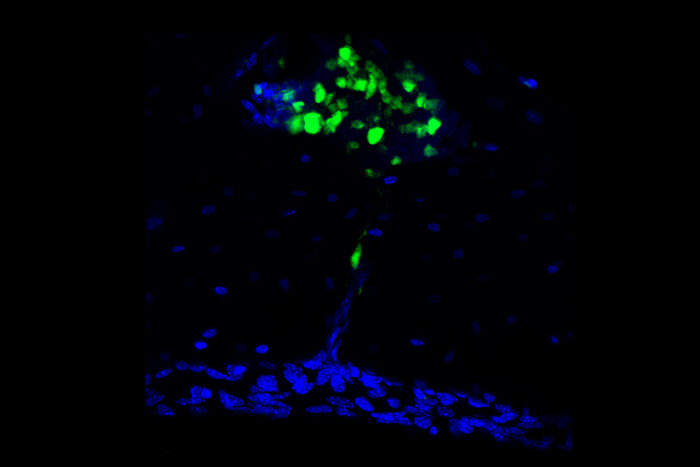
A newly developed B cell (green in middle of image) migrates from the bone marrow of the skull, where a cluster of other new B cells remain, then through the skull bone, to the protective tissue that covers the brain, which is populated mainly by other cells (blue). Researchers at Washington University School of Medicine in St. Louis have discovered that the immune cells stationed in the protective tissue known as the meninges come primarily from the skull. The finding opens up the possibility of developing therapies to target such cells as a way to prevent or treat brain conditions.

Immune cells from skull bone marrow guard the brain, spinal cord. Researchers have discovered that the immune cells that protect the brain and spinal cord come primarily from the skull...

Read More

Unique Antibody Profile sets Gluten Sensitivity apart from Celiac disease

Subclass Profile of IgG Antibody Response to Gluten Differentiates Non-Celiac Gluten Sensitivity from Celiac Disease

Subclass Profile of IgG Antibody Response to Gluten Differentiates Non-Celiac Gluten Sensitivity from Celiac Disease

A new study of the antibodies produced by people with gluten sensitivity may lead to a better way to detect the condition and treat it.
Until recently, many doctors often dismissed the complaints of people who claimed to be sensitive to foods containing gluten but did not have celiac disease, a well-documented autoimmune disease triggered by exposure to the dietary protein found in wheat, rye, and barley.

That view has changed in the past few years, based partly on studies by Armin Alaedini, PhD, assistant professor of medicine at Columbia University Vagelos College of Physicians and Surgeons, that have delved into the biological basis for non-celiac gluten sensitivity.

But ...

Read More

B cells may travel to Remote Areas of the Brain to improve Stroke Recovery

New UK research reveals that B cells may travel to remote areas of the brain to improve recovery after a stroke.

New University of Kentucky research shows that the immune system may target other remote areas of the brain to improve recovery after a stroke.

The study in mice, published in PNAS by researchers from UK’s College of Medicine, University of Texas Southwestern Medical Center and University of Pennsylvania reveals that after a stroke, B cells migrate to remote regions of the brain that are known to generate new neuronal cells as well as regulate cognitive and motor functions.

B cells can produce neurotrophins that regulate the development and growth of neurons in the brain...

Read More