
cancer cells tagged posts

Forcing cancer cells to die can alert the immune system to enhance anti-tumor attack

Unlike accidental cell death, some cells can actively decide to die through a controlled process. This is called programmed cell death and can occur in different forms, including apoptosis and necroptosis. Cells use this process when they are damaged, stressed, becoming cancerous, or infected by harmful microbes. This self-destruction mechanism helps to protect the body, but it is also involved in many diseases, such as infections, inflammatory conditions and cancer.

A major problem in cancer is that some tumors and cancer cells learn how to avoid apoptosis, allowing them to survive when they should die. This resistance can make cancer treatments less effective, especially in advanced or spreading (metastatic) cancers.

A research team led by Prof. Dr...

Read More
Foundational Technology to Make Cancer Cells Revert to Normal Cells?

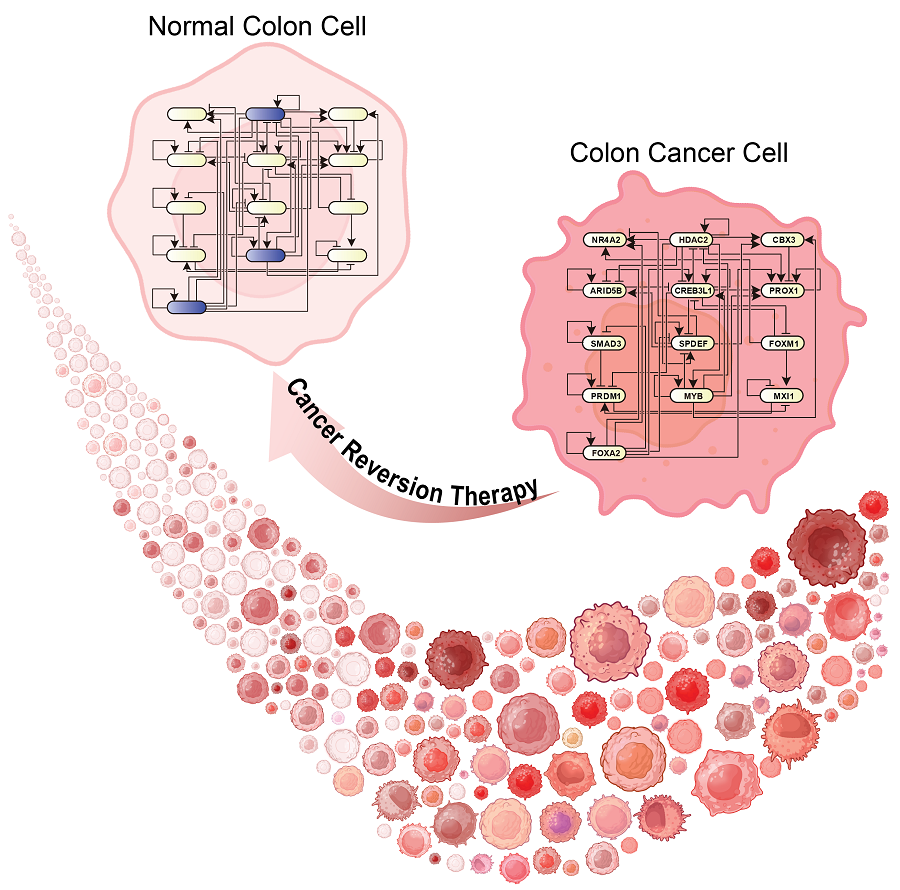
Schematic diagram of the research results. Professor Kwang-Hyun Cho’s research team developed a source technology to systematically discover key control factors that can induce reversibility of colon cancer cells through a systems biology approach and a digital twin simulation analysis of the differentiation trajectory of normal colon cells, and verified the effects of reversion on actual colon cancer through molecular cell experiments and animal experiments. 

A research team has developed a groundbreaking technology that can treat colon cancer by converting cancer cells into a state resembling normal colon cells without killing them, thus avoiding side effects.

Despite the development of numerous cancer treatment technologies, the common goal of current cancer therapies is to elim...

Read More

Clogged Arteries Worsened by Cells that Behave like Cancer Cells

Columbia University researchers have found cells inside clogged arteries share similarities with cancer and aggravate atherosclerosis, raising the possibility that anticancer drugs could be used to treat atherosclerosis and prevent heart attacks.

Their study found that smooth muscle cells that normally line the inside of our arteries migrate into atherosclerotic plaques, change their cell identity, activate cancer genes, and proliferate inside the plaques.

“Our study shows that these transformed muscle cells are driving atherosclerosis, opening the door to new ways to treat the disease, potentially with existing cancer drugs,” says Muredach Reilly, MD, the Florence and Herbert Irving Endowed Professor of Medicine at Columbia University Vagelos College of Physicians and Surgeons ...

Read More

‘Trojan horse’ approach to kill Cancer Cells Without using Drugs

Nano-pPAAM.jpg
Image: The anti-cancer therapeutic nanoparticle is ultrasmall, with a diameter of 30 nanometres, or approximately 30,000 times smaller than a strand of human hair, and is named Nano-pPAAM.

Cancer cells are killed in lab experiments and tumour growth reduced in mice, using a new approach that turns a nanoparticle into a ‘Trojan horse’ that causes cancer cells to self-destruct, a research team at the Nanyang Technological University, Singapore (NTU Singapore) has found.

The researchers created their ‘Trojan horse’ nanoparticle by coating it with a specific amino acid — L-phenylalanine — that cancer cells rely on, along with other similar amino acids, to survive and grow...

Read More