CME tagged posts

Interplanetary spacecraft capture a coronal mass ejection component hidden from Earth

Interplanetary spacecraft capture a coronal mass ejection component hidden from Earth
Extreme ultraviolet (EUV) and coronagraph observations of the solar disk and corona highlighting the extended filament that produced the complex CME. Credit: Science Advances (2026). DOI: 10.1126/sciadv.aed9960

During a coronal mass ejection (CME), the sun hurls billions of tons of magnetized plasma into space. These eruptions are among the most powerful events in the solar system, and when they are aimed toward Earth, they can seriously threaten the satellites and power grids we depend on. For now, it remains notoriously difficult to predict how these eruptions evolve over time—and, in turn, whether they might be heading toward us.

Taking observations from an extensive network of spacecraft across the solar system, a team led by Adrienn Luspay-Kuti at Johns Hopkins University h...

Read More
Astronomers spot a rare planet-stripping eruption on a nearby star

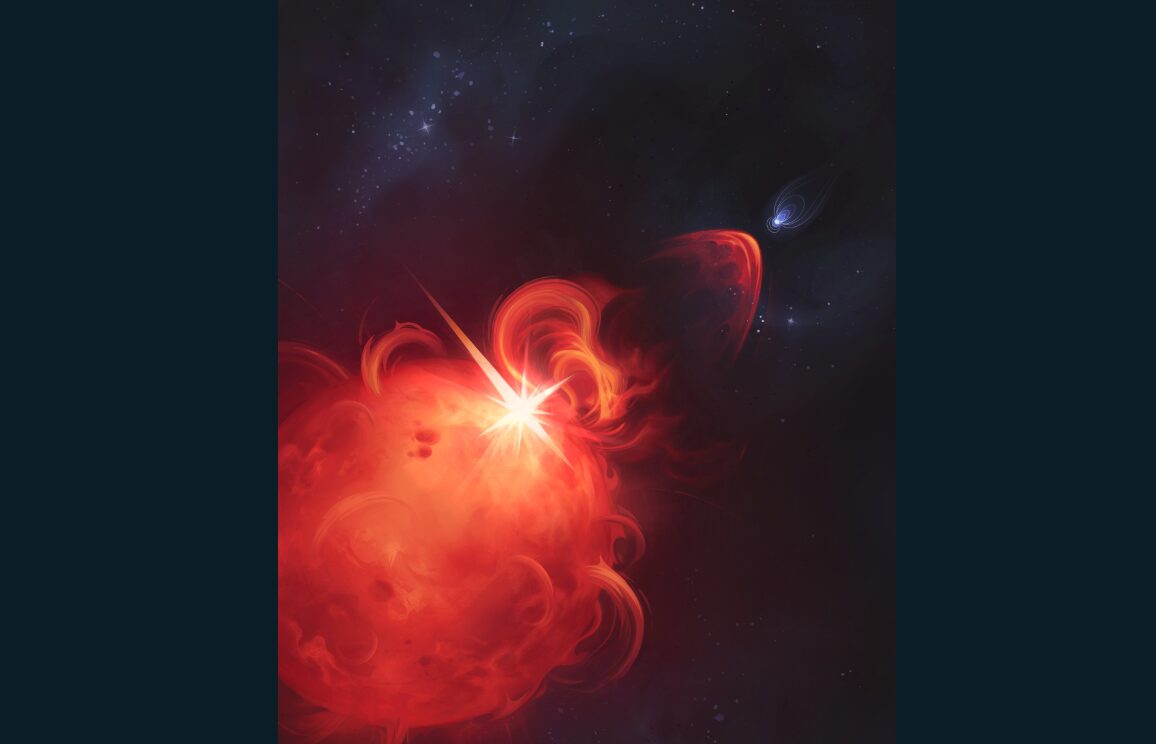
Artist’s impression of an explosion on another star

Scientists have finally confirmed a powerful coronal mass ejection from another star, using LOFAR radio data paired with XMM-Newton’s Xray insights. The eruption blasted into space at extraordinary speeds, strong enough to strip atmospheres from close-orbiting worlds. This suggests planets around active red dwarfs may be far less hospitable than hoped.

Astronomers working with the European Space Agency’s XMM-Newton observatory and the LOFAR radio telescope have obtained clear evidence of a violent burst of material hurled into space by a distant star. The outflow was strong enough that any nearby planet in its path would likely have its atmosphere stripped away.

This burst was identified as a coronal mass ejection (CME), a typ...

Read More

First Glimpse of a “Young Sun” Super-Eruption Captured by Astronomers

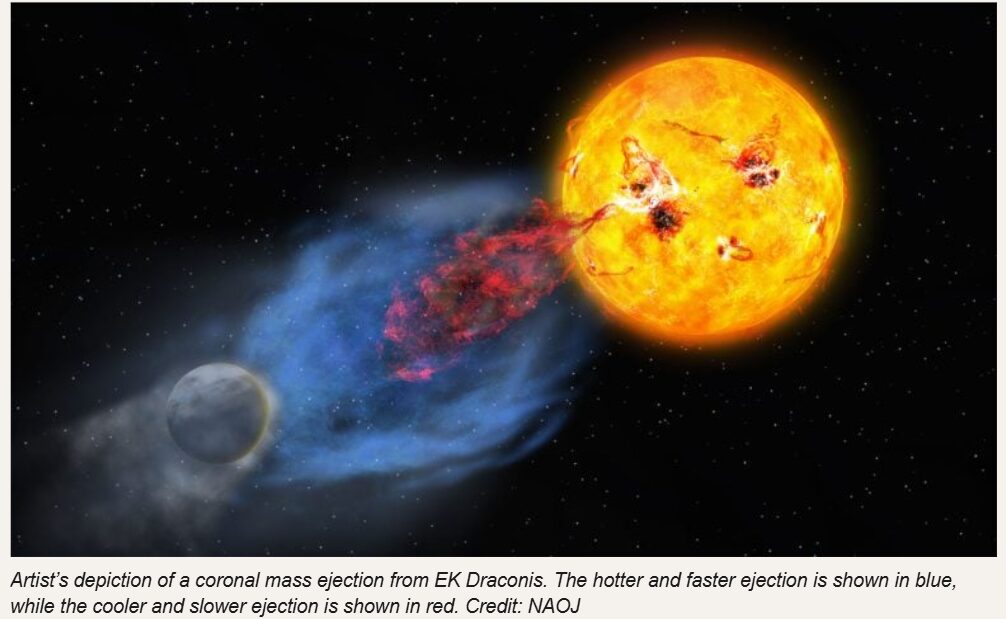
A young Sun’s violent plasma eruptions may have helped ignite the spark of life on Earth. Astronomers observed a massive, multi-temperature plasma eruption from a young Sun-like star, revealing how early solar explosions could shape planets. These fierce events may have influenced the atmosphere and life-forming chemistry of the early Earth.

Although we rarely notice from Earth, the Sun is continuously hurling enormous clouds of charged plasma into space. These events, known as coronal mass ejections (CMEs), often occur alongside sudden bursts of light called solar flares. When particularly strong, CMEs can stretch far enough to disturb Earth’s magnetic field, producing dazzling auroras and sometimes triggering geomagnetic storms that disrupt satellites or even power grids.

Sc...

Read More

Sun unleashes monster solar storm: Rare G4 alert issued for earth

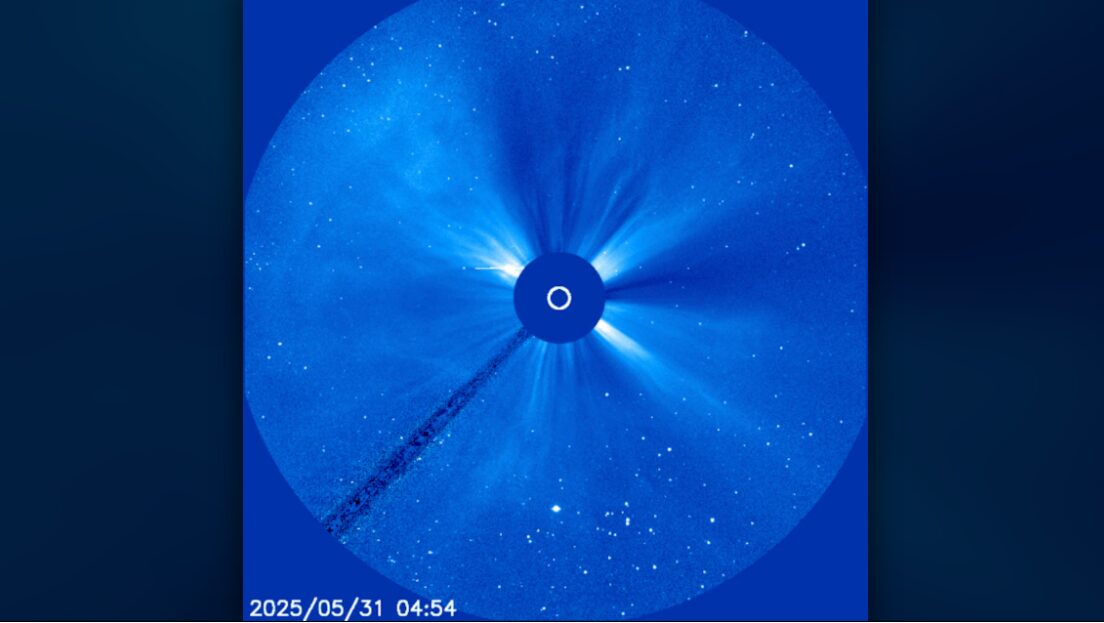
A violent solar eruption on May 31 launched a coronal mass ejection (CME) hurtling toward Earth, triggering a rare G4-level geomagnetic storm alert. Captured in real-time by U.S. Naval Research Laboratory instruments, this cosmic blast has the potential to disrupt satellites, communications, and military systems.

Local weather alerts are familiar warnings for potentially dangerous conditions, but an alert that puts all of Earth on warning is rare.

On May 31, U.S. Naval Research Laboratory’s (NRL) space-based instrumentation captured real-time observations of a powerful Coronal Mass Ejection (CME) that erupted from the Sun initiating a “severe geomagnetic storm” alert for Earth.

“Our observations demonstrated that the eruption was a so-called ‘halo CME,’ meaning it was Earth-d...

Read More