Comet tagged posts

Comet discovered to have its own Northern Lights

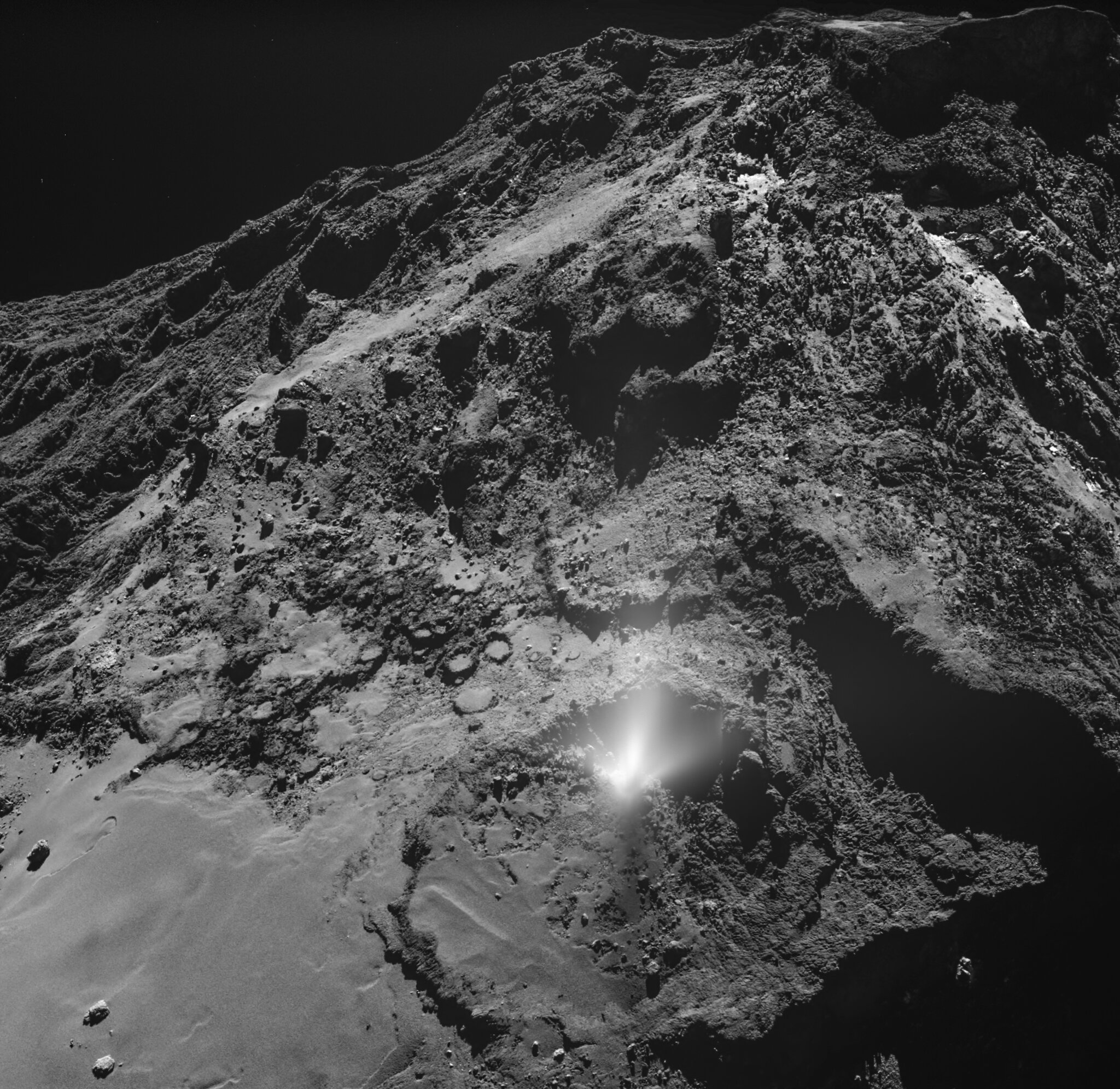
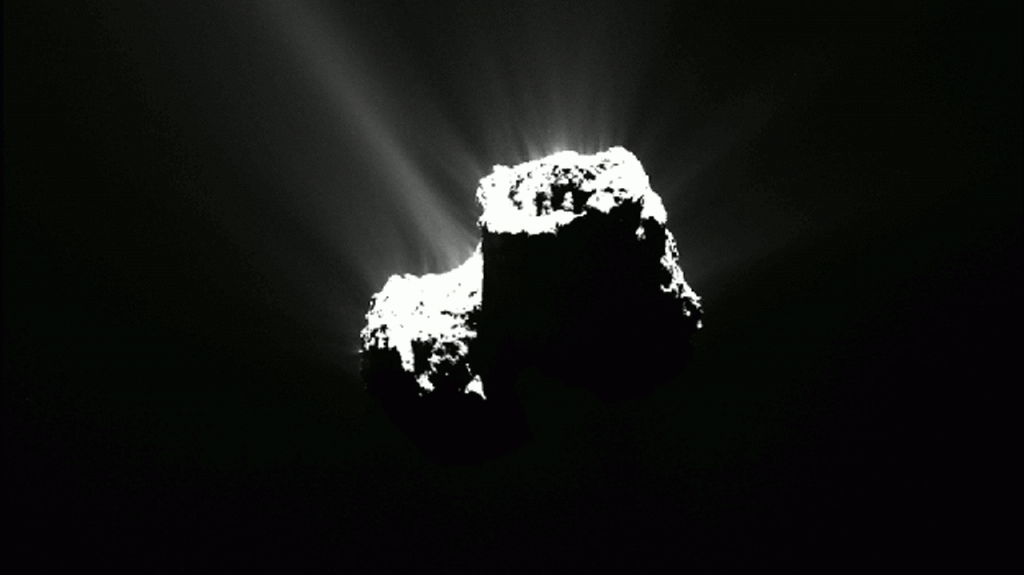
Image acquired by the navigation camera on the European Space Agency’s Rosetta spacecraft orbiting Comet 67P/Churyumov-Gerasimenko between Nov. 19 and Dec. 3, 2014. Image credit: ESA/Rosetta/NAVCAM

An atmospheric light show previously relegated to planets and Jupiter moons is found on comet using data from ESA’s Rosetta spacecraft. Data from NASA instruments aboard the ESA (European Space Agency) Rosetta mission have helped reveal that comet 67P/Churyumov-Gerasimenko has its own far-ultraviolet aurora. It is the first time such electromagnetic emissions in the far-ultraviolet have been documented on a celestial object other than a planet or moon. A paper on the findings was released today in the journal Nature Astronomy.

On Earth, aurora (also known as the northern or southern light...

Read More
Hubble snaps close-up of Celebrity Comet NEOWISE

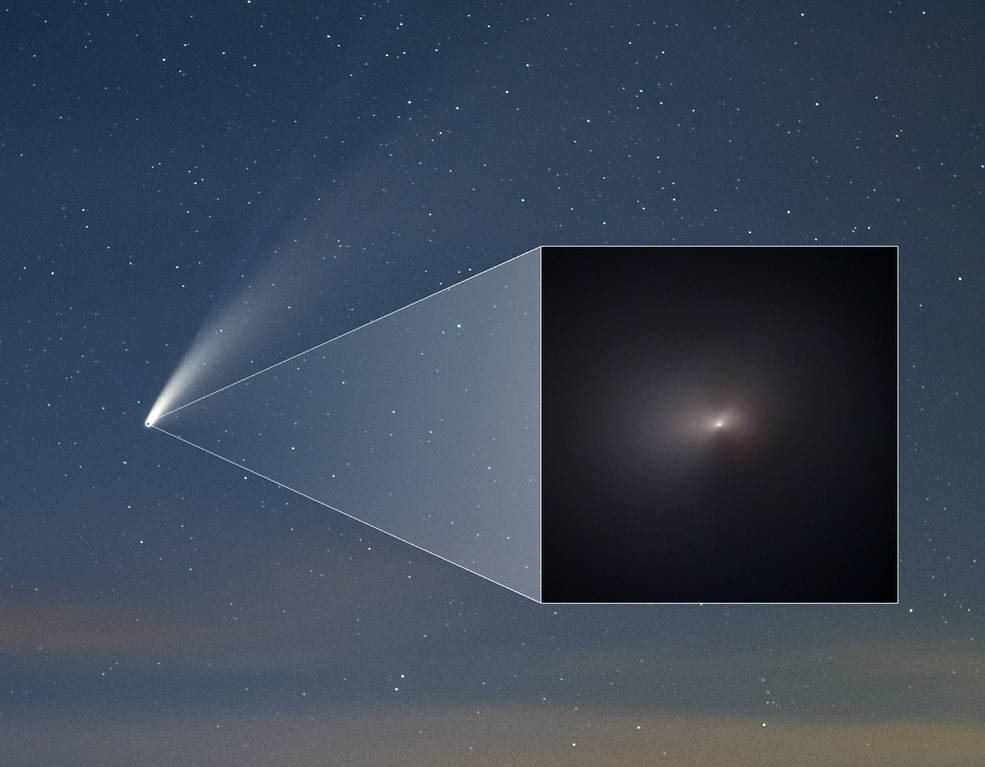
This ground-based image of comet C/2020 F3 (NEOWISE) was taken from the Northern Hemisphere on July 16, 2020. The inset image, taken by the Hubble Space Telescope on Aug. 8, 2020, reveals a close-up of the comet after its pass by the Sun. Hubble’s image zeroes in on the comet’s nucleus, which is too small to be seen. It’s estimated to measure no more than 3 miles (4.8 kilometers) across. Instead, the image shows a portion of the comet’s coma, the fuzzy glow, which measures about 11,000 miles (18,000 kilometers) across in this image. Comet NEOWISE won’t pass through the inner solar system for another nearly 7,000 years.
Credits: NASA, ESA, STScI, Q. Zhang (Caltech); ground-based image copyright © 2020 by Zoltan G. Levay, used with permission

NASA Hubble Space Telescope images ...

Read More

ALMA reveals unusual Composition of Interstellar Comet 2I/Borisov

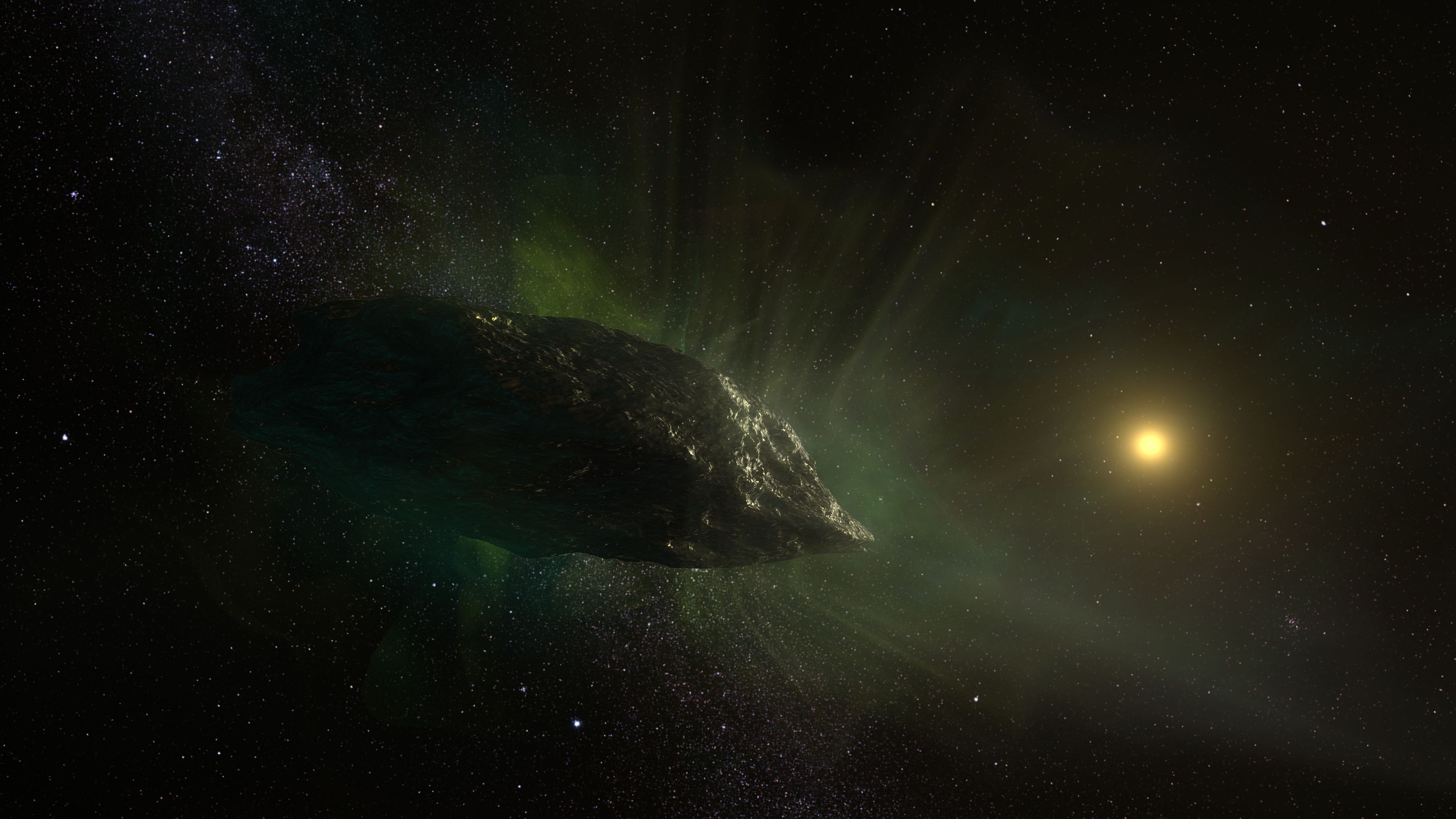
Credit: NRAO/AUI/NSF, S. DagnelloArtist impression of the interstellar comet 2I/Borisov as it travels through our solar system. This mysterious visitor from the depths of space is the first conclusively identified comet from another star. The comet consists of a loose agglomeration of ices and dust particles, and is likely no more than 3,200 feet across, about the length of nine football fields. Gas is ejected out of the comet as it approaches the Sun and is heated up.
Credit: NRAO/AUI/NSF, S. DagnelloCredit: NRAO/AUI/NSF, S. Dagnello

2I/Borisov likely formed in extremely cold environment, high amounts of CO show. A galactic visitor entered our solar system last year — interstellar comet 2I/Borisov...

Read More

The Salt of the Comet

A plume of dust from Comet 67P/Churyumov–Gerasimenko, seen by the OSIRIS Wide Angle Camera on ESA’s Rosetta spacecraft on 3 July 2016. The shadow of the plume is cast across the basin, which is in the Imhotep region. Credit: ESA/Rosetta/MPS for OSIRIS Team MPS/UPD/LAM/IAA/SSO/INTA/UPM/DASP/IDA

More than 30 years ago, the European comet mission Giotto flew past Halley’s comet. The Bernese ion mass spectrometer IMS, led by Prof. em. Hans Balsiger, was on board. A key finding from the measurements taken by this instrument was that there appeared to be a lack of nitrogen in Halley’s coma – the nebulous covering of comets which forms when a comet passes close to the sun...

Read More