
Cosmic Noon tagged posts

Chandra resolves why black holes hit the brakes on growth

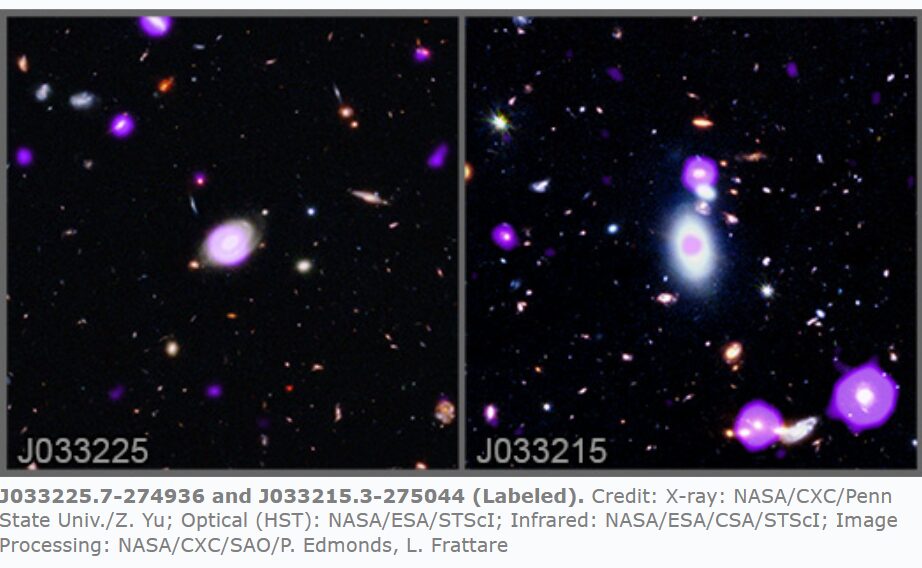
Astronomers have an answer for a long-running mystery in astrophysics: why is the growth of supermassive black holes so much lower today than in the past? A study using NASA’s Chandra X-ray Observatory and other X-ray telescopes found that supermassive black holes are unable to consume material as rapidly as they did in the distant past. The results appeared in the December 2025 issue of The Astrophysical Journal.

Ten billion years ago, there was a period that astronomers call “cosmic noon,” when the growth of supermassive black holes (those with millions to billions of times the mass of the sun) was at its peak across the entire history of the universe. Between cosmic noon and now, however, astronomers have seen a major slowdown in how rapidly black holes are growing.

“A longst...

Read More
Study of Small Magellanic Cloud suggests Planets could have Formed during ‘Cosmic Noon’

Study of Small Magellanic Cloud suggests planets could have formed during 'cosmic noon'
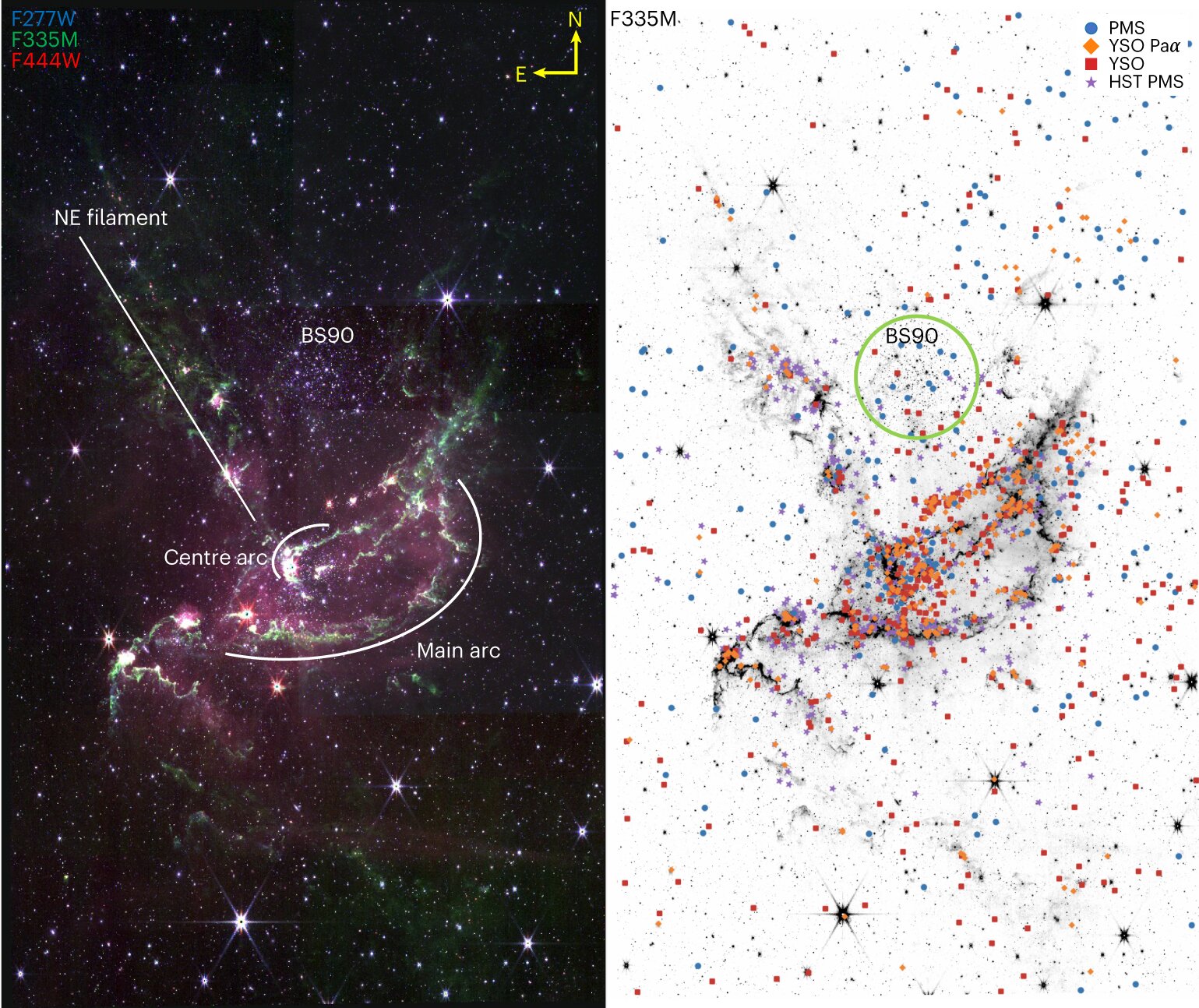
NIRCam mosaics of NGC 346. Credit: Nature Astronomy (2023). DOI: 10.1038/s41550-023-01945-7

An international team of space scientists has found evidence suggesting that planets could have formed during the so-called “cosmic noon.” In their study, reported in the journal Nature Astronomy, the group used data from the James Webb Space Telescope (JWST) to study a part of the Small Magellanic Cloud (SMC) to learn more about planet development around young stars.

For many years, astronomers have been studying planet creation and the likelihood of the existence of planets similar to Earth. But it is still not clear how planets could have could come to exist in the early universe when most, if not all of the stars, were small...

Read More