
Cosmic Origins Spectrograph (COS) tagged posts

Astronomers Observe Star Reborn in a Flash

Astronomers observe star reborn in a flash

An international team of astronomers using Hubble have been able to study stellar evolution in real time. Over a period of 30 years dramatic increases in the temperature of the star SAO 244567 have been observed. Now the star is cooling again, having been reborn into an earlier phase of stellar evolution. This makes it the first reborn star to have been observed during both the heating and cooling stages of rebirth.

An international team using Hubble have studied stellar evolution in real time. Over 30 years dramatic increases in the temperature of the star SAO 244567 have been observed. Now the star is cooling again, having been reborn into an earlier phase of stellar evolution...

Read More
Astrophysicists Release new study of One of the 1st Stars

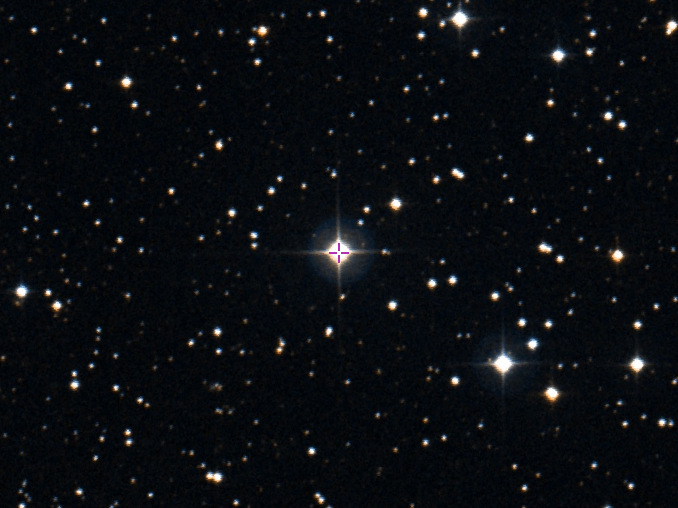
BD+44°493 (α=02h 26m 49.74s, δ=+44° 57' 46.52" J2000.0) is the brightest known second-generation star in the sky and lies in eastern Andromeda. Image credit: Aladin Sky Atlas; Digitised Sky Survey — STScI/NASA, Coloured & Healpixed by CDS.

BD+44°493 (α=02h 26m 49.74s, δ=+44° 57′ 46.52″ J2000.0) is the brightest known second-generation star in the sky and lies in eastern Andromeda. Image credit: Aladin Sky Atlas; Digitised Sky Survey — STScI/NASA, Coloured & Healpixed by CDS.

No one has yet observed the first stars that formed in the Milky Way. In all likelihood, they will never be directly observed, because the first stars are massive, ending their lives only a few millions years after their birth. But, astronomers can study those oldest stars by examining the elements these stars produce through nuclear fusion and the supernova explosions that mark the spectacular ends of their short lives.

Timothy Beers, the Notre Dame Chair in Astrophysics, is part of a team that has used the Cosmic Origins Spectrograph (COS) on...

Read More