COVID-19 tagged posts

Preclinical Data suggest Antioxidant Strategy to address Mitochondrial Dysfunction caused by SARS-CoV-2 virus

SARS-CoV-2
Credit: Unsplash/CC0 Public Domain

Building upon groundbreaking research demonstrating how the SARS-CoV-2 virus disrupts mitochondrial function in multiple organs, researchers from Children’s Hospital of Philadelphia (CHOP) demonstrated that mitochondrially-targeted antioxidants could reduce the effects of the virus while avoiding viral gene mutation resistance, a strategy that may be useful for treating other viruses.

The preclinical findings were published in the journal Proceedings of the National Academy of Sciences.

Last year, a multi-institutional consortium of researchers found that the genes of the mitochondria, the energy producers of our cells, can be negatively impacted by the virus, leading to dysfunction in multiple organs beyond the lungs.

SARS-CoV-2 proteins can...

Read More

Study Offers New Detail on how COVID-19 Affects the Lungs

An illustration of ferroptosis in the lungs of a COVID-19 patient.
In some severe cases of COVID-19, the lungs undergo extreme damage, resulting in a range of life-threatening conditions like pneumonia, inflammation, and acute respiratory distress syndrome. The root cause of those wide-ranging reactions in the lungs has until now remained unclear.

New research shows that ferroptosis, a form of cell death, occurs in severe COVID-19 patient lungs. Stopping it improves outcomes. In some severe cases of COVID-19, the lungs undergo extreme damage, resulting in a range of life-threatening conditions like pneumonia, inflammation, and acute respiratory distress syndrome. The root cause of those wide-ranging reactions in the lungs has until now remained unclear.

A new study by researchers at Columbia and the Columbia University Irving Medical Center sheds l...

Read More

Common Antibiotic may be Helpful in Fighting Respiratory Viral Infections

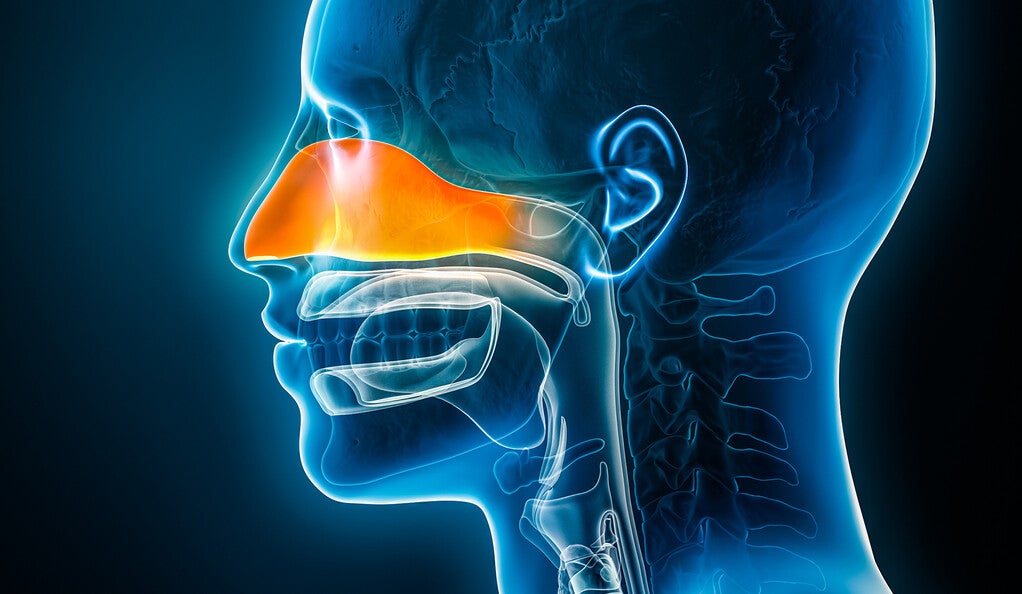
Transparent human head illustration with nasal cavity highlighted.
(© stock.adobe.com)

A new, Yale-led study suggests that a range of respiratory viral infections—including COVID-19 and influenza—may be preventable or treatable with a generic antibiotic that is delivered to the nasal passageway.

A team led by Yale’s Akiko Iwasaki and former Yale researcher Charles Dela Cruz successfully tested the effectiveness of neomycin, a common antibiotic, to prevent or treat respiratory viral infections in animal models when given to the animals via the nose. The team then found that the same nasal approach—this time applying the over-the-counter ointment Neosporin—also triggers a swift immune response by interferon-stimulated genes (ISGs) in the noses of healthy humans.

The findings were published in the journal Proceedings of the National Academ...

Read More

COVID-19 Research: Study reveals New Details about Potentially Deadly Inflammation

COVID-19 research: New details about potentially deadly inflammation revealed in USC study
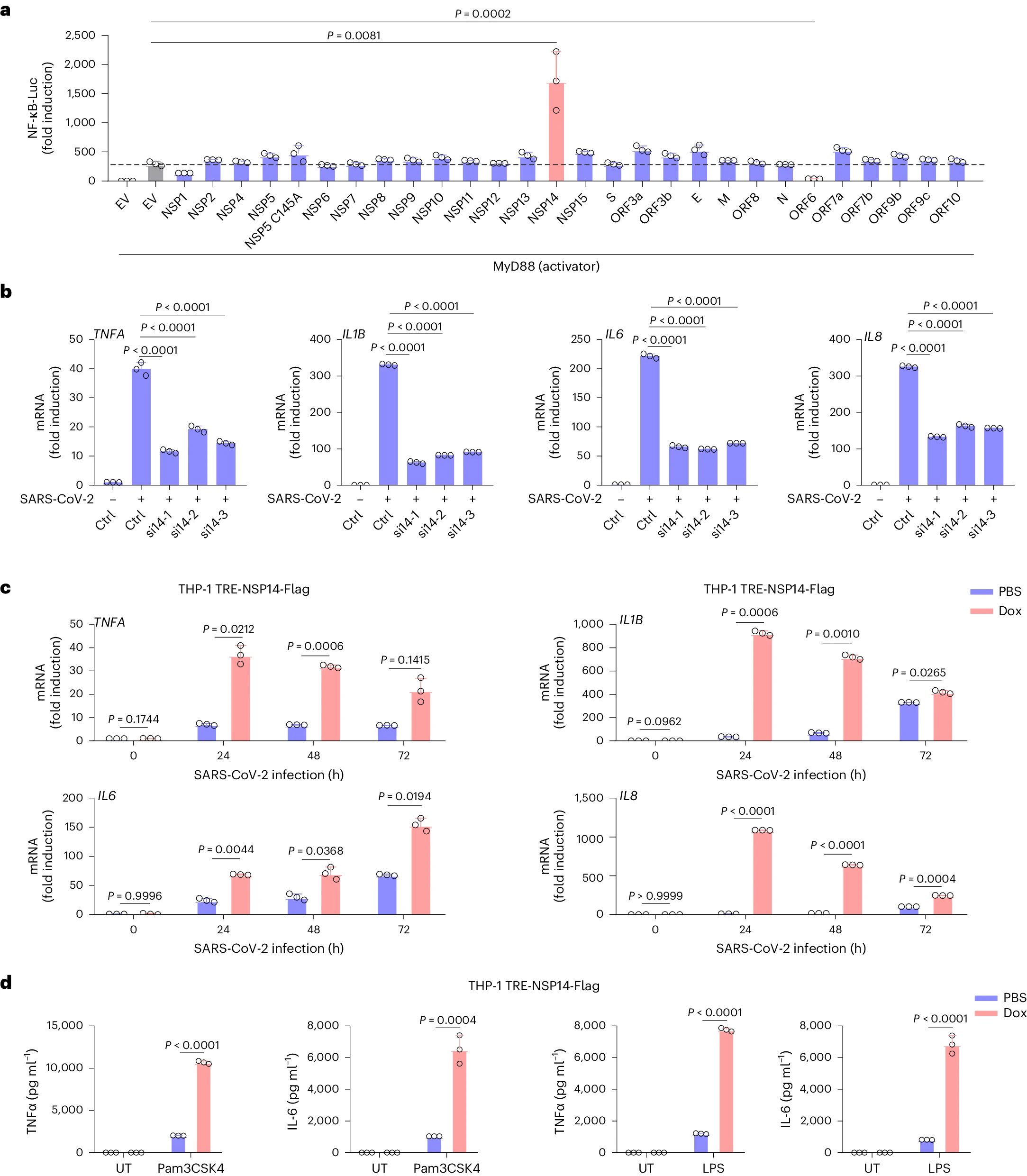
SARS-CoV-2 NSP14 facilitates the activation of NF-κB signaling and inflammatory response. a, HEK293T cells were transfected with the plasmids of 27 SARS-CoV-2 proteins, along with MyD88 and a reporter plasmid carrying the NF-κB promoter (NF-κB-Luc) and the cells were analyzed for NF-κB activity by reporter gene assay. The horizontal dashed line indicates the activation level of the positive control (EV+MyD88) group. b, Expression of the proinflammatory genes TNFA, IL1B, IL6 and IL8 in human MDMs transfected with NSP14-specific or scramble control (Ctrl) siRNA, followed with SARS-CoV-2 infection at MOI = 1 for 48 h. c, Expression of the proinflammatory genes from b in Dox-inducible SARS-CoV-2 NSP14-expressing THP-1 cells, measured after treatment with Dox (1 μg ml...
Read More