
CXCR4 tagged posts

New combination therapy shows promise in metastatic pancreatic cancer

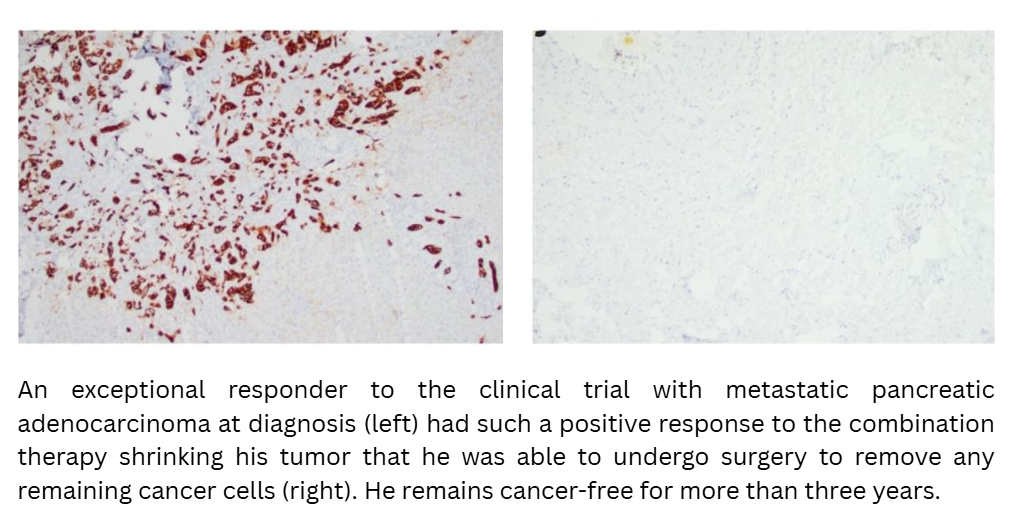
Results from an early-stage clinical trial, published in Nature Communications, showed encouraging outcomes among patients with newly diagnosed cancer whose tumors had spread to distant organs. Most strikingly, one patient experienced a pathologic complete response—meaning no viable cancer cells could be found—and remains cancerfree for more than two years without further treatment. These findings offer an important signal that a new approach may be able to overcome one of the disease’s greatest challenges: its resistance to immunotherapy.

“We desperately need new tools in our arsenal,” said Gulam Manji, MD, PhD, a medical oncologist specializing in pancreatic cancer and lead investigator of the trial...

Read More

In CRISPR/Cas9 advance, T cells successfully edited

CXCR4 is a receptor broadly expressed in cells of immune and the central nervous systems and can mediate migration of resting leukocytes and haematopoietic progenitors. It is also used by strains of HIV1 to gain entry into Helper T cells, and are typically detected at the later stages, associated with a rapid decline in CD4+ T cells and progression to AIDS.

CXCR4 is a receptor broadly expressed in cells of immune and the central nervous systems and can mediate migration of resting leukocytes and haematopoietic progenitors. It is also used by strains of HIV1 to gain entry into Helper T cells, and are typically detected at the later stages, associated with a rapid decline in CD4+ T cells and progression to AIDS.

They disabled a T-cell surface protein CXCR4, exploited by HIV when the virus infects T cells and causes AIDS. The group also successfully shut down PD-1, a protein that has attracted intense interest in the burgeoning field of cancer immunotherapy, as scientists have shown that using drugs to block PD-1 coaxes T cells to attack tumors.

T cells not only stand at the center of many disease processes, but could be easily gathered from pat...

Read More