
Double Asteroid Redirection Test tagged posts

Method for Decoding Asteroid Interiors could help Aim Asteroid-Deflecting Missions

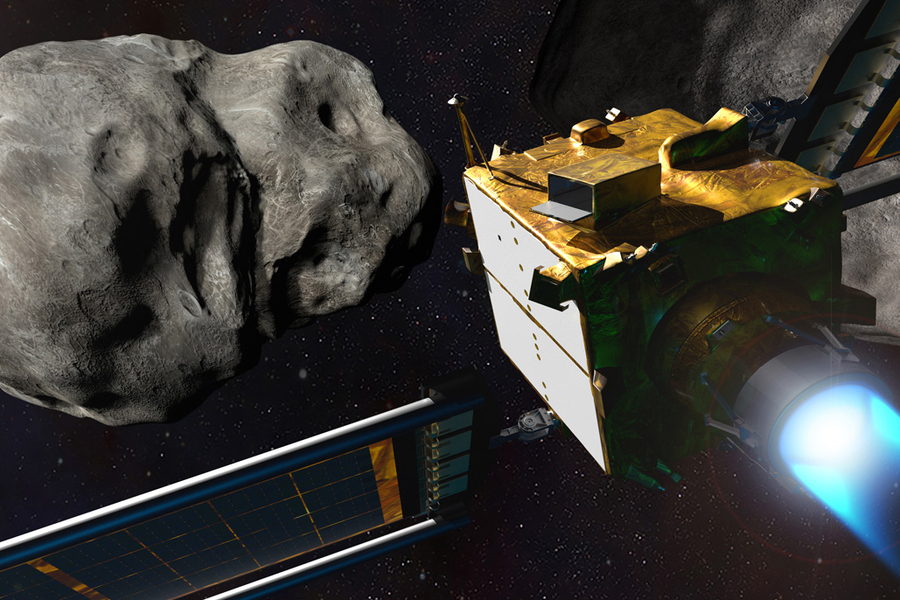
3-D modeled illustration depicts the DART mission, and shows a boxy spacecraft with blue jets and solar panel wings approaching a bulky meteor.
Caption:MIT astronomers have found a way to determine an asteroid’s interior structure based on how its spin changes during a close encounter with Earth. The tool may improve the aim of future asteroid-targeting missions like the recent DART mission.
Credits:Credit: NASA/Johns Hopkins APL

Astronomers have found a way to determine an asteroid’s interior structure based on how its spin changes during a close encounter with Earth. NASA hit a bullseye in late September with DART, the Double Asteroid Redirection Test, which flew a spacecraft straight at the heart of a nearby asteroid. The one-way kamikaze mission smashed into the stadium-sized space rock and successfully reset the asteroid’s orbit...

Read More
DART Spacecraft Prepares to Collide with Asteroid Target later this Month

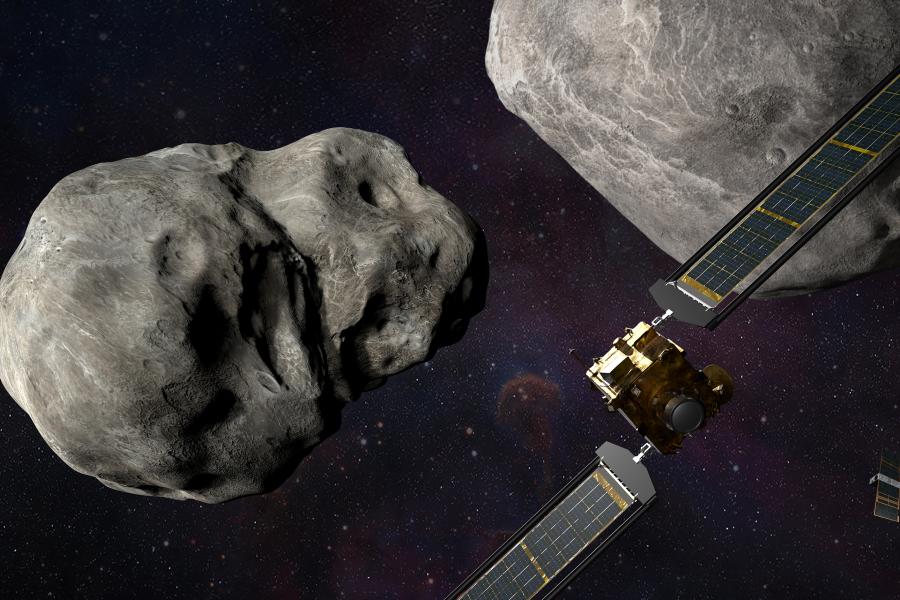
An illustration of a spacecraft flying into an asteroid

As NASA prepares to usher in a new form of planetary defense, one Johns Hopkins engineer will be eagerly awaiting the big collision that she is helping orchestrate.

Elena Adams, the mission systems engineer at the Johns Hopkins Applied Physics Laboratory, and her team will spend the next two weeks carefully observing Didymos, a double-asteroid system that poses no threat to Earth and yet will be the target of NASA’s Double Asteroid Redirection Test—a first-of-its-kind, proof-of-concept mission that will intentionally crash a spacecraft into an asteroid’s moonlet to deflect it away from its course.

“During the day of impact, I’ll be more of a conductor, making sure that all of the orchestra is following the beat and playing their parts,” said Adams, who will discuss the mission...

Read More

NASA’s plans to Prevent a Potential Asteroid Impact Catastrophe explained

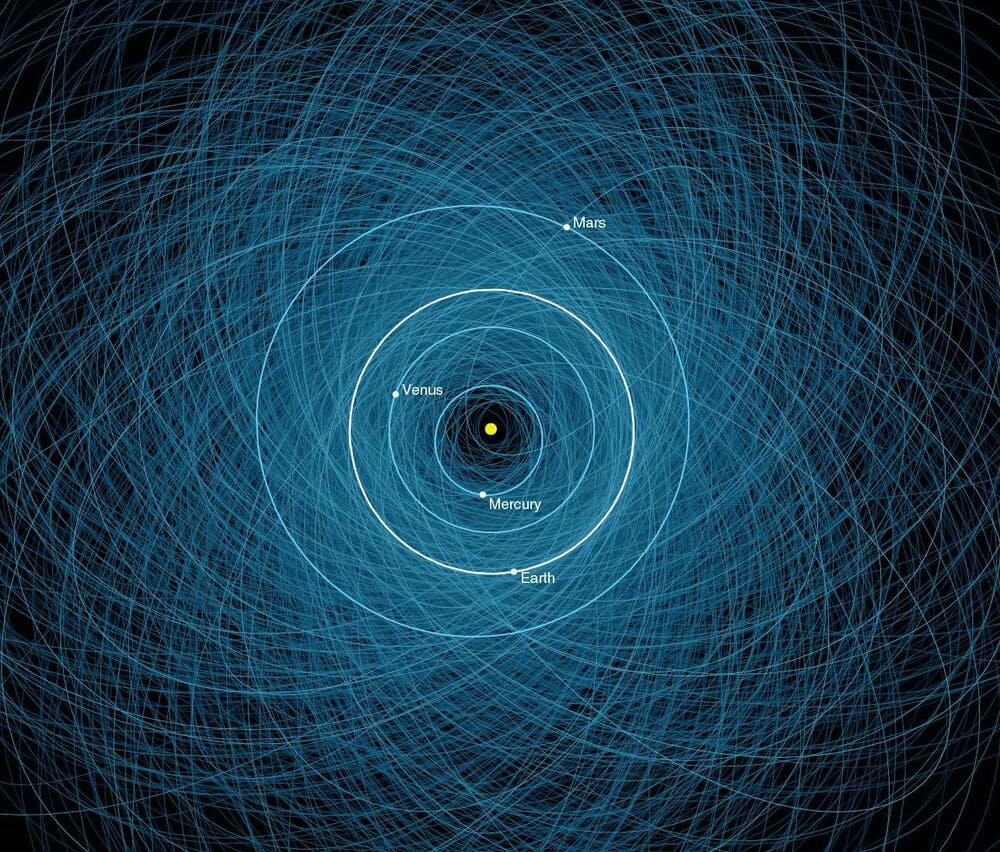
The orbits of thousands of asteroids (in blue) cross paths with the orbits of planets (in white), including Earth’s. Credit: NASA/JPL

The Earth exists in a dangerous environment. Cosmic bodies, like asteroids and comets, are constantly zooming through space and often crash into our planet. Most of these are too small to pose a threat, but some can be cause for concern.

To date, NASA has tracked only an estimated 40% of the bigger ones. Surprise asteroids have visited Earth in the past and will undoubtedly do so in the future. When they do appear, how prepared will humanity be?

The threat from asteroids and comets

Millions of objects of various sizes orbit the Sun...

Read More