
Earth’s magnetosphere tagged posts

Earth’s magnetosphere might not protect us from superstorms after all

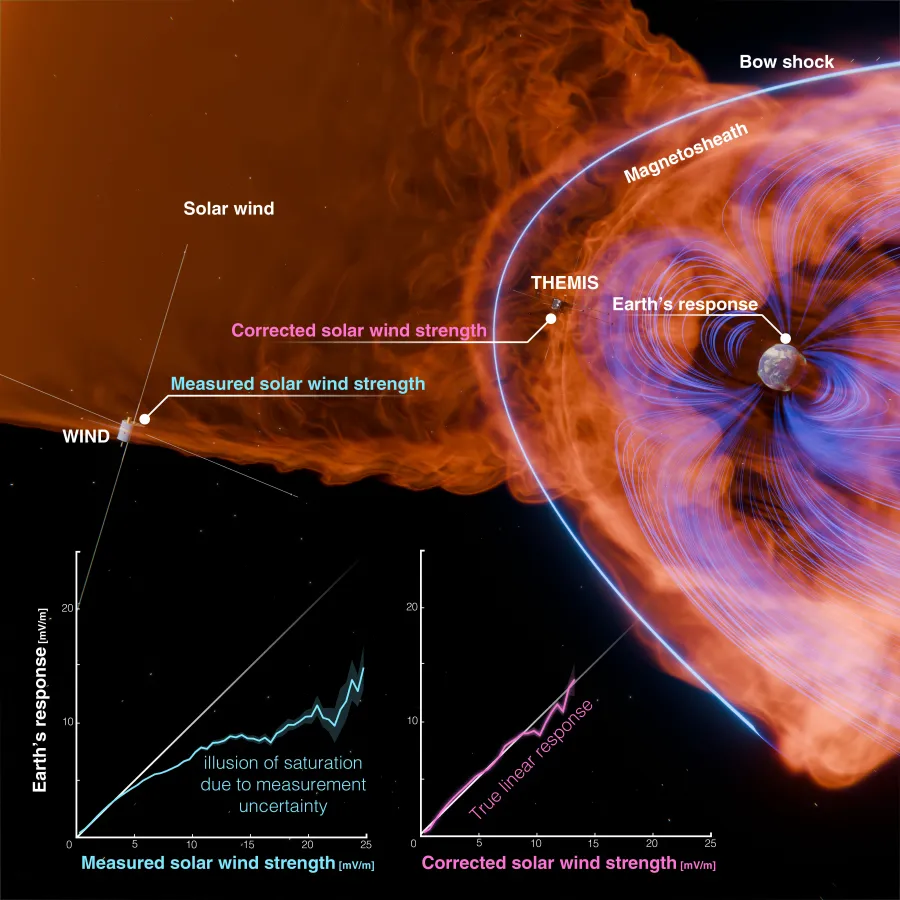
Graphic showing the interaction of the solar wind and the magnetosphere, along with the locations of the satellites used in the study, and the graph showing the corrected response. Credit - NASA / N. Sivadas et al.
Graphic showing the interaction of the solar wind and the magnetosphere, along with the locations of the satellites used in the study, and the graph showing the corrected response. Credit – NASA / N. Sivadas et al.

Science seems like a straightforward endeavor. You come up with a hypothesis, collect data to prove or disprove it, and analyze that data to see whether the hypothesis is right. But anyone who actually does science will tell you that it is often not that straightforward. One of the most common complexities is data analysis.

A new paper in Nature suggests that one such complexity, known as regression to the mean, might be causing us to massively underestimate how severe solar storms can be.

The interaction between the solar wind and Earth’s magnetosphere can be thought ...

Read More
Radiowave bursts linked to onset of intense auroral storms

Earth seen from space with a green auroral display blanketing the sky above the planet.
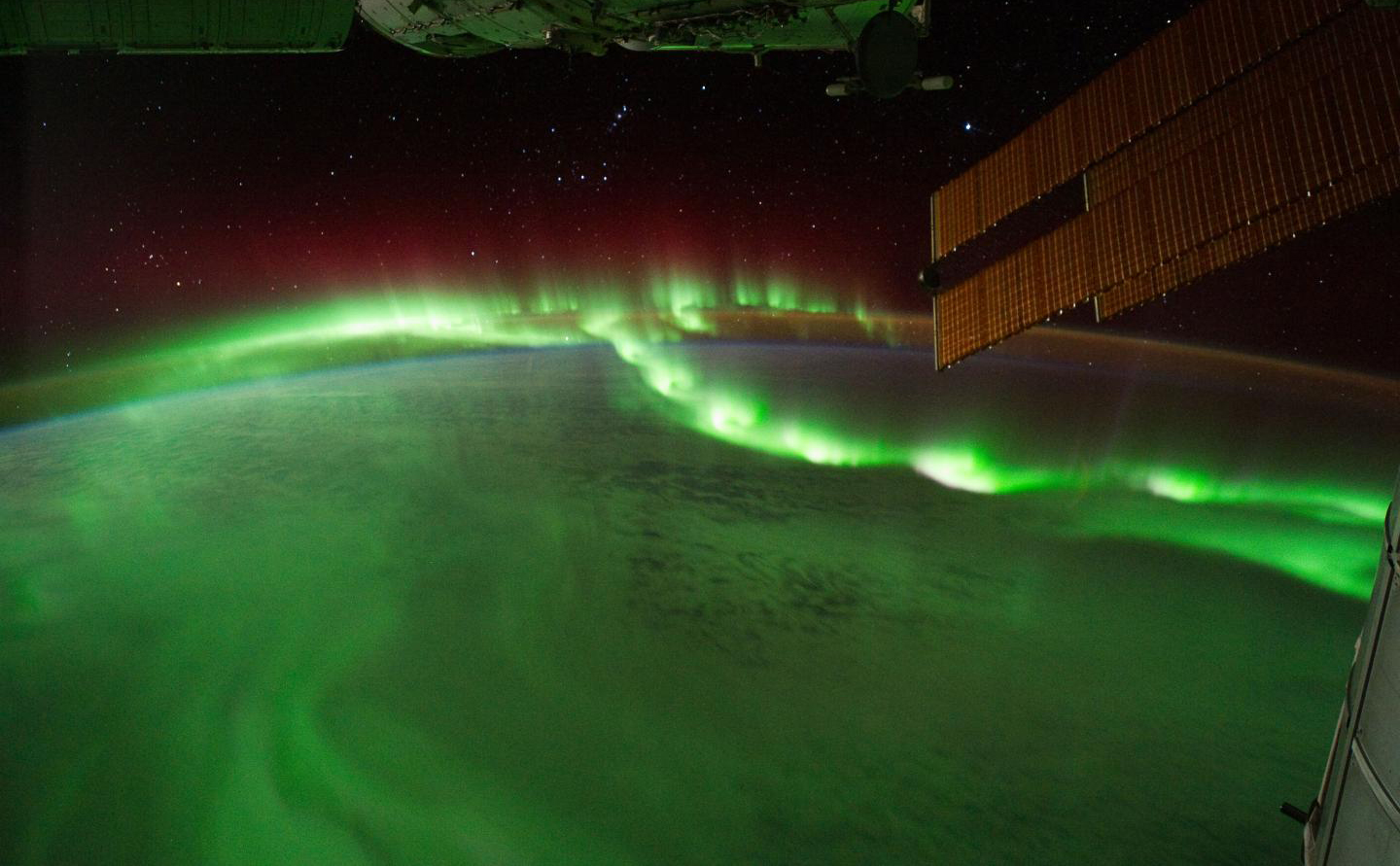
Auroral beads seen from the International Space Station. Credit: NASA

A University of Southampton study has revealed an intriguing new clue in the mystery of what triggers periods of very intense, brightly colored activity during displays of both the southern and northern lights.

Known as a “magnetospheric substorm,” this awe-inspiring phenomenon, which blankets the night sky in green and purple, is almost always preceded by what space scientists call “auroral beads”—a necklace-like wave of multiple luminous points of light which eventually evolve into the storm.

Southampton scientists have now shown there is a link between these auroral beads and the intensity of low frequency radio waves above the aurora in Earth’s magnetosphere—a vast area around our planet that is dominated...

Read More

Mysterious moon rust explained by oxygen coming from Earth’s ‘wind’

Mysterious moon rust explained by oxygen coming from Earth's
The chemical and microstructure characteristics of O-irradiated magnetite (Mag) after H-implantation. Credit: Geophysical Research Letters (2025). DOI: 10.1029/2025gl116170

In 2020, scientists reported the detection of hematite, an iron oxide mineral otherwise known as rust, distributed through the higher latitudes of the moon, particularly on the nearside. This came as a surprise, considering the low concentrations of oxygen—which is required for the formation of rust—on the moon. Researchers proposed several theories to account for the origins of the oxygen in moon rust, including the degassing of volatiles from lunar magma, asteroids, comets, or large impact events.

However, the only explanation that could account for the distribution patterns of the hematite was that oxyge...

Read More

We’ve Directly Observed Electrons Causing Pulsating Auroras For The First Time

The ERG spacecraft observed chorus waves and scattered electrons in the magnetosphere, the origin of pulsation auroras. The scattered electrons precipitated into the atmosphere resulting in auroral illumination. Intermittent occurrence of chorus waves and associated electron scattering lead to auroral pulsation. Credit: 2018 ERG science team.

The ERG spacecraft observed chorus waves and scattered electrons in the magnetosphere, the origin of pulsation auroras. The scattered electrons precipitated into the atmosphere resulting in auroral illumination. Intermittent occurrence of chorus waves and associated electron scattering lead to auroral pulsation. Credit: 2018 ERG science team.

For the first time, a satellite has directly observed the shower of electrons bouncing across Earth’s magnetosphere, allowing scientists to figure out what causes a rare form of Northern Lights known as pulsating auroras. Typically, the Aurora Borealis is caused by charged particles released from the upper atmosphere of the Sun...

Read More