
Energy-Efficient Electronics tagged posts

Artificial Materials for more Efficient Electronics

press750x329.jpg
Scanning transmission electron micrscopy image of superlattice consisting of an alternating sequence of 5 atomic unit cells of neodymium nickelate (blue) and 5 atomic unit cells of samarium nickelate (yellow). © Bernard Mundet / EPFL

The discovery of an unprecedented physical effect in a new artificial material marks a significant milestone in the lengthy process of developing ‘made-to-order’ materials and more energy-efficient electronics.

We are surrounded by electronic devices. Transistors are used to power telephones, computers, televisions, hi-fi systems and game consoles as well as cars, airplanes and the like. Today’s silicon-based electronics, however, consume a substantial and ever-increasing share of the world’s energy.

A number of researchers are exploring the propert...

Read More
A Key Development in the drive for Energy-Efficient Electronics

Driving forward energy-efficient electronics
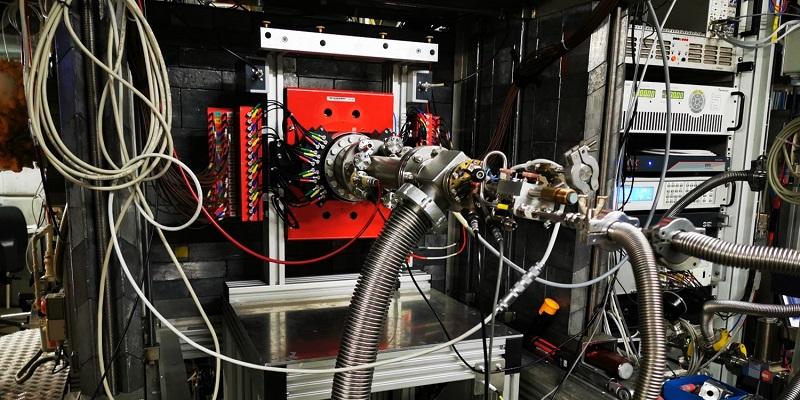
Sample of the advanced material undergoing analysis by muon spectroscopy. A muon is a sub-atomic particle. 

Scientists have made a breakthrough in the development of a new generation of electronics that will require less power and generate less heat.

It involves exploiting the complex quantum properties of electrons – in this case, the spin state of electrons.

In a world first, the researchers – led by a team of physicists from the University of Leeds – have announced in the journal Science Advances that they have created a ‘spin capacitor’ that is able to generate and hold the spin state of electrons for a number of hours.

Previous attempts have only ever held the spin state for a fraction of a second. In electronics, a capacitor holds energy in the form of electric charge...

Read More