



galactic disk tagged posts
A Black Hole as light as 40 tons can exist inside a star if dark matter helps
September 7, 2026,
 Astronomy/Space
Stars Travel More Slowly at Milky Way’s Edge
January 28, 2024,
Astronomy/Space
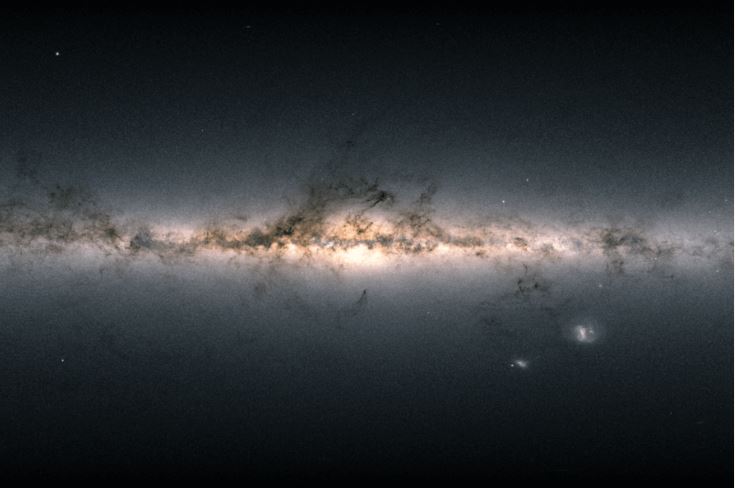
Physicists discovered stars near the edge of the Milky Way travel more slowly than those closer to its center — a surprise suggesting our galaxy’s gravitational core may have less dark matter than previously thought.
By clocking the speed of stars throughout the Milky Way galaxy, MIT physicists have found that stars further out in the galactic disk are traveling more slowly than expected compared to stars that are closer to the galaxy’s center. The findings raise a surprising possibility: The Milky Way’s gravitational core may be lighter in mass, and contain less dark matter, than previously thought.
The new results are based on the team’s analysis of data taken by the Gaia and APOGEE instruments...
Read More
Recent Comments